The Dark Side of Being Organized

I recently downloaded an app that I thought would help me be better organized. Instead of writing Post-Its or making notations in a notebook near my keyboard, using scraps of paper, paper towels, or toilet tissue, I could put everything on this very organized app. I am going to tell you how it works, what I did, and how it created a dark side.

The app is called Get it Done and it is very helpful. There is an inbox, a today file, a next, a scheduled and a someday file. There is also a projects list where you can add and edit projects. You can do the same for something called Smart Groups. I have no idea what this is, but it is there. You can also add and edit people (if it were only that easy).

Keep in mind that this app is free, though there are certain functions for which you need to register and pay $39 per year. But for my needs the free features work quite well, thank you.

I have two items in my inbox. One will remain as it is a reminder of something I need to focus on each day, the other concerns upcoming events.  I have five items in my today function, one for today and the others for upcoming days. What I need to do, where to go, appointments; a daily calendar. I have 12 items in my someday file, though that could be in the projects folder as it has do to with my writing plans, projects I am working on and upcoming projects. So I may move it to that location.

Now keep in mind I had to set all this up, deciding what I needed to focus on, how I want it arranged and then typing in all my notes and so on. Upon completion my desk was clear and my life was organized in my cute little app. However, it took so long for me to organize my organizer that I had no time to write the blog I intended to write.

I also went to a book sale the next day and though I only bought nine books, in order to better organize things I had to spend three hours reorganizing my room in order to make my book case and shelves better organized, putting in alphabetical order all my unread books-now over 300 including e-Books-by size, alphabetized in three sections; hardback, trade, and paperback. All tidy, pretty, and organized. The problem of course is that I had no time to write my blog for the second consecutive day.

As you can tell, being organized is time consuming and leaves little time to get done what is on your list. I had to forego the blog I intended to write as I thought I should warn you about the dark side of being organized. It isn’t all it’s cracked up to be.

dugout (1)Cemetery_Tales_and_other_PhantasmsA-351x597coyotemoon_silentmurderPicture 022


How to create a story-FROM WHAT?

While reading “The Curse of Beauty: The Scandalous & Tragic Life of Audrey Munson, America’s First Supermodel” I was struck by lightning, or to put it another way, a light bulb lit up over my head in a cartoon panel; in other words I had an idea.

Audrey Munson was a young woman of great beauty in the early years of the 20th century. She posed for every great sculptor of her time, not to mention painters, illustrators, and photographers. She was in high demand because during this neo-classical time before modernism became the mode of the day, she had, according to artists, the classical Greek form. She also appeared in two early silent films, appearingnude, which she frequently did posing for sculptors.,

In the book the author talked about the artists and how they would make sketches from all angles before making a clay model, then onto the actual sculpture. It dawned on me as the light bulb grew to full illumination that a writer can do the same thing, make sketches I mean.

I could in essence sketch the story before writing. So I thought I would try it for a short story that I must submit by September 1st. I have the beginning of the story, the problem that the protagonist encounters and what problems would arise with said problem and how it will end. You may think I created an outline, but I did not and this is why. It was free form, writing what came to mind without any undue thought process, one thing leading to another, thoughts, ideas within ideas, flowing from brain to fingertips, fingertips to tapping keys, and showing up in Word.doc. I wasn’t outlining by thinking, I was sketching by not thinking, coming up with a sentence here and there, more words, phrases, something to work from.

I would show you exactly what I did, but then you will have all you need to write your story from my notes, win yourself a Pulitzer, get a book deal with a New York publisher, make millions, have swimsuit models draped on your arm-or undraped if you prefer-and get you face on the cover of Writers Digest. I think you understand why I can’t share. Besides with success come problems. You will have too much money and fame, and that leads to drugs, addiction and the murder of a swimsuit model, and you spend the rest of your life in prison. So I am saving you from a life you don’t want. You’re very welcome.

So if you want to write a story, write a sentence or an idea, and then let your mind roam, writing down any thought that comes based on the sentence. Think of it as word association, but using at times more than one word. Example: Using the famous opening, “It was a dark and stormy night”-dark-power outage in the neighborhood-what kind of storm-rain? Meteor? Sand? Maybe a rainstorm in a desert-what is going wrong with the climate- a climatologist is in danger-is it the apocalypse? Well you get the idea. Let you mind go crazy and create a sketch of ideas to build your story on.

dugout (1)Loonies_In_Hollywood-375x712coyotemoon_silentmurder (1)Cemetery_Tales_and_other_PhantasmsA-351x597coyotemoon_cemetaryb

Why telling a story around a campfire makes you a writer

I was looking at some of my blogs from a previous incarnation and ran across this post and thought I would share it.

I have no illusions about my writing. I am not a great writer, though if you want to disagree I shall not object. Like most Indie authors who write e-novels and short stories, I have flaws. But I have read novels from writers who have an actual publisher and agent, and I wonder how they got published.

I contend that writing advice is often more analytical after the fact. What I mean is that the advice about structure and plot usually give examples to dissect, to show how it was done. That is fine, but how many writers actually sit down and write a structural outline, with character arcs, denouements, epiphanies, and other literary  analytics.

Of course there are writers that do and my congratulations to all of you, but it seems backward. If you have sat around a campfire and told a story, you are actually writing as you speak. The story you tell has its own built in structure, its own twist, its own climax. When you sit down at the keyboard, instead of keeping all that advice in your mind; advice that can clutter, confuse and cause writer insanity, consider telling a story by narrating in your mind.

Imagine you are telling a story. Listen to your voice, forget grammar, forget everything and just tell your story.  You don’t need long, complex sentences with heavy use of adverbs and colorful description. Trying to impress will backfire. When you hear the phrase ‘a writer’s voice’ it is more than writers style and technique; it can also have something to do with how the author speaks with his voice.

In a good documentary film the narrator can captivate you with his words as he tells the story. That is what story telling is. Narration. You can even speak your words aloud as you pound out keystrokes. I don’t because I am already nuts, but I do listen to my words as I type. I narrate a story (Including dialogue of course). I don’t write it.

I bet you can do the same.

Cemetery_Tales_and_other_PhantasmsA-351x597coyotemoon_cemetarybLoonies_In_Hollywood-375x712


Here is what I purchased to feed my lustful disease

In my previous post I mentioned I was buried under an avalanche of books and that I was going to a book sale at the local library that raises funds for said library. Before I show you what I bought, I tried to find a name for the disease of those of us who-it might be said-are compulsive book buyers-but I found none specific to book buyers, but Google does no always find what I am looking for. The closest word is oniomania. It is a compulsive buying disorder that causes problems with everyday life. Book Buyers exempt.

The word ‘bookaholic’ does not really apply. It is a person who loves books, but when you continue to buy and your reading can’t keep pace with the purchasing then there must be a better, more accurate term. But I am not compulsive. It certainly does not interfere with daily life as daily life continues no matter what I do.

I may be in denial, having bought 21 books plus one Justice League of America comic book on Saturday, days after receiving two hardbacks from Amazon, “Paper,” a book on the history of paper, and “You May Also Like” a book on taste in the age of endless choices. It tells us why we choose what we do. (At least I have heard it will, as it remains unread for the moment).

Saturday sale 

Paperbacks:

Callander Square-Anne Perry

The Rose Rent-Ellis Peters

The Snake, the Crocodile, and the Dog-Elizabeth Peters

Live to Tell-Lisa Gardner

Nightmare in Pink-John McDonald

five mysteries by Dana Stabenow-set in Alaska.

Mr.. Murder-Dean Koontz

House of Sand and Fog-Andrus Dubus

Foucault’s Pendulum-Umberto Eco

The Island of the Day Before-Eco

Grendel-John Gardner

What Killed Jane Austen and other medical mysteries 

Hardbacks:

John Dickson Carr Treasury-two novels

Light Thickens-Ngaio Marsh

Book of Lies-Brad Meltzer

Faithless-Karen Slaughter

The World’s Last Mysteries-Readers Digest 

One Justice League of America comic 

21 books + one comic. Cost $6, tip included at Friends of the Library Sale


Sale continued Monday:

The New Yorker Album of cartoons 1925-195o (oversized

The New Yorker Album of cartoons 1955-1965 (oversized)

Hardbacks:

Bag of Bones-Stephen King

Devices and Desires-P.D. James

The Red House Mystery-A.A. Milne (Yes the Winnie the Pooh guy)

This Side of Paradise-F Scott Fitzgerald

Tender is the Night-F Scott Fitzgerald

The Dark-Carrie Brown ( a professor from my alma mater)

Paperback:

Something from the Nightside-Simon R. Green

The Natural-Bernard Malamud

Freedom From Fear-Pulitzer Prize winner from David Kennedy. The American people in the depression and war 1929-1945

And finally a book all book lovers MUST have on their shelf. It is “The Man Who Loved Books Too Much,” by Allison Hoover Bartlett. It is about a man who loves books and steals a fortune in rare books, not to sell, but for himself and the detective on his trail. I hope he is never caught. On the back of the book in the description it says this. . . “deep into the rich world of fanatical book lust. . .” Book lust, that must be the disease, an erotic, lust of books.

Cost-$6 (tip included)

dugout (1)coyotemoon_silentmurderLoonies_In_Hollywood-375x712Picture 022


HELP! I’M BURIED UNDER AVALANCHE OF BOOKS

In an April 4th post about three cheap ways to become a bookaholic I mentioned  that I had 81 unread e-Books and 133 unread old fashioned books, the type you hold in your hand without use of a device, unless, of course, you recognize hands as a device. This amounted to 234 books waiting for me to crack open, or in the case of an e-Book tap open.

Two months and a few days since that post there is no relief as the avalanche continues to bury me. Unread e-Books up to 96 and the old fashioned kind up to 157. This adds  up to 253, a 19 book gain. And keep in mind I have read and finished books during this time, hoping to lighten the load bearing down on me.

And it is going to get worse. This Saturday and again on Monday the Friends of the Library is holding one of there sales. The proceeds go to the library to help them purchase new books,  to aid library programs and buy supplies for kids. So everybody wins. Except for a book hoarder like myself; I can barely breath, let alone move under the weight of unread books.

How good is the sale you ask? Hardback books at 50 cents or 3 for a $1. Who does this? This is as close to giving books away as you can get. Do they expect me to stay away, do they think I have discipline? I believe they have these sales knowing they will make a fortune off me. And paperbacks are 25 cents each or 6 for a $1. The same goes for VHS tapes, CD’s and audio books. To be honest the CD’s they had at previous sale were mostly music to accompany your yoga workout, or music from countries I did not know existed. But I go for the books anyway.

I will spend the next few days reading books nearest my hands, as many as I can, foregoing meals, bathroom trips, sleeping, and doing anything that prevents me from getting out from under this cataclysmic cascade of opus delicti.

cropped-048.jpgLoonies_In_Hollywood-375x712coyotemoon_silentmurder


What did Sue Grafton say about writing

Besides being an author and blogger, I volunteer at the local library. One of my two sections covers all the books about writing. There is always a book or two that catch my eye while I am checking the Dewey decimals on each book ensuring they are in proper order. One day I ran across “Why We Write.” Twenty best selling authors telling you there tips, tricks, and secrets. (There are no secrets, for if you share, it is not a secret-but I digress.)

In the introduction, the editor of the book , Meredith Maran, quotes George Orwell’s four motives for writing. They are: Sheer egoism (to be talked about, remembered); Aesthetic enthusiasm (for the pleasure of sound and rhythm of what you wrote); Historical impulse (to see things as they are, find true facts); Political purposes (The opinion that art should have nothing do to with politics is itself a political attitude).

Writers are quirky. Isabel Allende begins every novel on January 8th. She begins with a ‘sort of an idea’ and the first four weeks are wasted. Eventually it begins to pull together. What we can take away is her perseverance. She doesn’t quit, she works her way through her process. So if you feel bogged down with your story remember Isabel and stay with it; persevere and you will feel great, having, in the end, worked out of the dense jungle you found yourself in.

David Baldacci says ” ‘Writing for your readers’ is a euphemism for ‘writing what you think people will buy.’ Don’t fall for it! Write for the person you know best: yourself.” Many writers have said this. Write your story for yourself first-it will turn out better. This has been said since Mark Twain, maybe earlier.

Jennifer Egan says not to worry about bad writing. “One should accept bad writing as a way of priming the pump, a warm-up exercise that allows you to write well.” She also says you must write on a regular basis, even 15 minutes a day, something to keep you in the habit.

Sue Grafton, with all her success, says “Most days when I sit down at my computer, I’m scared half out of my mind. I’m always convinced that my last book was my last book, that my career is at an end. . . ” She, like Allende, perseveres.  Grafton gave my favorite quote, “There are no secrets and there are no shortcuts. As an aspiring writer, what you need to know is that learning to write is self-taught, and learning to write well takes years.”

dugout (1)Loonies_In_Hollywood-375x712cropped-048.jpg


Off-the-Wall Books for Writers

Creative writers own books on writing. Those books are easy to find, but there are other books that writers can learn from, ones you may not think about and I am here to help.

Games People Play by Eric Berne. It is a basic book about transactional analysis. STOP. Don’t get scared and run away. This book has sold millions and was published back in 1964. The title says it all. People play games; life games, marital games, sexual games, underworld games, and on and on. None of it on video by the way. This is how people interact, the games we play with each other. This is good for writers to develop characters. What type of person is your character? How about the “If it weren’t for you game.” A character who blames other people for holding them back in some way. A writer can learn how the game is played and how the person plays it out and use that trait in developing  a character. An insightful book on human behavior, one that can make a writers characters real.

I will pause here before continuing to scary books for advanced writers.  Spunk and Bite by Arthur Plotnik is not only a fun read, but one whose message is we should forget the classic book on writing style “The Elements of Style” by Strunk and White  because it is wrong, at least for today’s writers. And when you read the book you will agree. Crisp, witty, perceptive, Plotnik makes the profound simple and delightful.

And now for post graduate work.

Berne’s book will work for any creative writer. but if you want something more advanced and you want to write something complex, say along the lines of Dostoyevsky you may want to dive into Denial of Death by Ernest Becker. It won a Pulitzer Prize winner and is in one word-challenging. The book talks about the philosopher Kierkegaard, the psychoanalyst Sigmund Freud, how we deny death, psychology, religion, and the heroic individual. You can run away now if you like, or you could read Man and His Symbols by Carl Jung. An excellent book for reading about dreams, symbols, deep psychological and cultural meanings. This is a book for those who seek metaphor. So if you have a bent for James Joyce, D.H. Lawrence, and the like this book will be helpful.

Or you can pick up any book on mythology and use those cast of characters to draw from, giving them new names and new stories and in doing so, you create a new mythos using previously created symbols and metaphors. And you can bypass those ‘heavy’ books. Aren’t you glad you didn’t run away?

dugout (1)coyotemoon_silentmurder (1)coyotemoon_cemetarybcropped-048.jpg


The frustration of translating dreams into digital adventures

Writers can relate. So too can anyone who has tried to write a story.

It begins with a dream, an idea, a thought, a fragment, a vision, a nightmare; it begins in some form within the writers brain, a sometimes partner, but more a landscape like that of the moors in “Hound of the Baskerville’s,” foggy, swampy, and empty, where the writer as detective searches out storylines, but finding none let’s his mind go, then without seeking, ideas bounce around in his head like and ball caroming off walls on a handball court, fast and furious, coming at all angles. Stop. Let me catch one.

Then more frustration. The writer sees in his mind the characters, he can see what will happen, he know where and how it will go. It is all played out in his mind. That is the fun part, the imagination given free reign, a daydream the writer escapes into. But how to accurately translate what is in the writers brain onto paper or the digital magic of Word is the problem.

The language must be precise. What is the right word? There might be a better word that more acutely gives the proper nuance. Sometimes the writer knows the word is there someplace, but it is elusive, just out of his mental grasp. Search the Thesaurus. But while doing that the rest of the thought, the rest of the paragraph may dissipate like morning fog when the sun comes up. Gone. What was I going to say? Exactly.

The brain works faster than the writers hand can write, faster than the writers fingers can type. And while writing, typing, trying to translate with perfection the thought, the description, the dialogue, the everything, it can never be perfect. Frustration. Something, no matter how slight the shading, gets lost in translation. It is never perfect. But it can be in one sentence. It can be in one paragraph. Here and there something comes out exactly, or as close to exactly as possible, but on the whole, in its entirety, the translation is never what was racing through the writers landscape.  

Even in rewriting, the art of clarification, of rhythm, of making sense, the writer has a chance to make the dream whole and complete. But he is merely fixing, not realizing. By the end of the story, the origin of the daydream, the vision, what is left is the ghost of the story, but often it is good enough.

dugout (1)Loonies_In_Hollywood-375x712coyotemoon_silentmurderCemetery_Tales_and_other_PhantasmsA-351x597coyotemoon_cemetaryb


Oscar Wilde, abandoned books, and us

Oscar Wilde said, “Books are never finished. They are merely abandoned.”

I know what he meant. If you have read Charles Dickens, Leo Tolstoy, or even “Infinite Jest” by David Foster Wallace, you know there are writers who write long, thick books that take a year to read. They love their characters, they love to see what their characters will do, and they love to escape into the world they created for their characters.  The real world can not be controlled, it is out of all our hands. But a writer can create a world, he can control what happens.

Using myself as an example. When I finished my first e-novel “Loonies in the Dugout” I realized, in part because of the ending, and in part because I loved my two main fictional characters, that I could not end their story. I had to abandon the book, it was finished, at least that one, so I took my two favorite people and placed them in a new story 11 years later in another town where I could hang out with them some more.

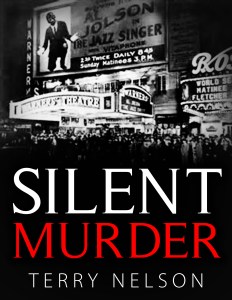
In the course of that e-novel “Loonies in Hollywood” I created another character, a flapper named Clancy. I fell in love with her as well, so when this book was abandoned because it must come to an end, I had to write a third e-book with all three of my friends. “That was “Silent Murder.”

Once that was abandoned I started another e-book with the same three characters. So I understand what Wilde meant. At least my interpretation of what he meant. He could also have been talking about the agony of rewriting and proofreading and that the writer reaches a point where he says ‘enough.’ But I think it has more to do with never wanting to escape the world the writer not only created, but inhabits with his characters, sharing their adventures. The writer is the fly on the wall.

Writers and readers do share a common bond and that is we both like to escape. The writers escaping into his world with his friends, secretly hoping to never have the story end, to write about them forever. And the reader escaping into a time and place, the world created by the writer, one the reader can also escape into. Perhaps we can find each other in this world. If you spot me, say hello.

dugout (1)Loonies_In_Hollywood-375x712coyotemoon_silentmurder (1)


The mysterious disappearance of bloggers

In my previous post I told of how there was a gremlin on my “Loonies in Hollywood” page that show at the top of this site’s header. I am unable to create a space between paragraphs. Every other page I can do that, but this page will not cooperate due to the gremlin residing in there, somewhere.

But there is another gremlin at work as well. Over time I have clicked many blogs to follow. They showed up in my inbox or they were in my e-reader. But I noticed of late that many blogs I received have not been showing up. Yes, I read them. Most of them anyway. And My e-Reader which had dozens of blogs suddenly had only about five.

I have no idea why or how you disappeared. And I miss reading what you had to say. Most of you anyway. I frequently clicked like. And yes I commented when something worthy inspired conversation.

I feel lonely. My digital friends have disappeared. It’s not like I have real ones.

It is true that some tire of blogging, take a break; others are victims of alien abduction (I saw the movie) or who knows what has happened. But I can’t believe so many have quit or been abducted.

Gremlins? Conspiracy? Or some problem with WordPress?

But I do know that I am going to write down on something called paper the blogs that still exist, and add to the new list, on this paper thing, new blogs that I follow and make a log when your last blog was posted and see how long before some of you disappear. I must see if there is a pattern to this madness. It must stop.

I have not abandoned you, I have been cutoff. I will leave no blogger behind.

coyotemoon_silentmurder