Did Shakespeare invent football

         ‘Am I so round with you as you with me, That like a football you do spurn me thus?’ The line comes from Shakespeare’s play Comedy of Errors, Act 1, Scene 2.  And again in King Lear, act 1, scene 4, this insult ‘Nor tripped neither, you base football player.’ 

        The above lines came from my Kindle edition of the complete works of Shakespeare that cost 99 cents. Shakespeare did not of course invent football, as it existed in his time, not the soccer 21st century fans are enamored with though. This ‘football’ according to this website killed more people than swordfights. It was ‘mob’ football and I am assuming played without referees and had no concussion protocol.
        But that is beside the point. According to a children’s book “William Shakespeare & the Globe”, written and illustrated by Aliki , Shakespeare invented the word ‘football’ though I am sure NFL fans believe it was Roger Goodell. It is also claimed in this wonderful book that old Will invented about or around 2,000 words such as bandit, employer, schoolboy, moonbeam, alligator!!!, luggage, eyeball, birth-place, gloomy, blushing, puppy-dog, shudder, fairy land and phrases like ‘every inch a king’, ‘pomp and circumstance’, wild-goose chase’, ‘for goodness sakes’,  ‘sweets to the sweet’,  and with due respect to Charles, ‘what the dickens’. Also puke, hush, and tut, tut.
        I have no intention of researching all the above words and phrases, nor the others listed in the book. I will take Aliki and Scholastic at their word (pun not intended-well maybe), but it does bring up an interesting question. If Will did invent those words, and the audience in the Globe heard those words for the first time, how did they know what they meant. I can see a member of the audience saying in response to alligator ‘what was that he said’ to his companion, much like when I watch a British TV show and they use a word I am unfamiliar with, which is frequent. 
        I don’t really know if Will invented words or was the first to write them down on parchment and use them in public at the Globe, but language evolves like a Darwinian paradigm. There are words and phrases popular in their day that are gone, never used in centuries. I mentioned some of them in a post I previously wrote.
        And we can invent phrases as well. In regards to words and evolving language how about ‘Alas poor Webster, I knew him well  Roget.’ Okay, I am no Shakespeare and you are thinking that my phrase has ‘no rhyme nor reason,’ another Will invention and you are wishing me ‘good riddance,’ yes that phrase too, so I bid adieu.
“Speak the speech, I pray you, as I pronounced it to you, trippingly on the tongue; but if you mouth it, as many of your players do, I had as lief the town-crier spoke my lines.’ Hamlet, act 3, scene 2. lief means willingly, readily. Who says lief anymore?

Seven insults not to say to a woman

  1. Whipperginnie. An abusive name for a woman used in the 1600’s, it was the equivalent of a derogatory name for a man-snippersnapper, and taking the whipper part of the first word and adding it to the male name you get whippersnapper, an insulting term for a male that has lasted for centuries. My uncle called me a whippersnapper often when I was a child. I thought it meant I was smart as a whip. Now I know better. 
  2. Wallydraigle is a worthless slovenly woman. No offense to men named Wally, but wally is a term insulting somebody’s intelligence or common sense.
  3. Taw-Bess is a slut, a slattern. I have no idea who Bess was, but she was either very bad, or very good. 
  4. Tirliry-Puffkin is light-headed woman, a flighty woman, a flirt.
  5. Daggle-Tail came about from a woman’s garments that were dirtied from being trailed over wet ground, therefore she was a untidy woman, another slut or slattern. Daggle is a term that means to drag through the mud. The Tail I will let you figure out.
  6. Drassock is a drab, untidy woman. Bonus word-Drosell is another word for slut or hussy.
  7. Bronstrops is  prostitute. I think it may be fair to say a bronstrop is a professional drosell and I mean no offense to either.

These words come from the British Isles and were used centuries ago. It shows how language changes and thinking that, you wonder how many words we currently use will be lost centuries from now. There a couple of good words to call a woman of course. And they come from the book that I got these words and definitions from. The book is Poplollies and Bellibones.

Poplolly is a little darling, a female favorite, special loved one, or mistress (but not a bronstrop or drosell)

Bellibone is a lovely maiden, a pretty lass. It is anglicized from the French belle et bonne.

When you look at the seven uncomplimentary names, humorous as they sound, they are harsher than poplolly and Bellibone, both of which have a lovely sound to them. Perhaps if a word sounds bad, it is and if it sounds good, it is.

Loonies_In_Hollywood-375x712coyotemoon_silentmurder (1)

Two personality tests to see if you are a writer

dugout (1)Loonies_In_Hollywood-375x712coyotemoon_silentmurder (1)

One can argue that the true test of a writer is to have readers and followers as well as book sales with good reviews. But what if you want to write, but are unsure if you have the right personality or temperament. Years ago  I read the book “Please Understand Me” by David Keirsey and Marilyn Bates, both of whom are therapists and diagnosticians. Don’t roll your eyes, this is not a self-help book.

This is a book, test included, that tells you what your personality is and how it affects different areas of your life. For instance I am an INFJ, a rare  species representing only 1% of the population. The NF is important because this type is attracted to words, and INFJ’s tend to become either creative writers or preachers.

Now if you find out you are an NF which is ‘intuitive’ and ‘feeling’ this means that you value and perceive possibilities over facts and that you are prone to making decisions based on value judgements over logic. It is an overstatement to say ‘if it feels good, do it,’ but that is close to the truth. I would bet that if you are an NF you are a good reader, love to read.

And if you are an INFJ, that means the I is an introvert who draws energy from within, someone more solitary, whereas an extrovert finds energy from being around people. The J is a ‘organized lifestyle’ as opposed to a flexible one.

I have two links to websites. This one will tell you about the four temperament types. And this one will tell you about four types of personalities, Guardians, Idealists, Artisans, and Rationalists.

Even if you do not feel you want to be a writer, but want to learn more about yourself, both sites and the aforementioned book are fun to explore. Then again you may not have the personality or temperament for it. But INFJ’s love it.

And of course, if you want to be a writer, no matter what your temperament or personality, no one is going to stop you.


How I dropped the bloody knife for Amazon after three days

coyotemoon_silentmurdercoyotemoon_silentmurder (1)

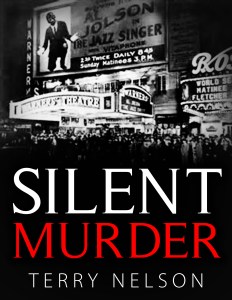
The cover on the left was done for my murder mystery about a serial killer murdering sound men in 1927 Hollywood; a killer with the crazed idea that he could prevent sound movies by killing technicians working to bring talking pictures to reality.

The victims were all killed by a knife, all from behind, and without any struggle, as if the killer silently came up behind them. Since the story takes place during the silent era of motion pictures and the killer was silent in his methods, it created, I thought, a clever play on words, not a killer pun, but a good one nonetheless. That is the reason the woman who did the cover put in the knife. I liked the image because it reflected the era and method of the serial killer.

But my opinion does not matter. Amazon’s opinion does, whether I agree of disagree. They did allow the cover, it was there on my Amazon page for a few months and no doubt would still be there except for what I tried to do. When I tried to set up an ad campaign through Amazon Marketing, the campaign was rejected because of the cover. It is their policy not to show images considered threatening, among other things. They can set their rules, it’s their right, but I doubt that censoring the image of the bloody knife is going to lessen the violence in the world.

The content of the book is anything but violent, the murders off-screen as it were, and the descriptions of the crime scenes are not overly descriptive, gory, gruesome, or yucky.

There will be times in our lives, many times, where we are faced with compromises. A smart person knows what battles to fight, and when, and how and why. This is a compromise I can live with. The funny thing is, in reference to the three days, I changed the cover following the rejection and resubmitted. It was rejected again. The change was on my Kindle Direct page where I uploaded the revised cover. But I discovered, thanks to an e-mail from Amazon, that it can take up to 72 hours for the new image to migrate to my public Amazon page. Just when we think we live in a world where things can change in one or two clicks I find we are in the dark ages. Three days!

But the migration is complete, the ad campaign is live, and the world is wonderful.

How I lost my identity through writing fiction.

dugout (1)coyotemoon_silentmurder (1)

It started innocently enough. I was working on character names for my first e-novel, “Loonies in the Dugout” and thought I would use the first names of my father and two uncles for three fictional characters. But I also wanted to use my mother’s name, but this was a baseball novel and there was not going to be that many female characters. So I used my dad’s first name Chet, for the lead character, and my mother’s last name Koski for Chet’s last name. Though I got to honor my mom and dad in one character, I did not anticipate what would happen.

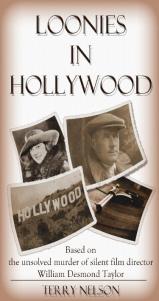
I enjoyed Chet and his girlfriend Eveleen so much I wanted to use them in another story, so I went from 1911 in my first book to 1922 in Hollywood for my second book in which Chet and Eveleen, now married, solve the murder of William Desmond Taylor. I had no problems in this story, but I got confused in book three.

In “Silent Murder,” set in 1927, there is a murder and it turns out the victim was a cousin of Chet. But he had no idea this was his cousin. So the police, naturally, when they find this out and inform Chet, got me into a family tree to sort out some police questions. And I nearly messed it up. Chet’s fictional last name is Finnish, but I was thinking Danish because that is my real father’s heritage. Yes, I realized later that I could have used the Finnish family tree, but the problem is it was too hard to trace for too many reasons to go into here. So I was stuck staying with a Danish tree for a Finnish character. I had to tinker a bit.

This tree was part of the plot-at the beginning of the story anyway. It is always a possibility that this plotline was a red herring. Had I known while writing the first novel that Mr. Koski would continue in two more stories and another now in progress I would have done things differently. As it is, by using my mother’s maiden name, in the third book I dug a pit that addled my brain about two families. After all I am talking about people from the 1800’s whom I never met.

If I had to do it all over again I would have used my real fathers last name and changed his first name, using perhaps Paul (my mother’s name was Pauline). Or even better, use my fathers middle name as his first, so I would have had Alvin Nelson.  Actually I don’t like that name, Paul would be better, except that is also the middle name of another relative, and that only adds more confusion.

I dug myself into a pit and I am stuck with it. Did I learn a lesson? No. I am using the names of two real life cousins who are cousins in my work in progress, but the two cousins in real life from opposite sides of the family and have never met. I don’t care. The territory is familiar to me. Besides I am too confused about my family tree I no longer know who I am. Writing as many pitfalls.

Two mandates of writing to use in your life

dugout (1)coyotemoon_silentmurderLoonies_In_Hollywood-375x712

There are two things a writer, any writer, must do or he will fail. It is unescapable and few writers, if any, like doing it, for that is where the hard work is, but the two mandates can also be applied to your life and it is a good idea to use them .

The first is proofreading. It is sitting down and reviewing what has been written to see what needs changing. And there are mistakes in writing and there are mistakes in one’s life. So in proofreading you examine how do make the story better. Your life is your story, so why not periodically sit down and review you life, check to see what needs improving; what needs fixing and how to fix it.

I remember while proofreading my first e-novel, “Loonies in the Dugout” that two sections, the writing of which I liked, still had to be cut entirely out of the story. Not cleaned up, not revised, but deleted with prejudice. Neither section advanced the story or had any character development. If there is something in your life that is not advancing your story or helping your development, then cut it out.

Cutting things out of your life, as in fiction, is called editing. Yes, you can edit your life for you are the writer, the proofreader, and the publisher. Your audience are friends and family. If you like, you can ask them what they would hope to see you edit out of your life. (not saying they’re right, but it doesn’t hurt to listen).

In the same e-novel I was trying for a theme in the first part of the book. It had to do with heat. The story was true and it began in the summer of 1911 when there was a heat wave, many people died during this time. So I had a lot of metaphors, similes, and descriptions where heat factored in the story. The problem I saw was that it did not work and had to be rewritten. As much as I liked it, it didn’t work, so it had to be changed.

That is the hard part about proofreading and editing your life. There are things you like, say eating three maple bars for breakfast. Who doesn’t love maple bars? But I don’t think three is good for you. Maybe cutting to one, then down to one half, then cutting them out would be a good idea. Blueberries in oatmeal, now that is better for your story.

So that is what I have learned from writing, to sit down, look at my life, see what needs changing, editing, fixing, and to make necessary changes. You can do the same and you don’t have to be a writer.

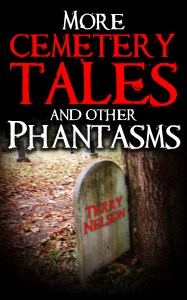
Cemetery_Tales_and_other_PhantasmsA-351x597coyotemoon_cemetaryb

What five rules of Journalism also apply to fiction

Cemetery_Tales_and_other_PhantasmsA-351x597coyotemoon_cemetaryb

Years ago I wrote brief high school sports reports on games I never saw. Honest. There were too many schools and too many games to cover in basketball, wrestling, swimming, and soccer, so somebody from outlying schools would call the newsroom, usually the winning coach, to give me all the stats, after which I would do a brief interview. The sports editor was emphatic that the five W’s should be in the first paragraph. Those five are  ‘who, what, where, when, and why.’ The rest of the article expands the five w’s.

Some fiction does begin with the five w’s, but obviously not all. A clever writer can do it and it might be a good writing exercise, especially for flash fiction.

Those five w’s also apply to fiction. The ‘who’ are the characters, notably the protagonist and the antagonist, the ones who get top billing, but all other relevant characters as well. The ‘where’ is the setting of where the story takes place and of course ‘when’ the story takes place. The’ what’ is the story, the action, the plot, the ‘whatever’ the story is including the denouement, the resolution of the plot that explains everything; in other words the ‘why.’ 

Of course the ‘why’ need  not explain everything in black and white. Often a little mystery, or something not quite resolved, or something to make the reader think about the ending is welcome. Not wrapping everything up in a nice little bow is not always for the best. It depends on what you want to leave the reader with and how you built up to that point.

The ‘how’ is sometimes considered the sixth rule of journalism, but that is iffy for a journalist, as one never gets all the facts, nor all the story so the ‘how’ is contingent on what is known. The ‘how’ in fiction, however, should be seamless because the ‘how’ are the tricks of the trade, the things a writer does to make to make the ‘how’ invisible.

Those who are avid readers know that some journalist’s stories often read like fiction in that they use fiction devices in long articles. Conversely some fiction reads like a news story. Clearly the two different modes of writing can become blurred. Not a bad thing. Everyone chooses how best to tell the story, whether it be news or entertainment. We have rules, but how we use them is where the creativity comes into play.

dugout (1)Loonies_In_Hollywood-375x712coyotemoon_silentmurder

Challenge your creativity with these stolen writing exercises

dugout (1)Loonies_In_Hollywood-375x712coyotemoon_silentmurder

Did the word ‘stolen’ get your attention. Shame on you.

They are not stolen, they are published in John Gardner’s “The Art of Fiction.” If you click on his name you find his Wiki page and a picture of him smoking a pipe. Writer’s back in the day-a long day past-often posed with their pipe. It made them look intellectual. He was that; a Beowulf scholar, professor, and writer. One of his students was the great short story writer, Raymond Carver. Before he died in a motorcycle accident in 1982 I met Mr. Gardner when I was in college.

There were two things I remember from his visit to my college to speak with some of us English Lit majors. First he said “Treasure Island” was something beyond fiction. He tried to explain, then realized he couldn’t explain it. It bothers me to this day. What was he trying to say when he is not sure what he is trying to say. The second is that when I had him sign my copy of his book “Grendel” he said it was his least favorite book, that it was not written well. Yet the book won an award, so there you go, a writer never satisfied with his work. And I respect that.

But he was very engaging and he offered a great writing exercise which I never forgot. He mentions it in the aforementioned book, on fiction, but I will offer some other exercises from the book to challenge your creativity and to make your work better.

For the  exercise to develop technique try this: Describe a landscape as seen by an old woman whose disgusting and detestable old husband has just died. Do not mention the husband or death. Or describe a lake as seen by a young man who has just committed murder. Do not mention murder. Or describe a landscape as seen by a bird. Do not mention the bird. 

To control tone in a complex sentence try this on for size. Write three effective long sentences: each at least 250 words, each involving a different emotion ( anger, pensiveness, sorrow, joy).

There are reasons for the exercises and that is to make your writing better, so get at it.

Thanks John.

Cemetery_Tales_and_other_PhantasmsA-351x597coyotemoon_cemetaryb


The best writing lesson from a six word story

Ernest Hemmingway is know for many memorable novels. I prefer Fitzgerald for Jazz Age writers, but like food, it is a matter of taste. I like cheese, my brother doesn’t. And he claims to be Scandinavian. But Hemmingway’s six word story is food for a writer to digest. It is the best example of flash fiction I can think of.

In my previous blog I wrote about the simplicity of Bukowski’s opening to his novel “Post Office.” Simplicity was the theme in that post and so is this one. Hemmingway wrote, “Baby clothes for sale, never worn.”

My first thought is the story is a tragedy. The baby died. Since the clothes were never worn, did the mother lose the baby, perhaps it was stillborn. But maybe the clothes were blue and the baby was a girl and the parents want pink. I don’t know.

But what writers can learn is that they need not always be descriptive. If a writer goes into the description of the clothes, the type, the color, the why, it could be the writer is clogging the readers mind with unnecessary information. There are things to tell and things not to tell, because the details are not important.

As I said in my Bukowski blog a writer can get in the way of his story. Elmore Leonard is said to have had a rule of never writing about the weather. If true his tongue may have been in his cheek. In my novel in progress that takes place in western Washington during November of 1927, I mention that it is raining in a couple of scenes. I note that it is the thick misty type of rain that so often inundates the area. But I do no belabor the point, not going into great detail, not over doing it. And it is important to place and atmosphere of the story. But the point is, I kept it simple.

When a writer goes over what he wrote he should not fall in love with his words. He should look at how to cut, what to cut. In doing so, in making it simple, in making it clear, the story is front and center, not the vainglorious wordsmith.