Making predictions by reading sortes virgilianae; Huh?

It started with Thomas Chatterton, a poet and forger, who committed suicide in 1770 at the age of 17. It was a short, but interesting life.

In Peter Ackroyd’s novel Chatterton, in which some intrepid souls belive they have discovered evidence suggesting Chatterton never committed suicide, but lived long and forged poems attributed to other famous poets, such as William Blake, I came across this phrase ‘sortes virgilianae.’ I am at once, both impressed by writers who use phrases and words that force me reach for my dictionary to discover the meaning, thus furthering my knowledge, and irritated by the writers flaunting their intellect by using words and phrases that impress critics and intelligentsia and make me fell stupid in the process. I can feel stupid on my own, thank you very much.

If you did not tap or click sortes virgilianae I quote from Wiki, ” The Sortes Vergilianae (Virgilian Lots) is a form of divination by bibliomancy in which advice or predictions of the future are sought by interpreting passages from the works of the Roman poet Virgil. The use of Virgil for divination may date as early as the second century AD, and is part of a wider tradition that associated the poet with magic.[1] The system seems to have been modeled on the ancient Roman sortes as seen in the Sortes Homericae, and later the Sortes Sanctorum.”

Romans consider poets as diviners and prophets. It was believed that by opening Virgil’s The Aeneid, written between 29-19 B.C. at random and running your finger down the page, then stopping at your pleasure, that reading the next sentence or few would tell your fortune. The emperor Hadrian used it among other Roman emperors.

Sounds better than reading tea leaves.

And in the Middle Ages, it was still though to be a prophetic book and that Virgil was a pagan prophet. And we thought Virgil was merely telling  a story of a Trojan named Aeneas who traveled to Italy and became, in essence, the ancestor of all Romans.

So I thought I would try it. This is the passage that my prophetic finger stopped at:

“Ere now the stout ship of Ilioneus, ere now of brave Achates, and she wherein [121-152]Abas rode, and she wherein aged Aletes, have yielded to the storm; through the shaken fastenings of their sides they all draw in the deadly water, and their opening seams give way.

Well that is an eye opener. Does it mean I should yield to the storm? Sounds like the ship might be sinking. So much, if true, for my writing career.

This is where reading leads you with a dictionary at hand. But what choice does one have?

“I don’t think writers should write about answers. I think writers should write about questions.”
Paul Haggis

Virgil would agree.

I don’t think you will need a dictionary for any of my e-novels and short stories; there is a built in dictionary with e-books.

Thanks for reading.
dugout (1)Loonies_In_Hollywood-375x712coyotemoon_silentmurder (1)Cemetery_Tales_and_other_PhantasmsA-351x597coyotemoon_cemetaryb


Have You Read Any of These Banned Books

As both liberal readers and conservative church folks know, there are books that should not be read, indeed, should be banned. But liberal readers will ignore banned books and read them with great delight. So will many church folks, otherwise, they say, how can I truly know how evil the book is.

The Index Librorum Prohibitorum was created by the Catholic church centuries ago to protect the flock from literary wolves. The books banned were considered heretical, or lascivious, or if it is really good, both. The list is a veiled way of pronouncing that you must agree with us on all things; we will think for you.  After all, we have your best interest at heart.

The list of authors and their books make quite a literary hall of fame. And many are surprising, such as Johannes Kepler (excluded from list 1835), because of his books on astronomy. God forbid Kepler could explain much about the universe and the heavens that conflicted with the church. Actually, neither God nor Church could forbid scientific explanations. Thank God.

Jean-Paul Sartre made the list, as did Victor Hugo (excluded in 1959), Spinoza, Kant, Copernicus, Francis Bacon, John Milton, Galileo, and David Hume among many.

Who did not make the list over time is more surprising. The works of Charles Darwin did not make the list, nor did D.H. Lawrence, James Joyce, and John Cleland. Dante was banned, but then reinstated like Kepler and Hugo. As was Justine and the Marquis de Sade. The Church was more considered, so it has been suggested, with blasphemy and heresy; less concerned with  sexuality or hate. Mein Kampf by Hitler, outlining his plans for power and hatred of the Jews was not banned.

The Index lasted over six centuries and was discontinued in 1966. But that has snot deterred other church organizations and even school districts from creating a banned book list. Huckleberry Finn, by Mark Twain comes under fire every year in more than one school district. Being considered a great work of fiction, and perhaps the great American novel means nothing to the righteous. 

“Forgive my asking you to use your mind. It is a thing which no novelist should expect of his reader…”
Owen Wister, The Virginian: A Horseman of the Plains   

Unfortunately none of my e-books are banned. But I remain hopeful.

dugout (1)Loonies_In_Hollywood-375x712coyotemoon_silentmurder (1)Cemetery_Tales_and_other_PhantasmsA-351x597coyotemoon_cemetaryb

How Story Plotting Makes You Write faster

Books to Die For is an anthology of essays written by mystery writers about their favorite mystery/crime book and author in that genre. One of the books, A Night for Screaming by Harry Whittington is one of many that caught my attention.

Whittington is quoted by Bill Crider in the e-book version of A Night for Screaming about plotting, saying:

“I understood plotting, emotional response, story structure. Fifteen years it took me to learn, but I knew. I could plot – forward, backwards, upside down. It was like being half-asleep and abruptly waking. Never again would I be stumped for plot idea or story line. From the moment I learned to plot, I was assaulted with ideas screaming, scratching and clawing for attention. For the next 20 years I sold everything I wrote.”

That should catch your attention. Whittington used 12 pseudonyms and wrote, depending on the source, 170 or over 200 books, and according to Wiki wrote 85 over 12 years.

Thinking about what Whittington said, if you have the plot of the story-that being what happens to whom from beginning to end- then all you have to do is fill in the blanks. Of course the plot contains all plot twists, surprises, getting the hero in trouble, piling on more trouble, then making his troubles unsolvable, before wrapping it up. 

Also in Crider’s introduction he says this about plotting, quoting Larry Dent’s formula:

“Maybe you’re familiar with Lester Dent’s formula for plotting a pulp story. At least three of its major sections begin with this advice: “Shovel grief onto the hero.” Or some variation thereof. The final one begins like this: “Shovel the difficulties more thickly upon the hero.” Dent follows that with this: “Get the hero almost buried in his troubles.” Nearly any of Whittington’s novels is a master class in following that advice. By the time you near the end of A Night for Screaming, you’ll be wondering how anybody could ever escape, and you’ll be zipping through the pages as fast as I did all those years ago.”

The advice can be used for any story, not just pulp fiction. Also in Crider’s introduction he said he read A Night for Screaming in one day. I don’t remember ever doing that, but I did with this book. The flow of language and the story was that good.

I plan on plotting my next e-mystery before writing the story. I think that will prevent me from bogging down here and there, trying to see where the story goes next.

Here is Goodreads list of Whittington’s books.

And here is my short list of e-books on Amazon:

dugout (1)Loonies_In_Hollywood-375x712coyotemoon_silentmurder (1)Cemetery_Tales_and_other_PhantasmsA-351x597coyotemoon_cemetaryb


Sue Grafton on Learning to Write; a Novel Approach

There is always someone who has not heard of a famous person, so I will not assume each of your are aware of Sue Grafton, but she is a best selling mystery writer whose titles have used the alphabet, going from A to Z, such as her first book A is for Alibi. According to her website, her latest book is “X” and that means two more novels, then . . . who knows.

She said the following about writing:

“There are no secrets and there are no shortcuts. As an aspiring writer, what you need to know is that learning to write is self-taught, and learning to write takes years.”

I remember hearing writers years ago saying one could not learn to be a writer through taking creative writing classes, that either you are a writer or you are not, and the best a writing class can do is make you a better reader, and understand the ‘craft’ or ‘art’ of writing.

Everyone has their opinion, but there is something to that. I think you can learn to write by reading and breaking down what writers do, even though there are different approaches, different styles, and the more variety you read, the better you should be as both reader and writer.

And Grafton is correct in that there are no shortcuts, and no matter how many webinars and conferences you attend, and no matter how many ‘how to books’ you read, there are no secrets. Most writers that I have learned about did teach themselves, trial and error, working through grammar, structure, metaphors, imagery, character creations, and everything in between and after; in truth each story, each book is an experiment, considering that the word ‘novel’ means strikingly new.

If you write then the more you write the better your writing should be. At least we hope so, and I think it is for the majority of us. It is a matter of being open to what you are doing and not doing, always challenging your ego to do better, not thinking you have it all figured it out. That is the learning process, and the process never ends.

There are and always will be, ways to improve. With each story you write, consider yourself starting from scratch, beginning a new. It is a novel approach.

My e-books on Amazon:

Loonies_In_Hollywood-375x712coyotemoon_silentmurder (1)Cemetery_Tales_and_other_PhantasmsA-351x597


How Literature is defined 40 Years later. . . and Today

Do you know the meaning of literature?

Some may think the term literature is reserved for the works of great writers like Dickens, Twin, Dostoyevsky, Austen, Lawrence, Fitzgerald, Hemmingway, Melville, and on and on. Literature, I am sure these folks think, should be set apart from popular fiction, especially genres like westerns, mysteries, science fiction, and those romance books, that women love so much.

I have a college textbook I used while completing my Bachelor degree. It is called A Handbook to Literature and is essentially a dictionary of sorts, in that it defines words, phrases, anything you need to know about literature including distributed stress, four senses of interpretation, Gaelic movement, sublime, plot, and sometimes things that sneak in like five points of Calvinism. It covers everything you need to know about literature, poetry, and in between. But it is missing one thing.

How is it a handbook about literature does not itself have a definition of literature? The closest it gets is litterateur defined as a ‘literary man, one who occupies himself with the writing or criticism, or appreciation of literature,’ but there is no definition of literature.

In college I did not bother looking up the word as I believed it was a broad term for everything written, whether fiction, poetry, or plays. And I assumed the word literature was reserved for creatively written books of depth and substance with great incite into the human condition, not those from Louis Lamour, Mickey Spillane, Jules Verne, or one of those Harlequin romance things. 

Indeed, when I typed in the word in Google Search asking for definition I find ‘written works, especially those considered of superior or lasting artistic merit.’ But I wanted to know the etymology of the word, so I Googled further. The online etymology dictionary says this. ‘ early 15c., “book-learning,” from Latin literatura/litteratura “learning, a writing, grammar,” originally “writing formed with letters,” from litera/littera “alphabetic letter” also “an epistle, writing, document; literature, great books; science, learning” (see letter (n.1)). In English originally “book learning” (in which sense it replaced Old English boccræft); the meaning “activity of a writer, the profession of a literary writer” is first attested 1779 in Johnson’s “Lives of the English Poets;” that of “literary productions as a whole, body of writings from a period or people” is first recorded 1812.  

And there it is. Forty years after college. Did you see it? “Originally” (as in the beginning) “writing formed with letters.” Not epistolary letters, not the Scarlet Letter, but simply using letters to create words, that create sentences and thus writing. That seems to encompass everything, including those Harlequin things.

Of course literature is also used to describe the works of a period in the cultural period of a country. And we can further go into more usages, but I think, in the end I will let Ezra Pound have the last word.

Great literature is simply language charged with meaning to the utmost possible degree. [Ezra Pound, “ABC of Reading”]

The following are my e-book contributions to literature of the 21st century, writing formed with digital platforms.

dugout (1)Loonies_In_Hollywood-375x712coyotemoon_silentmurder (1)Cemetery_Tales_and_other_PhantasmsA-351x597coyotemoon_cemetaryb


A Must Read Book For Writers

The book in question is by Francine Prose, a great surname for a writer, and this book is different from every book I have read about writing.

I read books on the art of writing by Ray Bradbury, Stephen King, and Lajos Egri; I learned something from each. But the book by Prose has a unique approach. She breaks down writing by these chapters; Chapter one-Words, Chapter two-sentences, then Paragraphs, followed by Narration and then Dialogue, moving on to Details and Chapter nine Gesture. There are three additional chapters, but let me state how she goes about things.

She does not tell, she shows. For example in the chapter on dialogue she uses a book by Harry Green, Loving, and uses, say two pages of dialogue between two or three characters. She tells you what to expect before you read the passages from Green’s book, then explains following the passage what Green was doing, and why, and how.

And that is why the name of her book is Reading Like a Writer. She teaches you how to read, what to look for, the why and the how of what each writer was doing. And she uses examples from writers with different styles, each of whom have different approaches, but each has a way of doing things, that when you see and easily understand what the writer is doing, you can not help but to learn.

And think about the chapters, starting from words-choosing the right word and why, and of course using examples that always gives you the ah ha moment. Now I get it. She starts with words, then of course the sentence, and on and on’ a perfect structure for writing.

And this book is not just for writers, but for readers who want to enjoy stories with an understanding of how the bones are put together.

Her book subtitled A Guide for People Who Love Books and For Those Who Want to Write Them is an accurate description. I love books, and I love writing them. And because I love books I discovered in the course of examples she cited writers I was unfamiliar with, and whose books I have purchased. They are coming in a brown box from Amazon and I looking forward to reading these stories in a new way.

Naturally I could have read any of the unread books in my massive slush pile, but the examples of writers she used made me want to read them. So now thanks to Francine I have learned about Harry Green, about Stuart Dybek, and Heinrich Von Kleist. I have invited them into my home, new friends to encounter, and to learn from. 

It is always exciting to encounter a new writer-new to you-and exploring there stories and now thanks to Francine Prose’s book, I can read them in a way that will make me a better reader, and a better writer.

My-e-books on Amazon

dugout (1)Loonies_In_Hollywood-375x712coyotemoon_silentmurder (1)Cemetery_Tales_and_other_PhantasmsA-351x597coyotemoon_cemetaryb


Are You A Book Collector Or A Reader ?

I believe it was Diogenes who said “To own books without reading them is like having a painting of a bowl of fruit.” Philosophers say things like that. I would say it is like having a bowl of fruit on your dining room table, but not eating any. A book, after all, is there for you to read at any time, as the fruit is there should you get hungry. You can only eat a painting if you have a mental disorder.

I don’t have a bowl of fruit, but I do have about 300 unread books. I am working on it, however.

There are two types of bibliophiles, or so I have read. One is a collector of books, a mania really, where the hunt is the thing. Collectors like to create libraries, whether they are all first editions, or all editions of certain writers, or rare books of any genre or age; basically any idea for collecting that grabs you. Some collectors have over 10,000 books and manuscripts. But they do not read them all. Who has the time?

I have no true rare books, none worth more than $60-$70, but I do like to collect books that need homes, as well as books I want to read. If I live long enough I might get to 1,000 books, and would be there now, but somehow books have gotten lost during moves, or I gave some away, and some evaporate into thin air, going I know not where.

Then there are the bibliophiles who are inveterate readers, buying and reading with voracious, lustful appetites.  Both types of bibliophiles are compulsive, whether to collect or read, they both have a mania.

Jacques Bonnet, a French bibliophile, says, “An inextinguishable curiosity drove me to find out what lay behind the words and phrases, and the unknown reality on to which I had stumbled . . . the fanatical reader is not only anxious, he or she is curious.”

I think readers can identify with that statement. I recently read “To Fetch a Devil” about an unsolved 1938 murder of a socialite woman and her 23 year old daughter in a desert near El Paso. I was curious, not only because it was unsolved, but how the author, Clint Richmond, put all the clues together and came up with a plausible, though circumstantial solution. And the solution was fascinating. And believable, even with all the complications and people involved.

Words. Sentences. They are magic. And writers are magicians.

So we collect, we read.

Loonies_In_Hollywood-375x712coyotemoon_silentmurderCemetery_Tales_and_other_PhantasmsA-351x597

My Obsessive Compulsion Is Really Weird

There are those with obsessive compulsion disorders like constantly checking the stove to make sure the burners are really and truly off, or always washing their hands, or rechecking the door to make sure it is locked when leaving the house, or always looking at their legs to make sure you did not leave the house without pants.

Mine is different. It has to do with quotation marks.

No I am not kidding.

Here is how it works. I write say ten chapters of a new novel and I decide to proofread these ten chapters before continuing the novel. I try to read close, often word by word, comma by comma, but those quotation marks get to me. I will read a chapter twice, three times, looking to see if the quotation marks are there. Not only that, but to make sure there is a comma, as in “I don’t know what to say,” he said. Sometimes a period sneaks in before the closing mark, so I need to see the marks, see the comma, then of course there is the split quote, as in “I don’t know what else to say, ” he said, “but I can tell you show you something.” That is four quotation marks and two commas to confirm.

Sometimes happy fingers hit this – ‘ rather than this- ” and I must make sure I have the correct mark.

The thing is, even after checking two or three times in the first chapter, if I find a problem in the second chapter it makes me think I missed something in the first one, especially if in the second chapter I found the error on the second or third reading. So I reread the first chapter. This could go on for years. Honestly.

Some writers have a mental block about writing. I have a mental block proofreading with quotation marks my bugaboo, my white whale, my Waterloo. I could give quotes about this disability, but I would have to check to make sure the quotes I used are correct.

If you find any quotation errors in these books, please forgive me. Sometimes I miss the quotation tree through the forest.

coyotemoon_silentmurder (1)Loonies_In_Hollywood-375x712coyotemoon_cemetaryb

Falling Books Kill; e-Books Don’t-Alkan’s Mystery Death

Charles-Valentin Alkan, 1813-1888,  was a French-Jewish composer whose death was said to be caused by a falling bookcase. If you are an inveterate reader, is there a better death, than being buried under a bookcase and books? How sweet.

It was believed he was reaching on a high shelf for the Talmud when the bookcase fell on him. However, years later a letter from one of his students who wrote that Alkan died in his kitchen from a heavy coat-umbrella stand. His story goes that his concierge heard moaning and found him lying on the kitchen floor. He was taken to his bed where he died that night.

Well that kills my joy. But I ask, which story is better. Killed by an umbrella stand/coat rack or a bookcase?

It was further thought the bookcase story derived from the following legend about Aryeh Leib Asher Gunzberg, 1695-1785. I quote from Wiki.

“A legend exists of his death. During his studies a book-case fell on him, covering him with books. His students were able to rescue him after an hour or so and he related to them that he had been covered by the books of the authors with whom he had quarreled. He had asked forgiveness from all of them and they all complied save for one, Mordecai Yoffe (known as the Levush) who refused. He knew therefore that he was not long for this world, and pronounced the verse in Hebrew “Aryeh shoag mi loi yiroh”; i.e. that Aryeh (the lion, meaning himself) shoag (roars), but mi (an acronym of Mordecai Yoffeh, but can also mean ‘who’) loi yiroh (is not afraid).[2]

It is speculated that this legend is the source of the urban myth surrounding the death of the French-Jewish composer Charles-Valentin Alkan, whose family originated from Metz.[3]

Personally I will belive the myth of Alkan’s death. I find it inspiring.

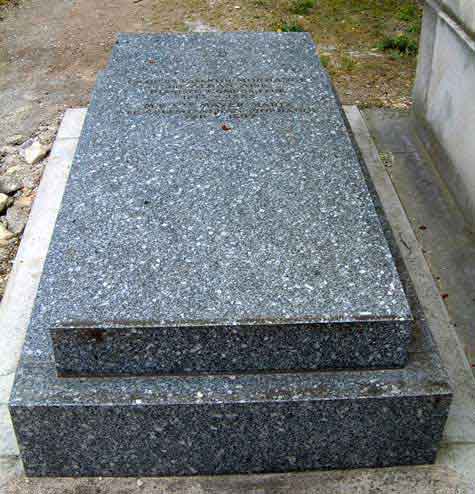
Alkan’s grave.

The good thing about e-Books is your death will not result from a falling bookcase.

dugout (1)Loonies_In_Hollywood-375x712coyotemoon_silentmurder (1)Cemetery_Tales_and_other_PhantasmsA-351x597coyotemoon_cemetaryb

Do You Agree With Pliny’s Quote about bad books?

“It is very rarely that a bad book does not contain some merit in the cultivated man.”- Pliny the Elder.

Writers will notice Pliny used the word ‘very’ and writers know to use that word, if at all, sparingly, very sparingly, but we must forgive the Roman Pliny for he lived from 26 AD to 79 AD and was unfamiliar with modern grammarians.

I admire Pliny for he loves to read, loves book, even bad ones, for he can find something of value where others can not.

But . .

Notice the phrase ‘cultivated man.’ The implication is that if you find nothing of merit in a bad book, something to take away from the book, you are not cultivated, therefore, or as Pliny would say ‘ergo’ you are unsophisticated, uncultured, unrefined, ignorant, perhaps outright stupid.   

Well who wants to be uncultured?

So we who want to be cultured, must of course, according to Pliny, find something in all books, no mater how bad, that we can learn from, or that brings up a pleasant memory, something we understand, that connects with us no matter how tangentially, anything at all.

I have tried. I have started books that had great reviews, or at least great blurbs on the back book jacket, and after twenty pages or so I am bored. I get what is going on. I just don’t care. Books talk to us. Each of respond differently to words, sentences, stories, just as we respond differently to food. Our taste buds are different. Sushi-never for me. Moby Dick-never for me.

Conversely, I have read books without any burbs whatsoever and found the story, the writing, everything about the book an absolute delight. Sometimes we are lucky and find these little treasures.

I do try to find something of merit Mr. Pliny, but I have many unread books, so I can set aside something that doesn’t taste quite right at the moment and try something else that looks more appetizing. But I do agree, every book does contain something for all of us, it is just a matter of connection.

Loonies_In_Hollywood-375x712coyotemoon_silentmurder (1)dugout (1)Cemetery_Tales_and_other_PhantasmsA-351x597coyotemoon_cemetaryb