What Writers Should Do Second, Not First

When writing a story writers can fall into a trap, one based on what they have read or seen in movies, a trap they  must escape. Let me explain.

A short story I wrote, Flowers for Martha Clemens, was based on something I saw, then I ran away with it into the twilight zone. I saw an old man, perhaps mid 70’s, carrying a shovel  in a cemetery. He walked with purpose among the graves, his clothes not those of a cemetery worker. I stopped to watch the old man, but then thought if I saw what he was going to do it might make sense and I would forget the whole incident. Better to turn away, not see what he was going to do and make up my own story.

The first thought of a writer would be obvious. The old man is going to dig up a grave. We have seen and read about grave robbers, and though the idea of a 70 year old grave robber has a bit of interest, I though it better to ignore my first instinct. Instead of robbing a grave he would dig up the grave for another reason, one more macabre. One reviewer said she liked the story “for the hauntingly melancholy vibe that sucks you into the story.”

Because of her comment I knew I made the right choice, one not based on the obvious, but one going in a new direction. That is why writers need to make unusual choices and not trust your first instinct. Better to play around with choices, bouncing things around in your mind, coming up with a few to choose from is even better.

Creativity is found in challenging your mind, writing outside the page, creating a sense of play, and getting a bit weird if need be. Creativity is challenging yourself to make new things. Writing need not be stolid, it should be fun.

6,466 Words That Anger And Please

Writers have bad days when words come slow, if they come at all. Then there are the good days where words pour out like a Pacific Northwest rain, fast and hard. But what happens when they flow to fast, too hard.

Maybe it was the two pots of tea that stimulated the senses, but 6,466 words is one heck of an output for me. I did not know what was coming next, I was in a zone where characters, situations, dialogue took over, my fingers tapping keys with little thought. I was not in control, some creative force was. I loved it.

But something happened when the words began piling up. Fingers must have got tired and when they did, bad things happened; then my mind got tired and bad things happened.

I noticed after a few thousand words there were more typos. Then they began increasing with two or three in every sentence, then three or four. When you are in a zone this becomes irritating seeing those words underlined in red, the color that infuriates bulls. I saw the red, the cape, and the bull in me took over. My fist pounded the arm of the chair. Then as typos overran my brain, my fist pounded the table behind me.

As I got close to 6,000 words loose objects were thrown with fierce bullheadedness. Soft objects will not do, noise is the only way to ameliorate the anger, the only way assuage the frustration.

I finally came to the end. The tornado was over. FEMA came in to assess the damage. I received counseling and was released from the hospital. In the end I was thrilled with my 6, 446 words.

And now I must go, this post a warm-up to another day of writing. I am not planning on a 6,000 word day. The room is empty except for desk, computer, and chair. I have no idea what will happen. Writing is adventure, writing is risk, writing is dangerous.

No keyboard was injured during the creative flow.

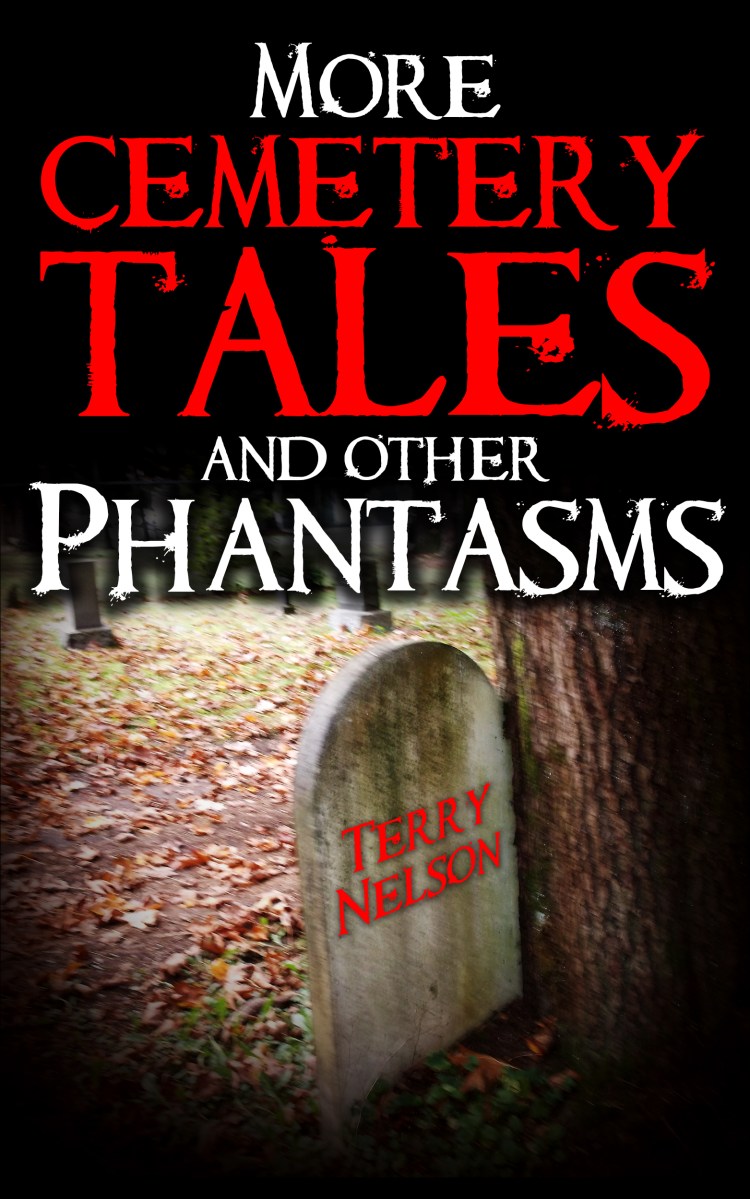
My dangerous e-Books on Amazon you can find here.

dugout (1)Loonies_In_Hollywood-375x712coyotemoon_silentmurder (1)

Adam and Eve, the truth of the matter

In the beginning Adam and Eve had the Garden all to themselves and frolicked with squirrels and all the other cute critters. Life was blissful.

Women don’t like to hear this, but I did not write the story; it was written by a male many centuries ago. In fact, according to linguists, Genesis was written by at least seven people, including one woman. Though I doubt she was the author of this part of the story.

The point is that Eve strayed. I don’t know where Adam was, perhaps sleeping, reading the sports page, or playing with squirrels. Maybe Eve was concerned about Adam’s performance issues. We simply don’t know, but she did approach the Tree of Knowledge, inching closer and closer to temptation. Then the serpent appeared and he began to hit on Eve, no doubt using the best pickup lines learned from his eating of the forbidden fruit. It was not an apple, that piece of fruit was added to the story centuries later. I once read an archeologist suggested it was a pomegranate, but that is another story.

Well what woman does not like the bad boy and the serpent was all of that. By the way, it was not a snake. That image, again, came centuries later. There are many types of serpents and there also could be a translation problem. But the point is that Eve did what the serpent suggested and ate of the fruit.

Bad Girl.

And what boy does not like the bad girl.

Now keep in mind Adam was loyal, loving, and honest. Not the bad boy; kind of dull, but a good man. Being a good man and desiring of an equal partnership he did not dominate, but strove for compromise. And he trusted Eve, the love of his life. Of course there were no other women around, so any port in the storm.

Anyway we know how the story ends. Adam was convinced by Eve to eat of the fruit. After they both ate they saw each other in a new light. It was an aha moment. The downside was they were evicted from the Garden. They were now party people and they disturbed the squirrels and other fun critters. So for the sake of the neighborhood, for it to remain a quiet place of peace and solitude, they had to leave.

I mention this because the story of Adam and Eve is the first story, one in which we have two characters; a man and woman. There is suspense. Will she listen to the bad guy? Will she give in to temptation or stay loyal to Adam? Two innocent people, a villain, and the results of being corrupted. And Eve the first femme fatale. Everything you need for a compelling story.

And look at what happened after they left the Garden. Millions of sequels.

My e-books can be found on Amazon

dugout (1)Loonies_In_Hollywood-375x712coyotemoon_silentmurder (1)


One Simple Paragraph . . .but

I recently read A Stranger in My Grave by Margaret Millar. She is a Mystery Writers of America Grand Master. It was originally published in 1960 and I would describe the book as literary, noir mystery.

The story is about a married woman named Daisy who hires a private detective/ bail bondsman to reclaim a lost day in her life. It has to do with her believing there is another person in her grave.

Of course she is alive; she knows that. But there is a reason for her belief. It is a nice hook to draw you into a story with some great twists and turns among believable characters.

There is a piece of writing, one paragraph that I loved that I want to share. It has to do with her trying to convince the detective, who thinks the woman is a bit off her rocker. The following is the paragraph:

“I didn’t lose the day. It’s not lost. It’s still around someplace, here or there, wherever used days and old years go. They don’t simply vanish into nothing. They’re still available— hiding, yes, but not lost.”

We all have memories both pleasant and not so pleasant. But there are also lost days, days that if you live long enough, increase to the point where they far exceed what we do remember. But are there hidden within those lost days, if they were found, something pleasant that its recovery would be a wonderful memory, like a treasure hunter discovering Captain Kid’s treasure?

Of course the flip side is that there might be in those lost days something you may not want to discover. There are people surrounding Daisy that try to tell her some things are better lost, not found.

So I reread the paragraph. There is something wistful and naïve about her thinking. We as readers may stop and wonder about are lost days, that they can be recovered and wouldn’t that be nice. But then again . . .

It is one paragraph, well written, that lies within a well written story. The paragraph, like the story makes you think. That is good writing.

Whether my e-novels on Amazon make you think or simply entertain you can decide.
coyotemoon_silentmurder (1)coyotemoon_cemetaryb

Sue Grafton on Learning to Write; a Novel Approach

There is always someone who has not heard of a famous person, so I will not assume each of your are aware of Sue Grafton, but she is a best selling mystery writer whose titles have used the alphabet, going from A to Z, such as her first book A is for Alibi. According to her website, her latest book is “X” and that means two more novels, then . . . who knows.

She said the following about writing:

“There are no secrets and there are no shortcuts. As an aspiring writer, what you need to know is that learning to write is self-taught, and learning to write takes years.”

I remember hearing writers years ago saying one could not learn to be a writer through taking creative writing classes, that either you are a writer or you are not, and the best a writing class can do is make you a better reader, and understand the ‘craft’ or ‘art’ of writing.

Everyone has their opinion, but there is something to that. I think you can learn to write by reading and breaking down what writers do, even though there are different approaches, different styles, and the more variety you read, the better you should be as both reader and writer.

And Grafton is correct in that there are no shortcuts, and no matter how many webinars and conferences you attend, and no matter how many ‘how to books’ you read, there are no secrets. Most writers that I have learned about did teach themselves, trial and error, working through grammar, structure, metaphors, imagery, character creations, and everything in between and after; in truth each story, each book is an experiment, considering that the word ‘novel’ means strikingly new.

If you write then the more you write the better your writing should be. At least we hope so, and I think it is for the majority of us. It is a matter of being open to what you are doing and not doing, always challenging your ego to do better, not thinking you have it all figured it out. That is the learning process, and the process never ends.

There are and always will be, ways to improve. With each story you write, consider yourself starting from scratch, beginning a new. It is a novel approach.

My e-books on Amazon:

Loonies_In_Hollywood-375x712coyotemoon_silentmurder (1)Cemetery_Tales_and_other_PhantasmsA-351x597


A Must Read Book For Writers

The book in question is by Francine Prose, a great surname for a writer, and this book is different from every book I have read about writing.

I read books on the art of writing by Ray Bradbury, Stephen King, and Lajos Egri; I learned something from each. But the book by Prose has a unique approach. She breaks down writing by these chapters; Chapter one-Words, Chapter two-sentences, then Paragraphs, followed by Narration and then Dialogue, moving on to Details and Chapter nine Gesture. There are three additional chapters, but let me state how she goes about things.

She does not tell, she shows. For example in the chapter on dialogue she uses a book by Harry Green, Loving, and uses, say two pages of dialogue between two or three characters. She tells you what to expect before you read the passages from Green’s book, then explains following the passage what Green was doing, and why, and how.

And that is why the name of her book is Reading Like a Writer. She teaches you how to read, what to look for, the why and the how of what each writer was doing. And she uses examples from writers with different styles, each of whom have different approaches, but each has a way of doing things, that when you see and easily understand what the writer is doing, you can not help but to learn.

And think about the chapters, starting from words-choosing the right word and why, and of course using examples that always gives you the ah ha moment. Now I get it. She starts with words, then of course the sentence, and on and on’ a perfect structure for writing.

And this book is not just for writers, but for readers who want to enjoy stories with an understanding of how the bones are put together.

Her book subtitled A Guide for People Who Love Books and For Those Who Want to Write Them is an accurate description. I love books, and I love writing them. And because I love books I discovered in the course of examples she cited writers I was unfamiliar with, and whose books I have purchased. They are coming in a brown box from Amazon and I looking forward to reading these stories in a new way.

Naturally I could have read any of the unread books in my massive slush pile, but the examples of writers she used made me want to read them. So now thanks to Francine I have learned about Harry Green, about Stuart Dybek, and Heinrich Von Kleist. I have invited them into my home, new friends to encounter, and to learn from. 

It is always exciting to encounter a new writer-new to you-and exploring there stories and now thanks to Francine Prose’s book, I can read them in a way that will make me a better reader, and a better writer.

My-e-books on Amazon

dugout (1)Loonies_In_Hollywood-375x712coyotemoon_silentmurder (1)Cemetery_Tales_and_other_PhantasmsA-351x597coyotemoon_cemetaryb


What the housekeeper in “Rebecca” reveals about the writing process

If you read Daphne De Maurier’s Rebecca, then you know Mrs. Danvers, the mysteriously manipulative housekeeper of Manderley. What you may not know is how her character developed. It says much about the writing process.

In an interview describing the development of Mrs. Danvers, Du Maurier said, “…the housekeeper, Mrs. Danvers had become more sinister. Why I have no idea.”

Taking her at her word, I think Mrs. Danvers became more sinister in the story because writers have an instinctive sensibility for storytelling that often surprise them in the writing process. Characters simply take over no matter what the writer intends. I have no idea how Du Maurier originally envisioned Mrs. Danvers, but if she were not sinister, not a creepy manipulative, jealous, spiteful woman, there would be no tension, no conflict between her and the new Mrs. de Winter. The reader senses the conflict, more so than Mrs. de Winter.

Mrs. Danvers is the pivotal character in the story around which so much mystery revolves. Without her sinister character the story is entirely different, our feelings for Mrs. de Winter will be different, for the malevolent spirit of Mrs. Danvers will be mitigated and Mrs. de Winter will not seem so isolated, so vulnerable.

I have read about many writers, Ray Bradbury, Stephen King, and Elmore Leonard to name three, who have an idea for a story and in the course of writings, minor characters become major characters, and where the story was planned to go ends up going somewhere else. Again, it gets back to the writers instinct, the ability to sense when you come to the fork in the road, you take the one that feels right.

The lesson here is if you write, don’t think too much, just keeping clicking letters on the keyboard, use it like an Ouija board and see where the fingers take you.

Du Maurier also said, “Women want love to be a novel, men want a short story.” I’ll let you sort that one out.

Loonies_In_Hollywood-375x712coyotemoon_silentmurder (1)Cemetery_Tales_and_other_PhantasmsA-351x597


Why Word.doc IS a Writer’s Tool Despite What Some Think

The following revised and updated blog entry was first published in 2013 in my first blog that I wrote under The Quill, the e-word, the looniness. I like the title, but though it had many followers, it was too long of a title, so I reset to this blog. This was my opening blog, my first entry into blogging. I hope you like it:

“There is a bestselling writer, definitely old school, who is adamant that using Word doc. is not writing. He contends writers write longhand, or, his choice of weapon, the typewriter.

Sholes typewriter, 1873. Museum, Buffalo and E...

Sholes typewriter, 1873. Museum, Buffalo and Erie County Historical Society. (Photo credit: Wikipedia)

I must say the statement was made some years ago and I am only 95% sure of who made the statement, and he may have revised his original opinion in the interim, which is why I won’t reveal his name.

I have written two e-book novels in my loony series (three now) and his statement fits within my view of the world. We are all a bit loony.

But consider the absurdity of the statement. Shakespeare used a quill pen to write. Had the typewriter been invented during his life, would he have rejected it because only a true writer uses a quill? Old Will would have learned how to use the new tool and be thrilled not to be continually dipping his quill in ink over and over.

The quill was the tool of Will’s day. A typewriter is a tool. A PC with Word doc. is a tool. All writers are storytellers and they use the tool that more easily tells the story. And writing in Word is far easier than a typewriter that has no spell check, no grammar check, nor needs reams of typewriter paper. With Word you can revise as you write.

That being said, the experience of Word and formatting, in my case, blogs, movie reviews, and e-book novels, is far from easy. Word may be easier than the quill and the typewriter, but both Word and Cyberspace bring their own set of problems.

And that is what led me to create a blog, one I hope you, whether a writer or not, will interact with me on, to discuss the looniness of writing in cyber world.

Speaking of spellcheck and looniness, as I wrote the previous paragraph a red line popped up under ‘looniness’ indicating it is misspelled or is not a word. But my American Heritage dictionary says otherwise.

So I hope you will join me on this journey, sharing the looniness of writing in cyber world. Quill pen anyone?”

I did not use a quill, pen and paper, or a typewriter in creating these cyber books.

dugout (1)Loonies_In_Hollywood-375x712coyotemoon_silentmurder (1)Cemetery_Tales_and_other_PhantasmsA-351x597coyotemoon_cemetaryb


Why I Created Three Fictional Characters-And How

It started so strangely.

There was a real person named Charlie Faust, 1880-1915, who once pitched for the New York Giants in 1911. Sort of.  A biography of Charlie, though much of his life is unknown, was written by Gabriel Schecter, called Victory Faust.

But who was Charlie?

That is what baseball people wanted to know. He was strange, and though many of his famous Giant teammates talked about him, and wrote about him, Charlie remains elusive. He could have been the most naïve country hick in history. Or he could have had mental issues. Perhaps-in the language of the day-retarded. But nobody knows for sure.

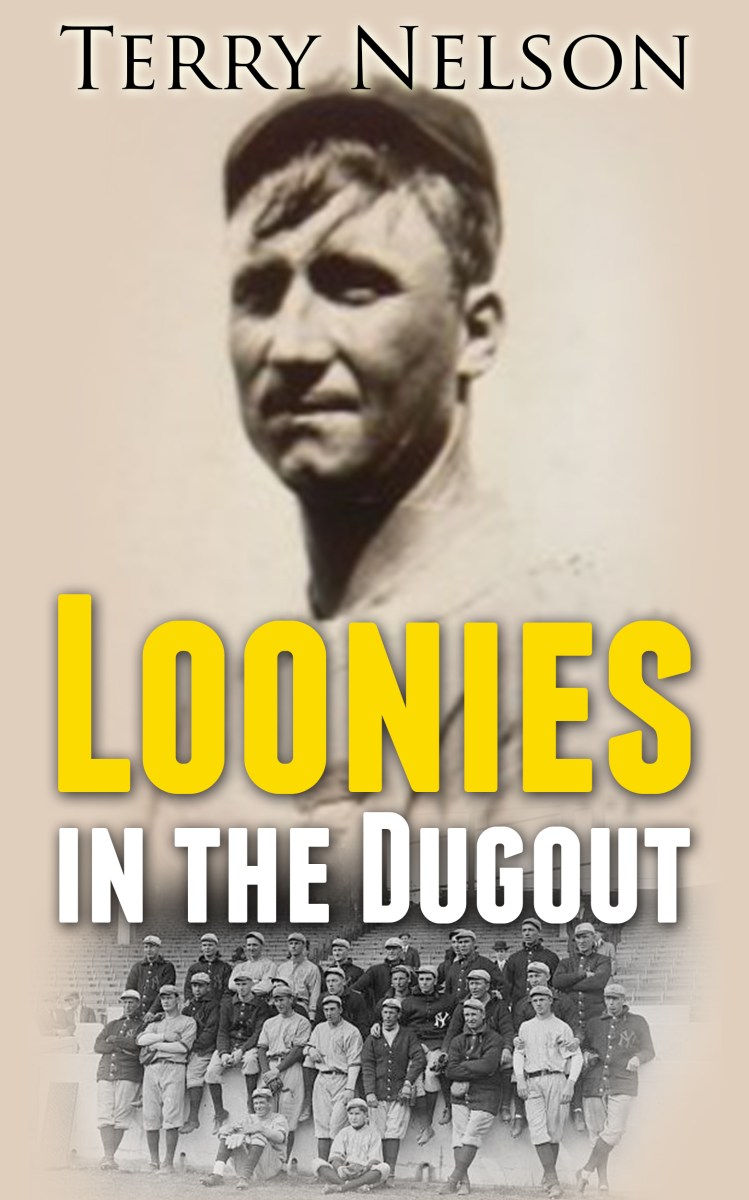
A few people have tried to write a fictional story of his life, but according to Mr. Schecter, nobody had. So a few years ago I decided to explore Charlie. To tell his story I used a rookie fresh off a Storden, Minnesota farm. Chet Koski was born in 1888 and in 1911 at the time of the story he is 22, his birthday being in October. He is not the rube that Charlie is, but it is his first time in a big city, and in a true sense it is his coming of age story, though by stories end, Chet does not fully bloom.

So we see Charlie through Chet who ends up as Charlie’s friend and at times guardian angel.

Now a young man in New York needs a girlfriend and she is Eveleen Sullivan, born in Ireland, 1890. Red hair, green eyes, she is all Irish. Her dreams are of the Broadway stage. When we meet her she is doing small parts, mostly in the chorus. She has another suitor, a British actor, who I will say little about. I won’t say he is a cad, but there is something about him I don’t trust.

Chet and Eveleen, like any young couple whose dreams lie in different direction, are unsure of themselves, of each other, and of any future. They might have a chance together, but then again, who knows.

The e-Novel is a satire on fame and celebrity. Charlie after all, though he is more a good luck omen, like a rabbits foot, or a horseshoe, becomes famous, not only in New York where he appears on Broadway within weeks of his mysterious arrival in New York, but all around baseball and the cities he sort of played in.

The baseball action and the scores are accurate. I researched the season and the games. Since Chet is fictional, I substituted him for a real player from time to time, but though he is fictional, what he does is what really happened.

Not only do we meet Christy Mathewson, Rube Marquard, manager John McGraw and other Giant players, we also meet Bat Masterson, George M. Cohan, and sportswriter Damon Runyon.

I said in the heading there were three fictional characters and I have mentioned only two, Chet and Eveleen. The third is Clancy. At the time of this story she is eleven years old and is not in Loonies in the Dugout. She shows up at the age of 22 in Loonies in Hollywood. She is the daughter of a rich California banker, and a carpe diem flapper with an extroverted personality. She is, as anyone would say, a handful. She was to be a plot device, nothing more; enter and leave the story in one scene, and a brief one at that. But she dominated the scene and as writers know, a character, yes a fictional one, can force their way into a story. She has become my favorite character. As I said she is a handful. 

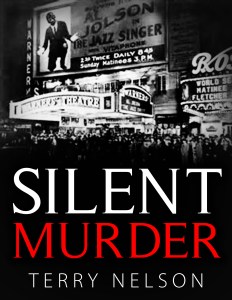
And of course Clancy became friends with Eveleen and Chet, helping their murder investigations in two published books and one mystery in progress.

Though the three characters appear in two stories, Silent Murder being the second, you do not have to read them in sequence as each is a stand alone story.

You can find them on Amazon here. Loonies in the Dugout, with two four star reviews, only 99 cents.

dugout (1)Loonies_In_Hollywood-375x712coyotemoon_silentmurder (1)


WARNING: Writers Eyes Only Should View These Links

If you notice the links below you will find information on Facebook ads, critique groups, stressed out writers, how to sell books, how not to sell books, 25 great writing tips, and blogging tips. This and much more you can find on Anne R. Allen’s blog with Ruth Harris. Having subscribed for years I can attest to the useful information I have gotten, some of which goes against common perceptions, but common perceptions are often wrong, which is another reason to follow their blog. It does not always agree with beliefs, too often regurgitated without anyone saying, “Hold on here. Does this really make sense?”

Facebook Ads that work

Disappearing Amazon reviews

Beware Groupthink-About choosing a critique group

Important for depressed, stressed and anxious writers

Speed Kills or Does it

How Do I Sell My Book

How Not To Sell Books

25 Must Read Tips

6 Tips for getting More Traffic to Your Blog

Blogging Authors, Ignore the Rules

Loonies_In_Hollywood-375x712dugout (1)coyotemoon_silentmurder (1)Cemetery_Tales_and_other_PhantasmsA-351x597coyotemoon_cemetaryb