What Writers Should Do Second, Not First

When writing a story writers can fall into a trap, one based on what they have read or seen in movies, a trap they  must escape. Let me explain.

A short story I wrote, Flowers for Martha Clemens, was based on something I saw, then I ran away with it into the twilight zone. I saw an old man, perhaps mid 70’s, carrying a shovel  in a cemetery. He walked with purpose among the graves, his clothes not those of a cemetery worker. I stopped to watch the old man, but then thought if I saw what he was going to do it might make sense and I would forget the whole incident. Better to turn away, not see what he was going to do and make up my own story.

The first thought of a writer would be obvious. The old man is going to dig up a grave. We have seen and read about grave robbers, and though the idea of a 70 year old grave robber has a bit of interest, I though it better to ignore my first instinct. Instead of robbing a grave he would dig up the grave for another reason, one more macabre. One reviewer said she liked the story “for the hauntingly melancholy vibe that sucks you into the story.”

Because of her comment I knew I made the right choice, one not based on the obvious, but one going in a new direction. That is why writers need to make unusual choices and not trust your first instinct. Better to play around with choices, bouncing things around in your mind, coming up with a few to choose from is even better.

Creativity is found in challenging your mind, writing outside the page, creating a sense of play, and getting a bit weird if need be. Creativity is challenging yourself to make new things. Writing need not be stolid, it should be fun.

6,466 Words That Anger And Please

Writers have bad days when words come slow, if they come at all. Then there are the good days where words pour out like a Pacific Northwest rain, fast and hard. But what happens when they flow to fast, too hard.

Maybe it was the two pots of tea that stimulated the senses, but 6,466 words is one heck of an output for me. I did not know what was coming next, I was in a zone where characters, situations, dialogue took over, my fingers tapping keys with little thought. I was not in control, some creative force was. I loved it.

But something happened when the words began piling up. Fingers must have got tired and when they did, bad things happened; then my mind got tired and bad things happened.

I noticed after a few thousand words there were more typos. Then they began increasing with two or three in every sentence, then three or four. When you are in a zone this becomes irritating seeing those words underlined in red, the color that infuriates bulls. I saw the red, the cape, and the bull in me took over. My fist pounded the arm of the chair. Then as typos overran my brain, my fist pounded the table behind me.

As I got close to 6,000 words loose objects were thrown with fierce bullheadedness. Soft objects will not do, noise is the only way to ameliorate the anger, the only way assuage the frustration.

I finally came to the end. The tornado was over. FEMA came in to assess the damage. I received counseling and was released from the hospital. In the end I was thrilled with my 6, 446 words.

And now I must go, this post a warm-up to another day of writing. I am not planning on a 6,000 word day. The room is empty except for desk, computer, and chair. I have no idea what will happen. Writing is adventure, writing is risk, writing is dangerous.

No keyboard was injured during the creative flow.

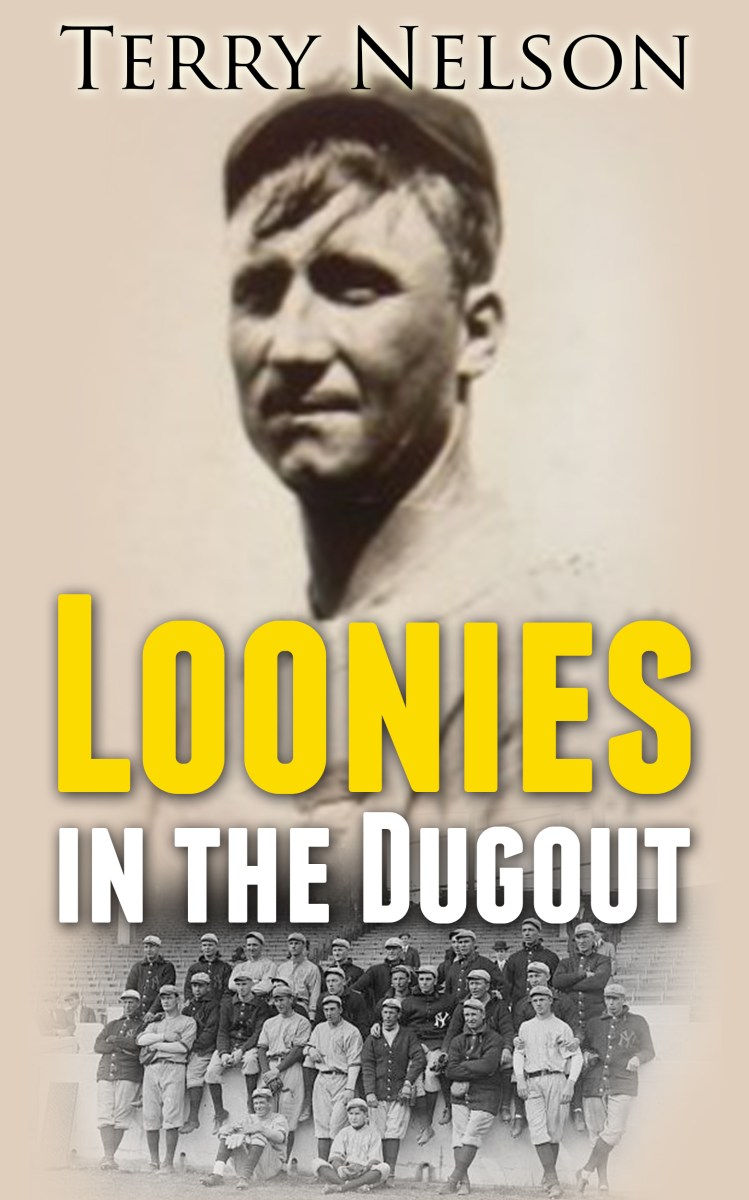
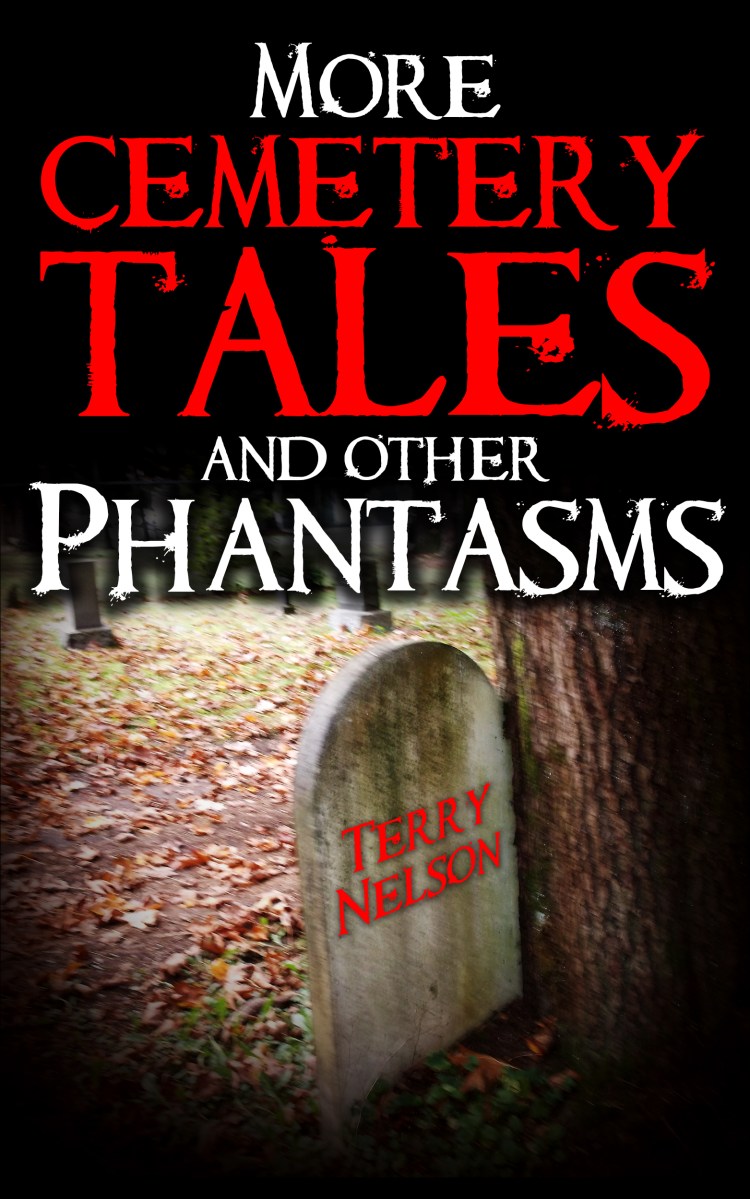
My dangerous e-Books on Amazon you can find here.

dugout (1)Loonies_In_Hollywood-375x712coyotemoon_silentmurder (1)

How a Candy Bar Changed My Life

It happened when I was four years old. A seminal moment I will never forget for even at four I realized something, and what I realized changed my life.

My aunt was driving me someplace, the where and why forgotten. I remember she stopped at a drugstore and went inside to purchase something. She came back out and handed me a candy bar.

I was curious as to what the candy bar was called. I was a year away from learning how to read, so I needed some help.

“What is the name of this candy bar?” I said.

“You know,” she answered.

“Now I don’t.”

“You know,” she said a second time.

Being four and being a boy, I was subject at times to a temper tantrum. I was on the verge of one by saying with strong emphasis, “No I don’t know. I CAN’T READ!”

I stared at the still unwrapped candy. It was long, had a silver wrapper and some letters on it. I kept looking down at it while my aunt pointed to the first letter. She said, “This is the letter U and this is the letter N and this is a O. It says U-No.”

“OH!”

I realized the power of letters. I realized the power of words. I learned the power of being able to read. I felt I was on the outside, that I was at a disadvantage.

This point was driven home when I learned how to read. Beginning with the Dick and Jane readers, progressing to the Hardy Boys, moving on to Jules Verne, I kept reading because the power of words, what they meant, what they symbolized was like having a super power.

I still read. I read fiction, non-fiction, e-Books, magazines, newspapers. And candy bar wrappers. I read because knowledge is power, but knowledge is gained from reading and discerning, analyzing, and thinking about what I read. And it is the letters, the words, that convey all that you need. U-No what I mean.

“No matter how busy you may think you are, you must find time for reading, or surrender yourself to self-chosen ignorance.”
– Confucius
“The more you read, the more things you will know. The more that you learn, the more places you’ll go.”
– Dr. Seuss, “I Can Read With My Eyes Shut!”
“Once you learn to read, you will be forever free.”
– Frederick Douglass

Reading also led me to writing as these e-Books on Amazon attest.

dugout (1)

Loonies_In_Hollywood-375x712coyotemoon_silentmurder (1)


Adam and Eve, the truth of the matter

In the beginning Adam and Eve had the Garden all to themselves and frolicked with squirrels and all the other cute critters. Life was blissful.

Women don’t like to hear this, but I did not write the story; it was written by a male many centuries ago. In fact, according to linguists, Genesis was written by at least seven people, including one woman. Though I doubt she was the author of this part of the story.

The point is that Eve strayed. I don’t know where Adam was, perhaps sleeping, reading the sports page, or playing with squirrels. Maybe Eve was concerned about Adam’s performance issues. We simply don’t know, but she did approach the Tree of Knowledge, inching closer and closer to temptation. Then the serpent appeared and he began to hit on Eve, no doubt using the best pickup lines learned from his eating of the forbidden fruit. It was not an apple, that piece of fruit was added to the story centuries later. I once read an archeologist suggested it was a pomegranate, but that is another story.

Well what woman does not like the bad boy and the serpent was all of that. By the way, it was not a snake. That image, again, came centuries later. There are many types of serpents and there also could be a translation problem. But the point is that Eve did what the serpent suggested and ate of the fruit.

Bad Girl.

And what boy does not like the bad girl.

Now keep in mind Adam was loyal, loving, and honest. Not the bad boy; kind of dull, but a good man. Being a good man and desiring of an equal partnership he did not dominate, but strove for compromise. And he trusted Eve, the love of his life. Of course there were no other women around, so any port in the storm.

Anyway we know how the story ends. Adam was convinced by Eve to eat of the fruit. After they both ate they saw each other in a new light. It was an aha moment. The downside was they were evicted from the Garden. They were now party people and they disturbed the squirrels and other fun critters. So for the sake of the neighborhood, for it to remain a quiet place of peace and solitude, they had to leave.

I mention this because the story of Adam and Eve is the first story, one in which we have two characters; a man and woman. There is suspense. Will she listen to the bad guy? Will she give in to temptation or stay loyal to Adam? Two innocent people, a villain, and the results of being corrupted. And Eve the first femme fatale. Everything you need for a compelling story.

And look at what happened after they left the Garden. Millions of sequels.

My e-books can be found on Amazon

dugout (1)Loonies_In_Hollywood-375x712coyotemoon_silentmurder (1)


Dangers of writing contests

I once read where people submitting their story to writing contests closer to the deadline had a better chance of winning. I don’t know if it is true, but I always put off until the near last minute.

But there is a danger to waiting.

I wrote a story that I was going to enter in the Pacific Northwest Writers Association (PNWA) unpublished contest. The writing was easy enough, as was the editing and punctuation checking. In case of course, it was easy because I did not catch all the mistakes. Writers tend to have a blind eye. We can’t see the comma through the period.

The main thing, however, in entering a contest is not the writing, but following all the directions. A self addressed stamped envelope (2 stamps) to receive two critiques whether you win or lose. And make sure you place the category number on the outside of the main envelope to the contest address.

There are requirements that must be stringently adhered too like double spacing, the margins, the font, what needs to be in the upper left corner of every page, namely the title, the category, the page number.

It is fun if you are obsessive compulsion going over everything a dozen or so times. Every day. But even after everything seems set, the unexpected happens. I have a computer that must be mad at the printer, for even though they came out of the same box from the same  manufacturer they frequently have trouble talking with each other.

When I click print-and this happens often-it says printer error. I try to delete in the queue, and though it says deleting, it will stay that way for eternity and never delete and that can prevent me from printing anything in the future. Sometimes turning off computer and starting it later it will automatically print. That is the usual modus operandi.

Not this time. Day after day nothing happened. Finally five days from deadline I did a troubleshoot. I have tried this in the past without any solution as troubleshoot and computer do not speak with each other either. But this time they were on friendly terms and my entry form printed.

Whew!

As I write this it is three days to deadline. The only thing left to do is one final check of the story, once again checking grammar, punctuation, and those fun things. Today it will be submitted online. Although I could do it tomorrow. I still have one day, unless of course my computer fails to talk with me tomorrow.

I better get to work. Tomorrow is to late.

“I love deadlines. I love the whooshing noise they make as they go by.”
Douglas Adams, The Salmon of Doubt   

I have two collections of twilight zone, paranormal, bump in the night stories you may enjoy. The e-books are found here.

Or you can read something about them as well as a review or two by clicking on the title at top of blog.

One Simple Paragraph . . .but

I recently read A Stranger in My Grave by Margaret Millar. She is a Mystery Writers of America Grand Master. It was originally published in 1960 and I would describe the book as literary, noir mystery.

The story is about a married woman named Daisy who hires a private detective/ bail bondsman to reclaim a lost day in her life. It has to do with her believing there is another person in her grave.

Of course she is alive; she knows that. But there is a reason for her belief. It is a nice hook to draw you into a story with some great twists and turns among believable characters.

There is a piece of writing, one paragraph that I loved that I want to share. It has to do with her trying to convince the detective, who thinks the woman is a bit off her rocker. The following is the paragraph:

“I didn’t lose the day. It’s not lost. It’s still around someplace, here or there, wherever used days and old years go. They don’t simply vanish into nothing. They’re still available— hiding, yes, but not lost.”

We all have memories both pleasant and not so pleasant. But there are also lost days, days that if you live long enough, increase to the point where they far exceed what we do remember. But are there hidden within those lost days, if they were found, something pleasant that its recovery would be a wonderful memory, like a treasure hunter discovering Captain Kid’s treasure?

Of course the flip side is that there might be in those lost days something you may not want to discover. There are people surrounding Daisy that try to tell her some things are better lost, not found.

So I reread the paragraph. There is something wistful and naïve about her thinking. We as readers may stop and wonder about are lost days, that they can be recovered and wouldn’t that be nice. But then again . . .

It is one paragraph, well written, that lies within a well written story. The paragraph, like the story makes you think. That is good writing.

Whether my e-novels on Amazon make you think or simply entertain you can decide.
coyotemoon_silentmurder (1)coyotemoon_cemetaryb

Writers Trick to Pronunciation

In Peter Ackroyd’s novel Chatterton, the lead character Charles is walking with his son at the beginning of the story looking for an address. When he finds the person he is looking for Charles introduces himself this way:

‘ Hi, I’m Wychwood.’

As a reader I immediately wonder if it is pronounced Witchwood or Wickwood. I not only like to read words, but I like the sound of them, and I do like to pronounce them correctly.

Ackroyd solves this problem for me and all readers by continuing with the scene this way:

“Mr. Leno sounded puzzled. ‘Which . . .?’

‘Wood. I telephoned this morning. About the books.’ ”

Since Charles did not correct Mr. Leno, we readers can surmise the name is pronounced with the sound of ‘which’ or ‘witch,’ as a minute later Charles is called ‘Mr. Witch.’ Now we have the author reinforcing the sound of the name, just in case we missed it the first time.

We learn the pronunciation of Charles’ name in a seamless manner, Ackroyd not telling us, but showing us through character interaction, a scene with humor no less.

It is not just a clever trick to pronunciation, but a way to introduce information without telling. It is so much better to learn things through characters than be told. After  all a novel is not nonfiction in which we are told things. We like novels, because-lets be honest-we are eavesdropping on people. And in this humorous scene which continues Mr. Leno, Mr. Leno, and Charles is fun to watch and listen in on.

The characters should tell the story, the author should be in the background, invisible; an observer like the readers.

Two of my five e-novels on Amazon are:

dugout (1)

Loonies_In_Hollywood-375x712


How Life Interrupts Life

I wanted to write two posts on my blog last week.

I couldn’t.

I wanted to work on a short story due by February 14th.

I couldn’t.

I wanted to work on my new e-mystery.

I couldn’t.

My brother went missing one night driving to the store a couple of miles away. Called police. My brother has dementia. Police sent a Need to Locate to three counties. Sleepless night. Brother found in town 18 miles away the next morning. He had slept in his car overnight in a gas station.

Life interrupted.

Brother was transported to hospital. They did usual tests, vital signs, checked for hypothermia. They told me he was ambulatory. I barely got him home. He fell in garage. He is dead weight. Two EMT’s got him up and into bed. He could not walk, tried but  fell getting out of bed. I got him into living room, but he fell again. Ambulatory?

Life interrupted.

I couldn’t get him off floor. I was not going to send him back to hospital. Why do that when they said he was ambulatory? They did not seem to want him. I called 911 and had them transport him to hospital 22 miles away.

A long week. He is now in an assisted living facility.

Life interrupted.

Now I can post a blog. Now I can work on my short story. Now I can work on my e-mystery. Not the same.

Life interrupted.


Why Bookworms Need An Advocacy Group

People who read and study a great deal are called bookworms. If you love books and reading as I do, one should think it a compliment, but it is considered to be derogatory. So try not to belt someone in their sour puss if they call you a BW (bookworm).

Dictinary.com defines bookworms as “insects or maggots; there is no single species known by this name, which is applied to the anolium beetle, silverfishes, and book lice. See book (n.) + worm (n.)” You see what I am talking about. We are considered lice and maggots.

Merriam-Webster dictionary mentions synonyms for bookworms as  nerd, dink, dork, geek, grind, weenie, wonk, and swot (British). It is also mentioned that bookworm was first used around 1580, but it does not cite by whom, not what context, nor if the term was for the lice/maggots/silverfish/ beetle that wormed their way through pages and bindings eating everything up, or if they meant it was used in derision of people who read a lot.

I don’t want to be referred to as a dork, but dink doesn’t sound so bad. The only time I have heard the word is in a Jimmy Durante song called I believe inka-dinka-doo” and that is another matter.

Back to worms, I just finished a novel Chatterton by Peter Ackroyd in which one of the characters, Charles Wychwood, a poet, does in fact eat pages of Dickens’ Great Expectations. Charles had other problems, writing block being one, or perhaps like Bartelby, he preferred not to. But Charles was a bookworm in the truest sense. Bon appetite!

I don’t know who first used the term in derogatory, mean-spirited, insulting, demeaning, bullying way, towards, I am sure, wonderful people, but it goes back a long time. We need not put up with this any longer. It is time to step out of the bookcase and announce to the world we are bookworms and proud of it.

We can have march to the Library of Congress to make the nation aware of us. We can form advocacy groups across the country. We should form support groups to not only discuss the slurs directed at us, but eat pages of books like Charles. Also a yearly Book Worm conference with guest speakers. We can write pamphlets about the joy of reading and create lists of good books to eat.

“When the Day of Judgment dawns and people, great and small, come marching in to receive their heavenly rewards, the Almighty will gaze upon the mere bookworms and say to Peter, “Look, these need no reward. We have nothing to give them. They have loved reading.”Virginia Woolf

My e-novels and short stories listed below you can not eat, but reading does bring it’s own reward. In the meantime I have a Heinrich Von Kleist short story to munch on.

dugout (1)Loonies_In_Hollywood-375x712coyotemoon_silentmurder (1)Cemetery_Tales_and_other_PhantasmsA-351x597coyotemoon_cemetaryb


Making predictions by reading sortes virgilianae; Huh?

It started with Thomas Chatterton, a poet and forger, who committed suicide in 1770 at the age of 17. It was a short, but interesting life.

In Peter Ackroyd’s novel Chatterton, in which some intrepid souls belive they have discovered evidence suggesting Chatterton never committed suicide, but lived long and forged poems attributed to other famous poets, such as William Blake, I came across this phrase ‘sortes virgilianae.’ I am at once, both impressed by writers who use phrases and words that force me reach for my dictionary to discover the meaning, thus furthering my knowledge, and irritated by the writers flaunting their intellect by using words and phrases that impress critics and intelligentsia and make me fell stupid in the process. I can feel stupid on my own, thank you very much.

If you did not tap or click sortes virgilianae I quote from Wiki, ” The Sortes Vergilianae (Virgilian Lots) is a form of divination by bibliomancy in which advice or predictions of the future are sought by interpreting passages from the works of the Roman poet Virgil. The use of Virgil for divination may date as early as the second century AD, and is part of a wider tradition that associated the poet with magic.[1] The system seems to have been modeled on the ancient Roman sortes as seen in the Sortes Homericae, and later the Sortes Sanctorum.”

Romans consider poets as diviners and prophets. It was believed that by opening Virgil’s The Aeneid, written between 29-19 B.C. at random and running your finger down the page, then stopping at your pleasure, that reading the next sentence or few would tell your fortune. The emperor Hadrian used it among other Roman emperors.

Sounds better than reading tea leaves.

And in the Middle Ages, it was still though to be a prophetic book and that Virgil was a pagan prophet. And we thought Virgil was merely telling  a story of a Trojan named Aeneas who traveled to Italy and became, in essence, the ancestor of all Romans.

So I thought I would try it. This is the passage that my prophetic finger stopped at:

“Ere now the stout ship of Ilioneus, ere now of brave Achates, and she wherein [121-152]Abas rode, and she wherein aged Aletes, have yielded to the storm; through the shaken fastenings of their sides they all draw in the deadly water, and their opening seams give way.

Well that is an eye opener. Does it mean I should yield to the storm? Sounds like the ship might be sinking. So much, if true, for my writing career.

This is where reading leads you with a dictionary at hand. But what choice does one have?

“I don’t think writers should write about answers. I think writers should write about questions.”
Paul Haggis

Virgil would agree.

I don’t think you will need a dictionary for any of my e-novels and short stories; there is a built in dictionary with e-books.

Thanks for reading.
dugout (1)Loonies_In_Hollywood-375x712coyotemoon_silentmurder (1)Cemetery_Tales_and_other_PhantasmsA-351x597coyotemoon_cemetaryb