A Must Read Book For Writers

The book in question is by Francine Prose, a great surname for a writer, and this book is different from every book I have read about writing.

I read books on the art of writing by Ray Bradbury, Stephen King, and Lajos Egri; I learned something from each. But the book by Prose has a unique approach. She breaks down writing by these chapters; Chapter one-Words, Chapter two-sentences, then Paragraphs, followed by Narration and then Dialogue, moving on to Details and Chapter nine Gesture. There are three additional chapters, but let me state how she goes about things.

She does not tell, she shows. For example in the chapter on dialogue she uses a book by Harry Green, Loving, and uses, say two pages of dialogue between two or three characters. She tells you what to expect before you read the passages from Green’s book, then explains following the passage what Green was doing, and why, and how.

And that is why the name of her book is Reading Like a Writer. She teaches you how to read, what to look for, the why and the how of what each writer was doing. And she uses examples from writers with different styles, each of whom have different approaches, but each has a way of doing things, that when you see and easily understand what the writer is doing, you can not help but to learn.

And think about the chapters, starting from words-choosing the right word and why, and of course using examples that always gives you the ah ha moment. Now I get it. She starts with words, then of course the sentence, and on and on’ a perfect structure for writing.

And this book is not just for writers, but for readers who want to enjoy stories with an understanding of how the bones are put together.

Her book subtitled A Guide for People Who Love Books and For Those Who Want to Write Them is an accurate description. I love books, and I love writing them. And because I love books I discovered in the course of examples she cited writers I was unfamiliar with, and whose books I have purchased. They are coming in a brown box from Amazon and I looking forward to reading these stories in a new way.

Naturally I could have read any of the unread books in my massive slush pile, but the examples of writers she used made me want to read them. So now thanks to Francine I have learned about Harry Green, about Stuart Dybek, and Heinrich Von Kleist. I have invited them into my home, new friends to encounter, and to learn from. 

It is always exciting to encounter a new writer-new to you-and exploring there stories and now thanks to Francine Prose’s book, I can read them in a way that will make me a better reader, and a better writer.

My-e-books on Amazon

dugout (1)Loonies_In_Hollywood-375x712coyotemoon_silentmurder (1)Cemetery_Tales_and_other_PhantasmsA-351x597coyotemoon_cemetaryb


My Obsessive Compulsion Is Really Weird

There are those with obsessive compulsion disorders like constantly checking the stove to make sure the burners are really and truly off, or always washing their hands, or rechecking the door to make sure it is locked when leaving the house, or always looking at their legs to make sure you did not leave the house without pants.

Mine is different. It has to do with quotation marks.

No I am not kidding.

Here is how it works. I write say ten chapters of a new novel and I decide to proofread these ten chapters before continuing the novel. I try to read close, often word by word, comma by comma, but those quotation marks get to me. I will read a chapter twice, three times, looking to see if the quotation marks are there. Not only that, but to make sure there is a comma, as in “I don’t know what to say,” he said. Sometimes a period sneaks in before the closing mark, so I need to see the marks, see the comma, then of course there is the split quote, as in “I don’t know what else to say, ” he said, “but I can tell you show you something.” That is four quotation marks and two commas to confirm.

Sometimes happy fingers hit this – ‘ rather than this- ” and I must make sure I have the correct mark.

The thing is, even after checking two or three times in the first chapter, if I find a problem in the second chapter it makes me think I missed something in the first one, especially if in the second chapter I found the error on the second or third reading. So I reread the first chapter. This could go on for years. Honestly.

Some writers have a mental block about writing. I have a mental block proofreading with quotation marks my bugaboo, my white whale, my Waterloo. I could give quotes about this disability, but I would have to check to make sure the quotes I used are correct.

If you find any quotation errors in these books, please forgive me. Sometimes I miss the quotation tree through the forest.

coyotemoon_silentmurder (1)Loonies_In_Hollywood-375x712coyotemoon_cemetaryb

MYSTERY OF THE WORD ‘BOOK’ AND HOW TO SAVE A BEECH TREE

I don’t know about you, but I have an interest in words. Where a particular word comes from, its origin, the root of the word, for some reason fascinates me. So I did some research wanting to know why we call a book a book.

One Internet search claims that ‘book’ is derived from the Danish word for bog, and or beech tree. Keep in mind this was a search done some while ago and I do not have the exact information, but it was Danish. Being half Danish and a writer I was proud of the Danish connection to ‘book.’ I surfed the Internet trying to find that information recently, but nothing showing the Danish connection was found, instead it was those Germanic languages taking claim.

One site said ‘book’ came from “Old English boc “book, writing, written document,” traditionally from Proto-Germanic *bokiz “beech” (cf. German Buch “book” Buche “beech;” I see the word beech, a tree, connected to the Danish origin which I had previously found. But notice it is now Germanic. Like World War 2, the Danes once again are at the mercy of those Germanic invaders from the south.

I found another site which echoed the above origin, almost word for word. But as we all know-at least I think we do-the Internet is not that reliable, and one mistake will be repeated over and over. Example: in researching a theatre, I found every website said the theatre, built in 1930, cost $200,000. I believed it, but they were wrong. I uncovered the original document which said it cost $60,000.

Now I am not saying that the origin of the word ‘book’ being Germanic is wrong, but more research needs to be done. There does seem to be an agreement that early Indo-European writings were etched on beech wood. Thus beech evolved into book, probably because of the sound of the word for beech.

Danish is a northern Germanic language-so the Internet tells me-and so I will hold out that the origin of the word ‘book’ is traced back to my Danish ancestors. The weather in Denmark is dreary most of the year, and the Danes, like Hamlet-who was based on a real Danish prince-are melancholy, so I am sure the Danes began writing and reading on beech wood because there was no television or Internet, and they needed something to do. Which is why this half-Dane wrote this blog in the first place.

No beech trees, or any type of trees, were harmed in the making of these delightful e-books that you can find here. Each book you buy saves a beech tree.


dugout (1)Loonies_In_Hollywood-375x712coyotemoon_silentmurder (1)Cemetery_Tales_and_other_PhantasmsA-351x597coyotemoon_cemetaryb

WARNING: Writers Eyes Only Should View These Links

If you notice the links below you will find information on Facebook ads, critique groups, stressed out writers, how to sell books, how not to sell books, 25 great writing tips, and blogging tips. This and much more you can find on Anne R. Allen’s blog with Ruth Harris. Having subscribed for years I can attest to the useful information I have gotten, some of which goes against common perceptions, but common perceptions are often wrong, which is another reason to follow their blog. It does not always agree with beliefs, too often regurgitated without anyone saying, “Hold on here. Does this really make sense?”

Facebook Ads that work

Disappearing Amazon reviews

Beware Groupthink-About choosing a critique group

Important for depressed, stressed and anxious writers

Speed Kills or Does it

How Do I Sell My Book

How Not To Sell Books

25 Must Read Tips

6 Tips for getting More Traffic to Your Blog

Blogging Authors, Ignore the Rules

Loonies_In_Hollywood-375x712dugout (1)coyotemoon_silentmurder (1)Cemetery_Tales_and_other_PhantasmsA-351x597coyotemoon_cemetaryb


Are you, like me, plagued by a digital gremlin

In my previous blog I wrote about trying to create the perfect ‘pitch’ the description writers use to make their book sound appealing and interesting. Now I really don’t know how many visitors to this site look at the top header and see the ‘who I am’ dropdown, or the titles of my books, but  the page of each book has a description, my pitch to see if anyone is interested in reading the story. However one of them is wrong.

I don’t mean wrong as in a lie, or a mistake. It just does not look right. If you click on any book and scan the page-or better yet, read it-you will see a space between paragraphs, nice and clean. Not so with “Loonies in Hollywood.” I have tried everything I could think of, but for some reason, it (whatever gremlin ‘it’ is) will not allow me to have separation between the first three paragraphs.

I try to have a professional looking site, but sometimes the digital world sets out to sabotage you and succeeds. I have tried deleting and rewriting. Nope. I have tried writing in Word and doing a copy and paste. Nope.

So I apologize if that page does not look correct, not neat and clean.

If anyone has any ideas I am open to trying to fix it. I dislike going to forums and searching to see if someone had a similar problem. It takes a lot of time going through threads that may or may not apply and I rarely have found a solution in the past. It can be frustrating at times, like trying to find a vampire with a suntan.

When you are trying to build an international empire where you sell 1,000,000 books a day-an hour would be better- every little gremlin can destroy your hopes, dreams, aspirations and so forth. If I find him I will stomp out it’s digital life. I hope the little bugger reads this.

Loonies_In_Hollywood-375x712coyotemoon_silentmurder (1)Cemetery_Tales_and_other_PhantasmsA-351x597coyotemoon_cemetaryb


Yale students want Shakespeare banned

An Ivy League university like Yale should be the epitome of higher learning. Yet in these hallowed halls the ivy is browning as a petition surfaced that demanded the English Department drop Shakespeare, Chaucer, Milton, Wordsworth, John Donne, among others because studying ‘white writers’ creates a ‘hostile environment for people of color.’

Now this could be a prank. The author of the petition is anonymous. This of course means he or she can hide while watching the national media pick up the story, laughing all the way to class. 

But considering the age we live in, a time in which a segment of the population, whose perception of injustice to minorities over centuries is nothing short of umbrageous hypersensitivity, then one can understand there are those who believe this an honest attempt at protest.

What purpose of dropping Shakespeare and other ‘white writers’ from the English curriculum serve? It is illogical, inane, and let’s be honest. It is racist. Racism, after all, is not the sole domain of the white race. It exists within the dark hearts of all races, nationalities, and genders.

It is not as if people of color are ignored at Yale. The most popular course, according to the article and the Fox news interview, is “Race and Gender in American Literature.” Yale also teaches classes on women writers, African-American writers, Asian writers, to name just a few other options.

I am annoyed that I even have to post a blog about a petition that is so outrageously stupid. Even if it is a prank it is stupid. I question whether the originator of the petition is even in the English program. The study of centuries dead white writers has nothing to do with race and everything to do with art. There is not one word, not one scene, not one iota of proof that the writings of these men could create any ‘hostile environment to people of color.’ One might as well argue Ray Bradbury’s “Martian Chronicles” shows hostility to aliens from other planets.

And nowhere is there an explanation-I repeat-nowhere in the petition is given any explanation as to why or how these writers create a hostile environment. No theory, no premise, no thoughts. Merely unpedantic demagoguery. In other words-bullshit. This is why I think it could be a prank, or a hoax.

If not, it is someone’s ill-intentioned, misinformed, unintellectual, ill thought, distorted thinking-or lack of thinking, misdirected prevarication that serves no purpose for people of any color. If the author of the petition-if that is the word for it-truly believes what he/she wrote, they do not belong at Yale. One must ask why the person is in a higher institution of earning when they show an inability for basic critical thinking. But the person does need to be institutionalized.


Free paranormal short story to chill your bones this weekend

coyotemoon_cemetarybCemetery_Tales_and_other_PhantasmsA-351x597

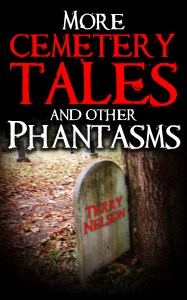
This short story, “A Walk through the Cemetery” appears in one of my e-Books, “More Cemetery Tales and other Phantasms” and is copyrighted, but I offer it for you this weekend.

A piercing shriek roared through the evergreens; loud, hard, and violent, then died as soon as it began. A small branch, high in an evergreen, snapped off from a longer limb and fell to the ground. Leaves fluttered down from nearby maples. Upon hearing the howl a man walking in the cemetery stopped and looked up at the swaying tree tops. A storm coming he thought as he looked at the dark gray clouds swiftly arriving from the east, beginning to blot out the sun.

He walked through the cemetery nearly every day since his retirement. Good for the heart. Build up the legs as well. Mountain View Cemetery took up a few city blocks in length, so it was a good walk from end to end, then a few blocks to the park with a small lake where he once saw a river otter swimming.  There was a dog park farther down from the lake. Also there were sheltered picnic areas, ball fields, and a wading pool. Years ago he attended a memorial service in one of the shelters for a deceased relative. 

He thought about that service when he was walking through the cemetery last week. There appeared to be a celebration going on. A grave had dozens of balloons, the kind you find in grocery stores with writing on them, tied down with rocks. Cars were parked along the back of the cemetery where people were greeting each other like it was a reunion; everybody drinking something from cups, kids eating hot dogs, grownups with chicken in their hands. The man did not know whether to chuckle at a picnic in a cemetery or be impressed that so many came to honor what must be a deceased relative.

Today the cemetery was quiet, nobody in sight. Except for the man sitting on a small John Deere tractor with a large claw that was digging up dirt. As he neared the man he saw that there were two by fours on each side of the rectangular pit. It was a grave, one being made new and fresh for an occupant.

He watched for a minute. Then the man got off the tractor, got a long pole and placed it in the pit at various spots. “Are you measuring to make sure it is all even,” he asked.

The man with the pole said nothing.

“I didn’t mean to bother you. I have never seen a grave dug before that’s all. It’s kind of interesting. Not to you of course. To you it’s work. Do you mind if I watch?”

The man with the pole set it down and climbed back onto the tractor. The claw scooped out more dirt, and then the arm of the claw swiveled around and dropped the dirt into a wagon. After this was done twice the man climbed down once again and did his measuring. He began to stomp down a section of the pit close to where the tractor was.

“I’m guessing it must be close to being done huh?”

The man in the pit said nothing.

“Did you hear that wind screeching a few minutes ago? That was something wasn’t it?”

The man in the pit climbed out, walked to the tractor, opened a knapsack, took out a sandwich, took a bite, then placed the sandwich in a plastic bag, and placed it in the knapsack.  

“Is there some kind of rule about not talking to gravediggers, or whatever you call yourselves? I’m just trying to be civil and thought it interesting what you were doing. Forgive me if I am being out of line, but are you a mute? I’m not trying to be funny here, just wondering why you won’t talk with me.”

The gravedigger, if that was what he was, walked about ten yards to a grave and set upright a small vase that had fallen over. He walked away leaving the man to himself. The man walked over to the grave where the grave digger had set the vase and reading the headstone realized the man resting below was a new arrival, having died a few days ago.

He looked for the gravedigger, but did not see him. The man continued his walk until he was at the entrance. He stopped, though he did not know why. But he did not want to walk to the park. For some reason he wanted to continue to walk here. So he walked, not down his normal path, but on the path that took him along the outer edges, a much longer walk. After about twenty minutes he encountered another man who was raking up some fall leaves.

“Excuse me, but do you work here?”

“Yes, can I help you with something?”

“It’s about a co-worker of yours, the other one here today.”

“I am the only one working today. What man are you talking about?”

“He was over there; you see where the tractor is. He was digging a grave, then got out and looked to be measuring the depth of the grave, I guess anyway, with a pole.”

“And when did this happen?”

“Oh, I don’t know. About half an hour ago, give or take.”

Uh huh. Well I didn’t see him.”

“I did. The tractor is about what, fifty yards or more from here. Maybe you didn’t see him because you’re here working.”

“I wasn’t here half an hour ago. Just came over here a few minutes ago.”

“Well this guy had a knapsack in the tractor and I saw him reach in and get a bite of a sandwich.”

“What kind was it? Ham and cheese?”

“I don’t know what kind?”

“Well what about this guy you’re talking about anyway. What’s the problem?”

“I was watching him and asked some questions about what he was doing. But he would not answer me. I was trying to be friendly and all and he ignored me like I wasn’t even there. Don’t see the reason for him to be rude.”

The man with the rake lost a little color in his face. “What did this man look like?”

“Well he was maybe about fifty or so, not to good with figuring a man’s age you know. But was tanned like he worked outdoors, and his skin was real smooth, kind of aristocratic you might say. Tall and lean.”

The man with the rake shook his head. “Don’t know him, never seen him, don’t want to see him.”

“What is going on here? If you don’t know him, aren’t you worried about him fooling around with your equipment? Was that your sandwich he took a bite from?”

“Look, the next time you see him, just leave him alone. And be grateful he doesn’t talk with you. He is not somebody you want to know and you, for sure, do not want to engage in any conversation with him, about anything.”

“So you do know him then? What’s his story?”

“The truth I told you. I don’t know him, but I know of him. Just let it be, forget about it.”

The man with the rake then dropped it and walked hurriedly away towards an area where the tractor was stored.


Just forget about it he says, thought the old man later as he sat in his home watching a show on TV called “Diggers,” about two men with metal detectors who go to historic sights looking for artifacts. How do you forget something like this? Why was this gravedigger, if that was what he was, being so rude and why did the man with the rake tell me to stay away from the man he has never seen in the first place. None of it made sense.

The old man did not have a restful night. Sleep came in awkward fits, awakened by the sensation of something, maybe a spider crawling up his leg; then later on his other leg. He brushed the sensation or spiders away. The sound of what seemed like somebody standing outside his window scratching softly on the glass. He felt probed and poked. He woke up, but nobody was there. Sounds real or imagined-and if imagined-just as real, for delusions have their own reality, kept him awake. He would not give into sleep. He would remain watchful, vigilant. Finally the sounds, the sensations went away. All was still. His eyes weary, feeling nothing, sleep came whether wanted or not.

He awoke the next morning without any memory of a sleepless night. In fact he felt at peace, rested and refreshed. He was not hungry, but eager for a walk, so he headed out to the cemetery.

The morning was sunny and warm, birds chirping; a late autumn gift to soothe woes, lift spirits, the last chance to enjoy the warmth of the sun before winter brings gray skies, cold weather to chill the bones.

The man enjoyed the walk through the pioneer section of the cemetery, a section thick with evergreens, dirt roads, and tombstones so old that one was tipped askew; facing a tree as if looking into a mirror, the name and dates of the deceased could not be read without bending down and around and then the weathered name was near impossible to make out.

When he came to the columbarium the evergreens gave way to a few maples, but mostly clear spaces with long rows of graves. When he walked from the dirt trail to the paved path he saw the tractor exactly where it was yesterday and standing next to it was the aristocratic man who would not speak with him. He was standing next to an open grave below a canopy, chairs aligned facing the grave.

The man walked up to the tall and lean man and asked, “Do you remember me from yesterday?”

“It wasn’t yesterday, it was a couple of days ago, but of course, I do remember you.”

“You may be younger than me, but I know it was yesterday. I am not senile. Why wouldn’t you talk with me? What’s wrong with you anyway?”

“Don’t let appearances deceive you. I am much older than you. I did not talk with you because there was nothing I had to say to you. I was aware of your questions, but really, it was obvious what I was doing. I really don’t like small talk. I knew you would return and I knew your questions would be answered. I am patient. All things in their time.”

“You’re an odd duck. I talked to your buddy yesterday. He says you don’t work here, that I shouldn’t talk with you. So what are you doing here?”

“Well, ‘my buddy’ as you call him is not my buddy. He is the caretaker here at Mountain View. I am merely the gravedigger. We have separate responsibilities and never see each other. I don’t think he likes me much, not many do I’m afraid.”

“Well if you don’t talk with people you won’t have any friends. Kind of obvious don’t you think?”

“I talk with people when the time is right.”

“I guess the time is right for me because here we are chatting.”

“Yes the time is right.”

“So who died?”

“Look for yourself.” He pointed towards the head of the grave. The man walked over and stood in front of it. He did not know whether to laugh or be mad. He looked to the tall and lean man who was smiling.

“Some joke. What’s the gag? This headstone has my name on it and yet I am here talking with you. Standing right here, standing and talking, and you are listening and talking. We are talking here.”

“Yes we are talking aren’t we?”

“Well then, I’m not dead, I’m alive.”

“Are you?”

“Of course I am you nut. I can’t be dead if I’m talking with you. That caretaker guy said there was something wrong with you, that I should stay away from you and now I know why. You’re going to get into trouble for this. What happens when the mourners arrive and see the name on the headstone?  What then huh?”

“Do you hear anything?”

“What? What do you mean ‘do I hear anything?’ Of course I do. I hear you don’t I?”

“Did you hear the cars arrive? Did you hear the car doors being opened? Do you presently hear any voices besides mine?”

The old man turned and looked. He saw his cousin Pamela first, then Denny, Brad, John, Mindy, all cousins. He saw his children, his grandchildren. He saw friends, acquaintances, business associates. Everyone he saw, he knew. He called to them. They did not answer. He walked up to them and said hello. They did not answer. Frustrated, he walked back to the tall and lean man. “I am not dead. I am standing here. I am wearing cargo pants, a Hawaiian shirt. I am not in a coffin. This is quite a prank, but it’s not funny anymore.”

“You did request, did you not, to be buried in comfortable clothing, saying cargo pants and a Hawaiian shirt?”

The old man thought for a second. “Of course you would know that. It is part of the prank. I told a few people about what I wanted. It is in my lawyer’s file. Of course you would know and be part of all this.”

“But alive you would be wearing shoes. Are you wearing shoes?”

The old man looked down. “I forgot them. I was eager to go for a walk, to see you, to find out what was going on with you yesterday, to question your rudeness.”

“And did you have breakfast. I think not.”

“I wasn’t hungry, that’s all.”

“But you always have breakfast. Don’t you?”

“This is absurd.”

Everyone was seated. Some man he did not know was speaking about the old man. The old man looked at the tall and lean man, and then turned and walked away. He was going to resume his walk. He was going to walk to the park today, to see the lake, maybe the river otter, stop at store for a candy bar. He would not take part in this stupid joke.

As he approached the building housing the tractors he saw the caretaker. He walked up to him, raking leaves as he was yesterday, and said, “That stupid gravedigger talked to me today. You were right. He is somebody you don’t want to talk with, what a nut case.”

The caretaker said nothing.

“Oh for God’s sake. Are you in on this joke too; they get to you. Who is responsible for this anyway? You must know?”

The caretaker said nothing.

“The joke’s over. I’m on to you guys. Very elaborate. Everybody I know is involved, but it’s over. You can tell me, you can talk with me.”

The caretaker said nothing.

“He can’t hear you.” It was the tall and lean man.

“You know I’m going to walk out of here you know. I just am. You can’t stop me. This is not funny.”

“You are free to walk wherever you want to go. It changes nothing. The last time you saw me I would not talk with you because it was not the right time, but the caretaker talked with you didn’t he. You were alive then. But today is your funeral. The caretaker, your family, your friends, all who came, could not see you, nor hear you. Because you are dead you see. I can talk with you now because I am the gravedigger.”

The old man stared at the tall and lean man, and then turned to stare at the caretaker; the old man’s face grimacing, he turned and walked in circles around the two men, pacing quicker and quicker, anger rising within him. He had enough. He stopped and all the frustration, all the anger, all the fed up emotion came out in one loud, bellowing scream.

A piercing shriek roared through the evergreens; loud, hard, and violent, then died as soon as it began. A small branch, high in an evergreen, snapped off from a longer limb and fell to the ground. Leaves fluttered down from nearby maples. Upon hearing the howl a woman walking slowly in the cemetery stopped and looked up at the swaying tree tops. A storm coming she thought as she looked at the dark gray clouds swiftly arriving from the east, beginning to blot out the sun.


Thanks for reading my story. I hope you enjoyed it.

coyotemoon_cemetarybCemetery_Tales_and_other_PhantasmsA-351x597


How I lost my identity through writing fiction.

dugout (1)coyotemoon_silentmurder (1)

It started innocently enough. I was working on character names for my first e-novel, “Loonies in the Dugout” and thought I would use the first names of my father and two uncles for three fictional characters. But I also wanted to use my mother’s name, but this was a baseball novel and there was not going to be that many female characters. So I used my dad’s first name Chet, for the lead character, and my mother’s last name Koski for Chet’s last name. Though I got to honor my mom and dad in one character, I did not anticipate what would happen.

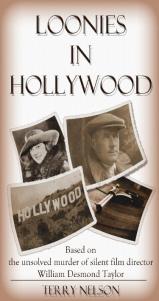
I enjoyed Chet and his girlfriend Eveleen so much I wanted to use them in another story, so I went from 1911 in my first book to 1922 in Hollywood for my second book in which Chet and Eveleen, now married, solve the murder of William Desmond Taylor. I had no problems in this story, but I got confused in book three.

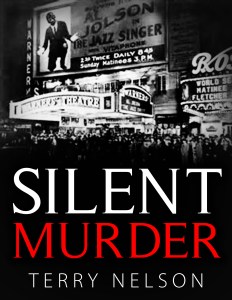
In “Silent Murder,” set in 1927, there is a murder and it turns out the victim was a cousin of Chet. But he had no idea this was his cousin. So the police, naturally, when they find this out and inform Chet, got me into a family tree to sort out some police questions. And I nearly messed it up. Chet’s fictional last name is Finnish, but I was thinking Danish because that is my real father’s heritage. Yes, I realized later that I could have used the Finnish family tree, but the problem is it was too hard to trace for too many reasons to go into here. So I was stuck staying with a Danish tree for a Finnish character. I had to tinker a bit.

This tree was part of the plot-at the beginning of the story anyway. It is always a possibility that this plotline was a red herring. Had I known while writing the first novel that Mr. Koski would continue in two more stories and another now in progress I would have done things differently. As it is, by using my mother’s maiden name, in the third book I dug a pit that addled my brain about two families. After all I am talking about people from the 1800’s whom I never met.

If I had to do it all over again I would have used my real fathers last name and changed his first name, using perhaps Paul (my mother’s name was Pauline). Or even better, use my fathers middle name as his first, so I would have had Alvin Nelson.  Actually I don’t like that name, Paul would be better, except that is also the middle name of another relative, and that only adds more confusion.

I dug myself into a pit and I am stuck with it. Did I learn a lesson? No. I am using the names of two real life cousins who are cousins in my work in progress, but the two cousins in real life from opposite sides of the family and have never met. I don’t care. The territory is familiar to me. Besides I am too confused about my family tree I no longer know who I am. Writing as many pitfalls.

Challenge your creativity with these stolen writing exercises

dugout (1)Loonies_In_Hollywood-375x712coyotemoon_silentmurder

Did the word ‘stolen’ get your attention. Shame on you.

They are not stolen, they are published in John Gardner’s “The Art of Fiction.” If you click on his name you find his Wiki page and a picture of him smoking a pipe. Writer’s back in the day-a long day past-often posed with their pipe. It made them look intellectual. He was that; a Beowulf scholar, professor, and writer. One of his students was the great short story writer, Raymond Carver. Before he died in a motorcycle accident in 1982 I met Mr. Gardner when I was in college.

There were two things I remember from his visit to my college to speak with some of us English Lit majors. First he said “Treasure Island” was something beyond fiction. He tried to explain, then realized he couldn’t explain it. It bothers me to this day. What was he trying to say when he is not sure what he is trying to say. The second is that when I had him sign my copy of his book “Grendel” he said it was his least favorite book, that it was not written well. Yet the book won an award, so there you go, a writer never satisfied with his work. And I respect that.

But he was very engaging and he offered a great writing exercise which I never forgot. He mentions it in the aforementioned book, on fiction, but I will offer some other exercises from the book to challenge your creativity and to make your work better.

For the  exercise to develop technique try this: Describe a landscape as seen by an old woman whose disgusting and detestable old husband has just died. Do not mention the husband or death. Or describe a lake as seen by a young man who has just committed murder. Do not mention murder. Or describe a landscape as seen by a bird. Do not mention the bird. 

To control tone in a complex sentence try this on for size. Write three effective long sentences: each at least 250 words, each involving a different emotion ( anger, pensiveness, sorrow, joy).

There are reasons for the exercises and that is to make your writing better, so get at it.

Thanks John.

Cemetery_Tales_and_other_PhantasmsA-351x597coyotemoon_cemetaryb


The best writing lesson from a six word story

Ernest Hemmingway is know for many memorable novels. I prefer Fitzgerald for Jazz Age writers, but like food, it is a matter of taste. I like cheese, my brother doesn’t. And he claims to be Scandinavian. But Hemmingway’s six word story is food for a writer to digest. It is the best example of flash fiction I can think of.

In my previous blog I wrote about the simplicity of Bukowski’s opening to his novel “Post Office.” Simplicity was the theme in that post and so is this one. Hemmingway wrote, “Baby clothes for sale, never worn.”

My first thought is the story is a tragedy. The baby died. Since the clothes were never worn, did the mother lose the baby, perhaps it was stillborn. But maybe the clothes were blue and the baby was a girl and the parents want pink. I don’t know.

But what writers can learn is that they need not always be descriptive. If a writer goes into the description of the clothes, the type, the color, the why, it could be the writer is clogging the readers mind with unnecessary information. There are things to tell and things not to tell, because the details are not important.

As I said in my Bukowski blog a writer can get in the way of his story. Elmore Leonard is said to have had a rule of never writing about the weather. If true his tongue may have been in his cheek. In my novel in progress that takes place in western Washington during November of 1927, I mention that it is raining in a couple of scenes. I note that it is the thick misty type of rain that so often inundates the area. But I do no belabor the point, not going into great detail, not over doing it. And it is important to place and atmosphere of the story. But the point is, I kept it simple.

When a writer goes over what he wrote he should not fall in love with his words. He should look at how to cut, what to cut. In doing so, in making it simple, in making it clear, the story is front and center, not the vainglorious wordsmith.