Misadventures That Infuriate Writers

Writing is not easy. Sudden unforeseen calamities lurk in the shadows. Consider Shakespeare one morning while putting quill to parchment, writing the famous line, “to be or not to be”, when his cat leaps onto Will’s desk, knocks over the ink bottle, ink flooding over the parchment, blackness blotting out what Will had written. To kill the cat or not kill the cat. That was the question.

Or Dashiell Hammett typing furiously towards the end of a chapter in “The Maltese Falcon.” He is in the writer’s bliss zone, words flowing like water from a faucet. But one of the typewriter keys is heading towards its desired targeted white page, while two keys, on either side of the rising key, are descending, all colliding in a twisted metal pileup, stuck together unable to be pried apart. Words stopped flowing. Hammett’s right fist pounds into the keyboard. Writers hate it when flowing words are turned off.

I doubt writers use quill and ink today, but some old school writers may use an electric typewriter or write on yellow legal paper. I tried the yellow sheets, but I had trouble reading my handwriting. The modern writer can use a computer, laptop, or tablet to write in Word.doc, using spell check, or they can purchase writing apps like Scrivner, Write!, Novlr, or a dozen others. Then Writers have Facebook, X, Instagram, Tik Tok. And writers create their own websites and publish on Kindle Direct.

What can go wrong for the modern writer when everything is easily accessed. Spell checks never miss misspelled words do they. Your cat can’t accidently jump on your keyboard, a paw hitting delete while you are proofreading after all. Computers never have problems do they.

The more things change, the more things remain the same. My cat is sneakily approaching as I type. I have to chase him out.

Charlie Faust, Bat Masterson, George M. Cohan

My first e-book novel was “Loonies in the Dugout.” Yes, it is baseball fiction based on the true story of Chalie Faust. . .wait. . .wait. . .wait. You’re not a baseball fan. That’s okay. You can also read it as a satire on fame and celebrity, or you can read it as a coming-of-age story for the young fictional Chet Koski. It is through his voice we learn about Mr. Faust, a truly odd character. In 1911, members of the New York Giants sent Charlie out to find striped paint. He returned sad and empty handed. That is a fact. As I said, Charlie was odd. Other true-life personalities are famed gunfighter turned sports reporter, Bat Masterson and George M. Cohan, Broadway actor, writer, director, song writer. Chet’s girlfriend is a young chorus girl, who ends up in one of Cohan’s plays. And of course, manager John McGraw and the NY Giants players, including the superstitious Rube Marquad who depends on Charlie to keep Rube’s win streak going. The more I think about it you can also read this as a comic novel. Read it anyway you want. https://www.amazon.com/Loonies-Dugout-Book-1-ebook/dp/B00EEN7YNA

Bookman’s Promise, Lichtenberg, and Me

I am only 74 pages into The Bookman’s Promise by John Dunning, the third book of five in the Cliff Janeway novels and I already know I will buy the other four. The reason is simple. The writing.

In the story Janeway is talking about Richard Burton, the explorer, not the actor. He mentions that after his death, Burton’s wife “torched. . .forty years of unpublished manuscripts, journals, and notes. . .to purify his image.” She did not want anything to taint his image with the Church, though it was a bit late. But that is another story.

Then Janeway says “This is why I am not religious. If and when we do learn the true secret of the universe, some kind of religion will be there to hide it. To cover it up. To persecute and shred, to burn and destroy. They stay in business by keeping us in the Dark Ages. Darkness is what they sell.”

This is strong writing. Comparing what Burton’s wife did to her husband’s unpublished works (bad girl) to a conspiratorial view of religious purpose, and making it short, concise and clear. There need be no elaboration.

This is the joy for me of reading. Not just the craft of writing done well, but learning about Burton, whose published  books, now rare, factor into the story as part of the plot. One should not assume you learn nothing in reading fiction.

Later, Janeway, an ex-cop, now rare bookseller is talking how the computer leveled the playing field in rare book seling. It tells people what books are selling for around the world, but not “how to identify a true first edition of One Hundred Years of Solitude.”

Then Janeway quotes Lichtenberg, German physicist, who said, “A book is a mirror. If an ass peers into it, you can’t expect an apostle to look out.”  A computer, like the mirror, can only do so much. A computer can’t make us experts in rare books, and if both book and mirror are reflective, neither will make us more than we are.

Lichtenberg was also a satirist who said, “I thank the Lord a thousand times for having made me become an atheist.” He gave credit where credit was due.

So this was my joy of reading the first 74 pages of Dunning’s book this Sunday afternoon that I wanted to share. Now back to reading.

life is like a book

This writers struggle to let go of his book

I thought it was just me.

But in The Golden Age of Murder, a book about British mystery writers between the two world wars it was said of Dorothy Sayers that  “. . . as  many authors do, that once she finished a book, she went through a phase of self doubt.”

I don’t know what went through her mind, but consider a writer creates a story, nurtures it, works to improve it, and when finished it is time to let go. Ah, it is the letting go that is the problem.

It is like raising a child and then letting it go out into the world. Your story, your work can be attacked by critics and readers, just as your child can be hated for reasons you can’t fathom. You love your child, you love your book and you hurt a bit when they are attacked. Each book, like each child, is on their own.

Self doubt, fear of letting go is real for many writers, myself included. I finished my latest e-novel months and months ago. I went through extended editing with grammar and punctuation and let it sit, coming to it with fresh eyes for another round of proofreading. How many times should one do this before letting go? I did it 3 or 4 times. Okay, maybe even more.

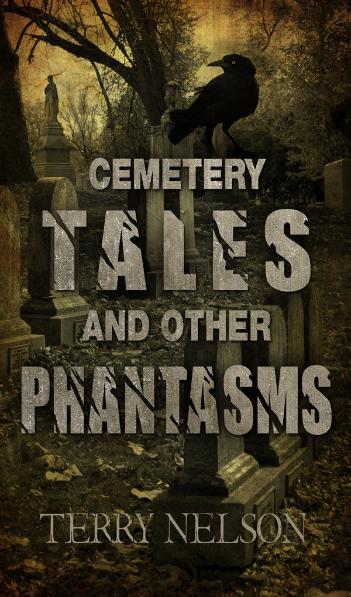
Now I am faced with creating a cover, or having someone else do it and I am also in the process of coming up with a new title. The original title was Head on a Grave, because the story begins with a woman’s head found on a grave. But I have two collections of horror stories, both with graves on the cover. I though another grave cover would be too much. I wanted more variety in my covers. Of course I could retain the title, but what image do I use on the cover?

I have two images from a town where some of the story takes place and I thought I would use that, but I still wanted another title. So I thought of Murder Bleeds out, or Blood will have Blood (from Macbeth), or Murderous Matters. Or perhaps Shadows in the Dark.

You see where I am going right.

I am still in a delay mode, while I ponder a new title, new cover, still having trouble letting go. It does not stop me from working on short stories or starting a new novel. The writing is easy, the letting go is hard.

But I have let go before, two collections of short stories and three e-novels on Amazon, so I can do it. I will get there. I just have to spank myself and get on with it.

What Should Writers Steal?

I was sitting at a desk doing volunteer work for an organization I belong to, and sitting not far away were a group of six or seven middle age-or older-women at a long table holding a monthly meeting. I could not hear anything specific in their discussion, but since they were in my direct line of vision and since they were preoccupied with whatever they were discussing I was an unobtrusive observer.

And I could spy. And I could steal without being noticed.

One of the women had a hairstyle best described as worn-out Brillo pad. She chewed gum with intense fierceness, unlike a cow who enjoys her cud with gourmet bliss. At one point the woman got up and left the building, coming back about six minutes later. I believe she had gone out for a cigarette; she had that ‘air’ about her. And she had, what I assumed, was fresh cud-excuse me-gum in her mouth. She went back to her seat and resumed her chew. A short while later a man and woman came in.

The man wore a bright knit cap, knitted with the colors of the rainbow, plus colors that existed only on the cap, in a horizontal pattern that encircled his head. The man bent over to look in a display case. I noticed a perfect circle a few inches in diameter cut out of the top of the cap. He was bald-at least in that spot. I imagined that if he wore the cap in summer, he might have a cute little tan spot at the top of his head. I didn’t ask him about the strange circle at the top of the cap for I didn’t want to break my observation. A spy can’t make contact with his quarry. You understand right?

The point is not why he had cutout that small circle in his knit cap, nor is the point about what the woman was doing with her gum, but what you can steal from around you. What you can use in describing characters in your story.

When you observe people, what they wear, how they walk, anything that stands out, you make a mental note, or like me, write it down in my small pocket notebook-when nobody you are observing can see you of course. You are the spy, you are the thief, and you must be discreet.

Character traits, odd little tics and quirks, make your characters more believable and identifiable to your readers. When your reader sees the character in their minds they are more involved with your story.

My observations of people I have stolen from and transformed into fictional characters can be found in my e-Books on Amazon. The descriptions of the books can be found in my header.


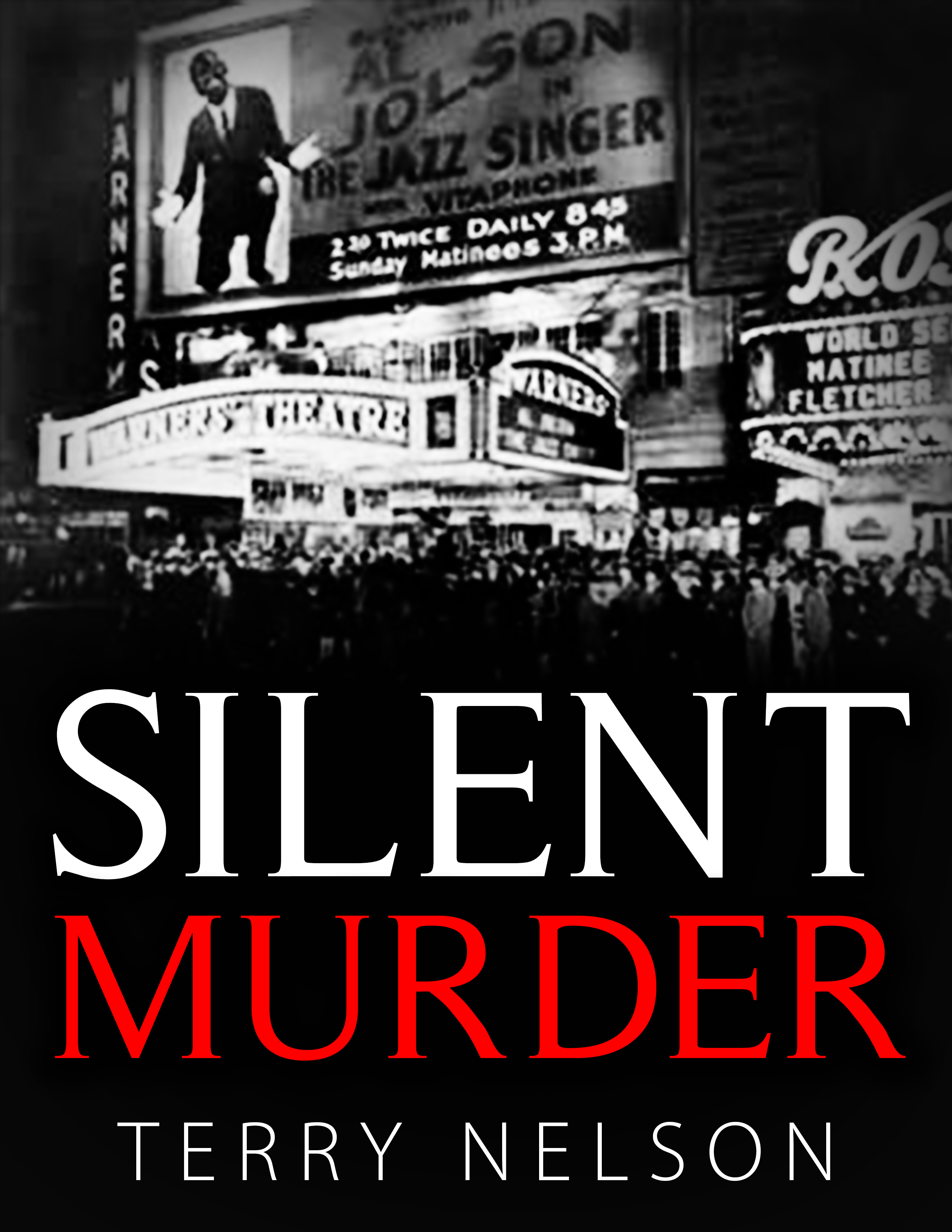
coyotemoon_silentmurder (1)


Why a Writer Should Work Like an Actor

Before I answer the question posed I want to set the scene before two characters talk.
In a short story I am working on, a man is walking down a hallway, stops in front of a door with a security window, punches a code into a keypad, and enters into another hallway.

I do not tell what the facility is, but through describing what the man sees in the hallway, like the color of the walls and what type of pictures or posters are hanging on the wall and using phrases like ‘institutional carpet’ and what he observes by watching people, some of whom are looking at a TV, though few seem to be comprehending, the reader should get the idea that the man is in a nursing home.
The man walks into a room where a woman is sitting and looking out the window. He pulls up a chair and begins to talk. So now we have a setting. And now they must talk.
When faced with a conversation, especially an emotional one and one with a twist, and a conversation that must reveal character, a lot of thought must go into the dialogue.
You must know your character, know how he talks, and know his personality. What you need not know is how the conversation will end. If you choose to think of how it will end and write towards that end that works too. For me, I like to make it up as I go along. Like an improve actor.
If I know my character, then I can imagine the conversation. As I write I know the man is going to reminisce about two things. One is about how happy he was when he got married and the other is the worst day of his life when his two children, home from college, are killed in an auto accident.
So, like an actor, I go with the scene. A writer must get into the character’s head and pretend to be the character. Writing fiction requires you, not to think, but to feel. A good actor feels the words, understands the emotion. Once you feel the emotion of the words, the dialogue flows. It did for me, usually does. And in this moment where the man says more than the woman he is conversing with I come up with something that makes it all work, including the twist.
You see, the man thought he was talking to his wife. The woman said that she was not his wife, that her children were not dead. She made short interjections, then asked him to call a nurse; three of four times she would break in and ask for the nurse.
When the nurse does come she sees the man and an empty chair.
The man was not in the right room, his wife is dead, the woman who lives in the room was watching TV in the activity area, and the man had dementia.
But you never say what the facility is. You never give the background like a reporter giving news. You reveal through descriptive imagery and through dialogue, imagining you are an actor, not on the stage, but on the page.
Finished imaginings of mine are found at the top of my web page and the e-books are available on Amazon.
Thanks for reading.

What should a writer pretend to be when writing dialogue?

Before I answer the question posed I want to set the scene before two characters talk.

In a short story I am working on, a man is walking down a hallway, stops in front of a door with a security window, punches a code into a keypad, and enters into another hallway.

I do not tell what the facility is, but through describing what the man sees in the hallway, like the color of the walls and what type of pictures or posters are hanging on the wall and using phrases like ‘institutional carpet’ and what he observes by watching people, some of whom are looking at a TV, though few seem to be comprehending, the reader should get the idea that the man is in a nursing home.

The man walks into a room where a woman is sitting and looking out the window. He pulls up a chair and begins to talk. So now we have  a setting. And now they must talk.

When faced with a conversation, especially an emotional one and one with a twist, and a conversation that must reveal character , a lot of thought must go into the dialogue.

You must know your character, know how he talks, and know his personality. What you need not know is how the conversation will end. If you chose to think of how it will end and write towards that end that works too. For me, I like to make it up as I go along. Like an improve actor.

If I know my character, then I can imagine the conversation. As I write I know the man is going to reminisce about two things. One will is about how happy he was when he got married and the other is the worst day of his life when his two children, home from college, are killed in an auto accident.

So, like an actor, I go with the scene. A writer must get into the character’s head and pretend to be the character. Writing fiction requires you, not to think, but to feel. A good actor feels the words, understands the emotion. Once you feel the emotion of the words, the dialogue flows. It did for me, usually does. And in this moment where the man says more than the woman he is conversing with I come up with something that makes it all work, including the twist.

You see, the man thought he was talking to his wife. The woman said that she was not his wife, that her children were not dead. She made short interjections, then asked him to call a nurse, three of four times she would break in and ask for the nurse.

When the nurse does come she sees the man and an empty chair.

The man was not in the right room, his wife is dead, the woman who lives in the room was watching TV in the activity area, and the man had dementia.

But you never say what the facility is. You never give the background like a reporter giving news. You reveal through descriptive imagery and through dialogue, imagining you are an actor, not on the stage, but on the page.

Finished imaginings of mine are found at the top of my web page and the e-books are available on Amazon.

Thanks for reading.

I raise the curtain behind a writers madness in writing a sentence

Writing is rewriting. The following is based on a short story I am starting. I thought it might be fun and instructional to show what goes through a writers mind as he/she tries to get a sentence and paragraph.  So let’s peek into my madness.


THEY COULDN’T GET OUT, THOUGH SOME COULD GET IN.

I know who ‘they’ are, the reader doesn’t. ‘They’ could be humans, or ‘they’ could be animals. The sentence needs clarity.

THE PEOPLE INSIDE COULDN’T GET OUT, THOUGH PEOPLE OUTSIDE THE DOOR COULD GET IN.

More specific, yet dull.

A CODE ON THE DOOR WAS NEEDED TO GET IN. THREE NUMBERS TO PUSH, THEN A CLICK WAS HEARD, THEN ONE PUSHED THE DOOR OPEN, LOOKING THROUGH THE WINDOW TO MAKE SURE SOMEONE INSIDE COULDN’T GET OUT, OR RATHER SHOULDN’T GET OUT.

Better, but awkward, does not say how the code is used. Does someone say “Alexa, please open door” or say three numbers, or are buttons pushed on a security pad. Also grammar is bad.

A MAN WALKED DOWN THE CARPETED HALLWAY, THE WALLS HUNG WITH INOFFENSIVE CHEERFUL POSTERS LEADING TO THE DOOR.

Problem is the walls are not hung, the posters (framed-should have used framed posters) are hung, and that is not what leads to the door.

A MAN WALKED DOWN THE INSTITUTIONAL CARPETED HALLWAY TOWARDS A THICK METAL DOOR WHICH HAD A REINFORCED WINDOW. FEW USED THIS HALLWAY, ONLY VISITORS AND STAFF AND THERE WAS ALWAYS MORE STAFF INSIDE THAN VISTORS. NEXT TO THE DOOR WAS A SECURITY PAD. THE MAN PUSHED THREE BUTTONS ON THE PAD, HEARD THE CLICK OF THE DOOR, BUT BEFORE PUSHING THE DOOR OPEN, THE MAN BRIEFLY PAUSED TO LOOK THROUGH THE WINDOW IN THE DOOR TO MAKE SURE IT WAS SAFE TO OPEN. THERE WERE PEOPLE WAITING TO GET OUT AND THEY MUST REMAIN. IT WAS CLEAR.

I like this. I used institutional carpeted to give the reader a hint of the type of building. I used ‘few used this hallway’ to make the reader wonder why (part of the hook if you will). And for the same reason wrote ‘more staff than visitors’ so that the reader will wonder what kind of place has more staff than visitors along with ‘few used this hallway.” The hallway and the building I hope arouse the reader’s curiosity. Then we have some action the man ‘pushed,’ ‘heard,’ and ‘paused.’ And finish with people inside must remain. And why.

If your first reaction is this is a jail, it is not. My intent is to describe what is inside the door through the actions or inactions of the people inside, doing so without telling you what the building is, but by describing what is going on it will become clear to the reader. Always better to show, not tell. I am not sure I am done with the opening paragraph. But it is time to move on to the second, to move forward, then go through it all over again.

 
The point for writers is to just write a simple sentence no matter how bad it looks, and then expand. Just starting gets the creative juices going. It may be slow for a bit, but then it picks up and you get on a roll. And as every writer knows, that is when magic happens.

My e-books are found on Amazon.

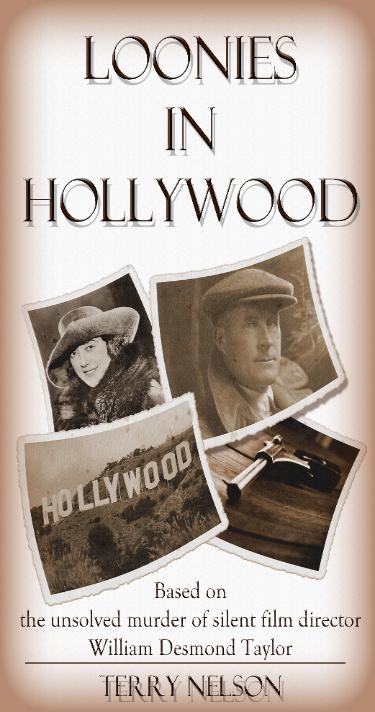
Loonies_In_Hollywood-375x712coyotemoon_silentmurder (1)

THE DAY I MET A 1911 BASEBALL STAR

You know you are getting old when you can tell people you met a pitching star whose rookie season was 1911. That was over a century ago.

 
I’m not a time traveler, I did not meet him in 1911; but at my age when reflecting on early parts of my life it sometimes seems I am traveling through time. The present is a totally different world from the late 1950’s.

 
I was probably in grade school. My father had been a pitcher in his youth, playing in an industrial league where I grew up. He gave that up when he decided to marry and have a family.

 
One of the umpires in the industrial league was a former major league pitcher who had an eatery in downtown Hoquiam, Washington, where I grew up. He told my dad-this is dad’s story- that this umpire told him he was good enough to pitch in the Pacific Coast League.

 
Who Knows?

 
But my dad took me to the eatery and introduced me to Vean Gregg, a pitcher who had a Hall of Fame start to his career until his arm went bad. In his rookie year of 1911 with the Cleveland Indians he was 23-7 with a league leading 1.80 ERA. Had there been a Rookie of the Year award he would have won.

 
The next two years he was 20-13 both seasons with ERA’s of 2.59 and 2.54. Then arm woes. He was 9-3 in 1914 before being traded to the Red Sox where he went 4-4. He was with Boston through 1916, then the Philadelphia A’s in 1918 and a final fling with Washington in 1925. His career record was 92-63 with a 2.70 ERA.

 
I remember sitting on a lunch counter stool and looking at Gregg as my father introduced me. I recall Gregg had nice smile and I have this image of the three of us going to a back room where I got to see some memorabilia.

 
He played on the same team as Shoeless Joe Jackson, one of the great hitters of the game. He was also a teammate of Hall of Famer Napoleon Lajoie. Gregg also played with the only player to be killed by a pitched ball, Ray Chapman.

 
And oh, yes, when he was traded to Boston he was on the same staff with a 19 year old pitcher named Babe Ruth. I wish I could recall every word of the conversation. Did I ask him what it was like to pitch to Ty Cobb? I remember images, not the words of the conversation. Knowing what I now know of baseball history I wish I could have that conversation again.

 
But at least I have the memory of meeting Vean Gregg, a star pitcher for three great seasons. That is what baseball can do. Give you memories that link to a bygone era. Sort of like being a time traveler.


And this memoir about Vean Gregg is what led me to be a writer. In researching and studying the 1911 baseball season I remembered the story of Charlie Faust and in researching Charlie I decided to write a fictional account of his brief time with the New York Giants. And because I liked two fictional characters I created for the Faust story I continued with them in two more novels with another finished, waiting publication, and another in the early stages of writing.


Every writer has a journey. This is how mine began.


Charlie’s story and the continuing adventures of Chat and Eveleen are e-books that are on Amazon.

dugout (1)


Author Paul Auster; what writing is and who writers are, part one

One of my favorite writers-and I have many-is Paul Auster and in his novel Brooklyn Follies the following passage considers what writing is and who writers are:

“Take a close look at the lives of poets and novelists, and what you wound up with was unalloyed chaos, an infinite jumble of exceptions. That was because writing was a disease, Tom continued, what you might call an infection or influenza of the spirit, and therefore it could strike anyone at any time. The young and old, the strong and the weak, the drunk and the sober, the sane and the insane. Scan the roster of the giants and semi-giants, and you would discover writers who embraced every sexual proclivity, every political bent, and every human attribute-from the loftiest idealism to the most insidious corruption. They were criminals and lawyers, spies and doctors, soldiers and spinsters, travelers and shut-ins. If no one could be excluded, and what prevented an almost sixty-year-old ex-life insurance agent from joining their ranks? What law declared that Nathan Glass had not been infected by the disease?”

Writing was always something I wanted to do, but early rejection dissuaded me. Later in life when the regrets of unfinished desires in life weighed heavily on my spirit, I became infected with a ravenous hunger to finish what I started.

I had doubts, I had fears, and like Nathan Glass, felt I was too old. The doubts and fears, however, were no match for the fear of not writing, of not moving forward, of having that monstrous ogre of life regrets go unquenched.

I have written two collection of horror/twilight zone type of e-short stories and three e-novels and a fourth to be published soon. Success does not matter, movie deals do not matter, for feeding this wonderful infection is life giving.

If you feel you are infected, do not wait. Start writing.

Loonies_In_Hollywood-375x712coyotemoon_silentmurder (1)Cemetery_Tales_and_other_PhantasmsA-351x597