Hey Kindle Readers-Want A Free e-Book

I was going to enter Writers Digest contest for self published e-Books, but there was a $110 entry fee. What?

No thanks.

But I do have the code for the free gift, so the first person who wants the free e-Book gets it. If you have a Kindle or Kindle app (free from Amazon) just write your email address in comments so I can send you the book. I will not allow email addresses to be seen publically as I will not approve comments, thus they should not be shown.

The e-Book is Loonies in the Dugout. Click above on title for synopsis. It has 2 four star reviews. Based on a true story about Charlie Faust and the 1911 New York Giants baseball team, the book is a satire on fame and celebrity and works as both baseball fiction and literary fiction.

dugout (1)


Are These 10 Novels The Best In History-You Decide

I picked up  “The Novel 100” by Daniel S. Burt published in 2004 at a sale. I mention the date because there is a 2010 revised edition and I have not seen it, so I must stick with his 2004 list. He ranks the greatest 100 novels of all time. Like any writer of a list written by someone with integrity, Burt has the good sense to invite disagreement, going as far to say in his introduction ” If you disagree violently with some of my choices, I shall be pleased.” I advise to not get violent.

I am not going to list all 100, but stick to his top ten and give my thoughts along the way.

  1. Don Quixote by Miguel de Cervantes. Burt claims it is the second best-selling book in history. Flaubert wrote in 1852 that “What is prodigious about Don Quixote is the absence of art. . .” Flaubert is a bit enamored here. Cervantes clearly has written an artistic book. Flaubert’s comments reminds me of the novelist and Beowulf scholar, John Gardner  who told our college English class that Treasure Island (not on top 100, but Honorable Mention) was not fiction, but something  else entirely, though he could not articulate exactly what he meant. I read Don Quixote decades ago and have forgotten most of it. Certainly deserves top 100, but . . Free Kindle edition here.
  2. War and Peace by Leo Tolstoy. I recall seeing a hardback edition in my home when growing up. I don’t think anyone in the household had read it. It was thick and intimidating for me, so I stuck to The Hardy Boys.  There is a free Kindle edition here. I just clicked the fun button, so will put it in my reading list, but there are 296 books ahead of it. Must do some weeding soon.
  3. Ulysses by James Joyce. A formerly banned book makes the list. I have a vague memory of either reading a few pages of it in College or actually trying to read it, can’t recall which, but once again a free Kindle edition. It is, I am told, a difficult read, but I believe I can handle it having much reading experience since college. While it has received much praise, D.H. Lawrence, H.G. Wells, and Virginia Woolf thought the book essentially garbage. So it must be good, being controversial and all.
  4. In Search of Lost Time by Marcel Proust. This is now the preferred title to Remembrances of Things Past., at least according to Burt. I had no idea until now, so am at a loss to know who made this decision. Keep in mind it is seven volumes. Should make good winter reading. If you begin reading this after Ulysses you are a brave soul as you risk mind and memory. A 99 cent Kindle edition is worth a try
  5. The Brothers Karamazov by Fyodor Dostoevsky. Another book I have not read and the second Russian to make the list. Sigmund Freud said the book is ” the most significant novel ever written.” If you trust Freud then a free illustrated Kindle edition with one click.  I love clicking for free books, especially classics, and I have some catching up to do. I have read Crime and Punishment though, so I get some points.
  6. Moby Dick by Herman Melville. Time for a bit of a rant. I tried twice to read this book and both times got to a long non-fictional account of whaling that broke up the narrative flow, and I grew bored, then irritated, then gave up. A not needed sidebar and Melville, I believe, was getting paid by the word. Aha! I loved Melville’s short story Bartelby, but I guess I am not into whaling. But Amazon does offer a free Kindle edition.
  7. Madame Bovary by Gustave Flaubert. I read this, like Don Quixote, decades ago. I would like to read it again because I recall nothing. Burt said the book has elements that make it perhaps the first “modern novel”  but I think I read it because I heard there were some sex scenes. Were there? Or was that in the movie? No matter. If I read it again it will be for literary value. If there are some sex scenes, so much the better. Literary Free Kindle Edition.
  8. Middlemarch by George Eliot. For those who do not know this was the pen name for Mary Ann Evans. Full disclosure, I have not read the book. Most people prefer two of her other novels Adam Bede or The Mill on the Floss, neither of which I have read. I have read Jane Austen and the Bronte’s in College, so considering my now growing list of unread novels, Eliot will not get into my reading list. Nothing personal mind you. Could not find free book, but there is an illustrated Kindle for 99 cents.
  9. Magic Mountain by Thomas Mann. I have read other works by Mann, but not Magic Mountain. Once again I can not offer my opinion, not that it would matter anyway. Burt says, ” it “is the great philosophical novel of the 20th century.” I found a study guide for the book, but no Kindle edition. Don’t know why.
  10. The Tale of the Genji by Murasaki Shikibu. This is the most interesting and intriguing book on the list. In western tradition the novel is traced back to Don Quixote in the 16th century, but Tale of the Genji was written in China in the 11th century. It was written by a woman, one that little is known about, but according to Burt, “With its realistic social setting, individualized characters, and psychological richness, the Genji is deservedly considered unprecedented and the first great novel. I could not find a free edition despite it written a millennium ago and while there are Kindle versions ranging up to 20.99 their is a 99 cent Kindle edition. If this book is everything they say it is, it moves up the line in my reading bin.

Of the top ten I have read only two books, failed at one (Moby Dick) and tasted a bit of few others. Not good for a Bachelor of Arts in English Literature. But I have read 32 of the top 100. That makes me a .320 hitter, pretty good for baseball.

None of my following books made a any list, but did get some good reviews.

dugout (1)coyotemoon_silentmurder (1)Cemetery_Tales_and_other_PhantasmsA-351x597coyotemoon_cemetarybLoonies_In_Hollywood-375x712


WARNING: Writers Eyes Only Should View These Links

If you notice the links below you will find information on Facebook ads, critique groups, stressed out writers, how to sell books, how not to sell books, 25 great writing tips, and blogging tips. This and much more you can find on Anne R. Allen’s blog with Ruth Harris. Having subscribed for years I can attest to the useful information I have gotten, some of which goes against common perceptions, but common perceptions are often wrong, which is another reason to follow their blog. It does not always agree with beliefs, too often regurgitated without anyone saying, “Hold on here. Does this really make sense?”

Facebook Ads that work

Disappearing Amazon reviews

Beware Groupthink-About choosing a critique group

Important for depressed, stressed and anxious writers

Speed Kills or Does it

How Do I Sell My Book

How Not To Sell Books

25 Must Read Tips

6 Tips for getting More Traffic to Your Blog

Blogging Authors, Ignore the Rules

Loonies_In_Hollywood-375x712dugout (1)coyotemoon_silentmurder (1)Cemetery_Tales_and_other_PhantasmsA-351x597coyotemoon_cemetaryb


Who Was Dr. John Yeoman And What He Did For Writers ?

I subscribed to Dr. John Yeoman’s blog on writing for years. He died last month and I felt it time to share not only who he was, but some of his helpful blogs and his e-novels. Not only was John’s blogs helpful, written very conversational, but often with humor, and certainly intelligence.

First who he was can be found here 

Now a dozen of my favorite Dr. Yeoman blogs:

How To Shape Great Stories With Word Games

How to Plot A Story (Even If Plotting Scares You Silly)

7 Great Ways To Close A Story (and How Famous Authors Did It)

Do You Make These Six Big Mistakes With Your Writing Blog

How To Cope With Bad Feedback On Your Work

Nine Big Lies That Agents Tell You

Could This ‘Magic’ Trick Rescue Your Story

How To Sell 100,000 novels Without (Really) Trying

Three Ways (Not) To Kill Your Story In Its Cradle

Top Ten Tips For Promoting Your Book-From A Dog

How To Write A Kindle Best Seller

Five Top Tips For Being a Happy Writer

And he practiced what he preached and taught. Here is his Amazon Page. I have read “The Cunning Man” and “The Hog Lane Murders” and they are great for new writers for you can read the e-novel like you read any book, but is also has footnote markers. When you click a footnote number he shows the why and how he wrote that scene and you can learn from seeing what he is doing. Great writing tool.

Thanks John!

dugout (1)coyotemoon_silentmurdercoyotemoon_cemetaryb

Why you must have a to do list

There is always tomorrow.  I don’t have time today (I do, I just don’t want to be bothered with this, not right now. I have more fun things to do).

 I am guilty of procrastination, of doing what I want today, not what I have to do. And I am guessing many of you are as well. It is so easy to put it off until tomorrow.

The problem of course is that there is always a tomorrow and putting off small things (what you think are small) pile up. And the pile is not the problem. That’s right, that now towering pile of things you meant to get to, but saved for tomorrow, is not the problem.

The problem is the unforeseen; a major event that suddenly strikes like lightning, but unlike lightning is not momentary, but stays, consuming your time.  Maybe a loved one’s illness, maybe urgent needs from your child, and now you find yourself being more of a care giver. Or maybe it is something that happens to you and your health.

It does not have to be health related. Maybe you got fired, maybe you have to move. Perhaps a divorce. There are a myriad of unseen catastrophic events that can and will find you at some time in your life. Then you are buried under an avalanche of those ‘small things’ and it is hard to catch up.

If you have a pile of tomorrows, then get it done now. Clear your chore list while you have the time because tomorrow you may not have that time. Also you will feel better for accomplishing things, even if they were not so important.

Find the ones easiest to do or won’t take much time. Make a To Do List and work through it checking off each item on the list when it is finished.

This is especially true for writers as finding time for writing is precious time and with a completed list, or a downsized list, you find more time for writing. And if you are a writer, write first, small things later, but later today.

dugout (1)Cemetery_Tales_and_other_PhantasmsA-351x597coyotemoon_silentmurder

Yearly Writing Goal 1,200,000 words!! Who can do this?

There is no way I could write 1,200,000 words a year, but according to Wikipedia, the author of the best selling Perry Mason mystery novels, Erle Stanley Gardner, 1889-1970, in his early days writing for pulp magazines had a goal of just that, 1,200,000 words a year.

TIME OUT.

Lets do some math. Feel free to double check as math is not my strong suit. Let us start with 360 writing days, taking off for Thanksgiving, Christmas, Mother’s Day, and two flex days. Dividing words by days I get 3,333 words per day. Assuming a 10-hour day that is 333 words per hour. I wonder if he kept a running total at his desk. Did he fall behind and do an extra few hours each day to catch up. There is no way he could do that today with Social Media and the Internet to distract him. Oh what a cut cat video!

Okay I can see 333 words an hour, but doing so ten hours a day, 360 days a year is obsessive compulsive; in other words, just plain nuts.

On the other hand, when Gardner started writing pulp fiction stories he would get three cents a word. If he wrote 1,200,000 words that comes out $36,000 a year which in those days was big money.

Now keep in mind Gardner wrote 82 Perry Mason novels as well as a series about a private detective agency Cool and Lam, another series about District Attorney Doug Selby, and used pseudonyms like AA Fair, Carleton Kendrake, Charles J Kenny, and  Charles M Green. He also wrote at least 205 short stories mostly for pulp fiction magazines, and in his spare time wrote non-fiction travel books.

According to Goodreads Gardner has 344 books listed. Were they counting reissues? I did not count them, and have no plans to do so as that would take up time needed to meet my writing goals; just short of 1,000,000 words. That’s for the next 10 years, fifteen if I take off holidays, Mondays and cat videos. If he did indeed write 344 books as well as short stories then perhaps he did reach his stated goal of 1,200,000.

I had hoped that reading about Gardner’s words goal I would get inspired to write more, to get me a kick in the pants. But the more I think of those ten hour days, I am already tired. I need a nap.

dugout (1)coyotemoon_silentmurder (1)coyotemoon_cemetaryb


CAN YOU FETCH A FETCHING

This post was posted from a previous incarnation of my writing blog.

Of late, since I seem to have nothing better to do, I became immersed  in the odd relationship between fetch and fetching.

I associate the word ‘fetch’ with dogs. When playing catch with a dog and a stick or ball is thrown the owner yells, “Go fetch!” I have heard this phrase many times, though in truth the dog knows to go fetch; he or she does not have to be told. They love to fetch.

I am also aware that ‘fetch’ can imply what something costs, though this is a somewhat archaic usage. I have not heard, “It fetched a good price” in a long time. So let us stick to ‘fetch’ defined as retrieving, to grab, seize, catch, and so on.

Okay, now we come to the word fetching. It means charming, enchanting, alluring, captivating, and is most used in describing a woman, or at least it once was, as in “She has a fetching appearance.” It was once a way of saying, “Man she’s hot!” And that phrase once meant something else. But anyway, how do we get from a dog fetching to a comely woman? How do we associate a dog with a cute woman? 

I know chauvinistic men would like a woman to fetch them a beer on demand, but that is not me. I can fetch my own thank you.

Was there something sinister behind the similarity of the two words, some wordsmith conspiracy to layer an insult to women, that they were dogs?  I had to uncover the truth.

I went to a well known establishment that provides  haircuts, or styling if you will, to men; the establishment, a national one that has fetching young ladies that cut your hair, a cut that fetch’s a good price mind you. I posed the question to the young woman cutting my hair about fetch and fetching. Leave it to a woman to figure it out.

She cut to the heart of the matter with the quickness of the snip of a scissor. “Fetch means the woman is worth fetching.”

I had to laugh, though I felt like a dog for thinking there was some conspiracy. I must refrain from saying a terrible pun like offering a beautiful diamond ring will fetch the woman.  That would be improper. Because you see, it is the woman tossing the ball or stick and the man, the dog that he is, will fetch it. And that is because the woman is so fetching the man can not resist.

If you would like to fetch on of my e-books, you can grab one here.

dugout (1)Loonies_In_Hollywood-375x712coyotemoon_silentmurderCemetery_Tales_and_other_PhantasmsA-351x597coyotemoon_silentmurder

WHY THINKING IS BAD FOR WRITERS

The following is reposted from a previous incarnation of my writing blog “The quill, the e-word, the looniness.”

Thinking is not good for writers. Thinking means analyzing what you are doing, dissecting your sentence, your paragraph, your page. Is everything you want to say there? Is it said the correct way? And are you following all the rules those creative books say you should do? Does doing this numb the mind? If you want to improve your writing, then stop thinking and just write. And here is why.

In his book “Zen in the Art of Writing” Ray Bradbury says,  “. . . the more swiftly you write, the more honest you are. In hesitation is thought. In delay comes the effort for a style; instead of leaping upon truth which is the only style worth deadfalling or tiger-trapping.”

I don’t know what Bradbury means by ‘deadfalling or ‘tiger-trapping’, but I understand what he is talking about.

Style can not be calculated. Style is how you write and that reflects who you are; a writers style comes out of his being. Don’t be who you are not. It is impossible for me to write a tragedy, a serious drama, a heart warming love story, or an inspiring story. The reason is that my sense of humor, good or bad, always finds its way into the story. I can’t help myself. That is why the titles of my first two e-novels begins with the word “‘Loonies.” It is part of my world view that there is something loony about humanity, with how we think, our actions, and so on. Whether we recognize it or not we are kind of funny in a weird way.

So I write without thinking. I write with what is coming out of my head, entering my characters mouths’ giving me the opportunity to blame them for their actions or inactions. Consider these two phrases; “He who hesitates is lost?” and “To thine own self be true?” They apply to writing. Don’t think, just let you mind flow and be who you are. I write what I write in the way I write because that is who I am. It will work for you as well. So go trap a tiger.

dugout (1)Loonies_In_Hollywood-375x712coyotemoon_silentmurder (1)


Amazon could ban Hamlet ad for holding one thing

In order to get along we abide by certain standards like ‘Thou shalt not kill,’ and if you don’t abide you go to prison or death row. There will be repercussions after all for those of you refusing to abide by the rules. And, for better or worse, we live in a politically correct society, one in which people are easily offended-and we don’t want that do we. So organizations and businesses create standards to live by, hoping people will not get offended.

Amazon has standards for us writers who publish e-books on their site and they are entitled to do so. I’m sure they review their policies from time to time, but it is interesting to read what they will allow and what they will not.

Example:  Unacceptable books • Books glorifying or promoting the use of illicit drugs, drug paraphernalia or products to beat drug tests • Books with content that is obscene, defamatory, libelous, illegal, invasive of another’s privacy, or contains hate speech • Books with content that is threatening, abusive, harassing, or that discriminate or advocate against a protected group, whether based on race, color, national origin, religion, disability, sex, sexual orientation, disability, age or any other category.

No complaints from this corner. But let us move on to advertising on Amazon, what you can or can’t do.

Examples: Unacceptable ad content • Books with overtly religious or spiritual content • Books that advocate a specific political ideology, advocate for or against a specific political issue, or promote a specific candidate. Objective, educational or historical political content may be accepted • Foul, vulgar, or obscene language, including censored words that indicate foul, vulgar, or obscene language • Images of human or animal abuse, mistreatment, or distress • Images or titles glorifying or promoting the use of illicit drugs, drug paraphernalia or products to beat drug tests • Images or titles that are obscene, defamatory, libelous, illegal, invasive of another’s privacy, or contain hate speech • Images or titles that may be interpreted as threatening, abusive, harassing, or that discriminate or advocate against a protected group, whether based on race, color, national origin, religion, disability, sex, sexual orientation, disability, age or any other category. • Provocative imagery such as blatantly sexual prurient poses or poses that may be suggestive of sexual behavior, including partial nudity, excessive cleavage, or models in lingerie, underwear, or swimwear • Violent or disturbing images or titles. This includes excessive blood, injuries, mutilations, guts, corpses, and weapons being used in a violent or threatening manner.  

Keep in mind this is about ad content and ads should be somewhat clean and respectable. But for me, it seems almost puritanical to ban ‘models in lingerie, underwear or swimwear.’ If people get upset by a woman in a swimsuit, or for that matter, a man in a swimsuit, it says something about that person, something along the lines of unhealthy repression, and though I could go into more details, I may be banned for offending repressive Puritans.

And if people wanted to press the issue they can find something in all those no-no’s in books or cover art; it all depends on how picky they want to be because reading what Amazon says is unacceptable could be everything if you look closely enough.

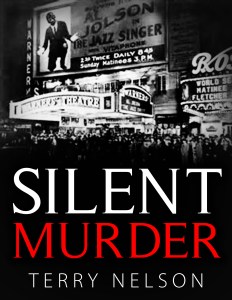
But it is not a battle worth fighting; none of the ads I created had anything offensive except for the cover of Silent Murder, the knife on the one cover is acceptable on my Amazon page, but is not acceptable in advertising. While it appears to be a double standard, perhaps hypocritical, at the same time both Amazon and myself win.

coyotemoon_silentmurdercoyotemoon_silentmurder (1)

I can see their point in much of what I read in Amazon’s policies that they sent me and other writers. I may not agree with everything as I think they have gone to the extreme a bit on some things. For example my favorite No-No that actually got me to chuckle was the following: Skulls and bones. We do not accept images of realistic skulls that may frighten or upset customers. We do not accept images of skulls or bones that appear in or around a grave, or as an exhumed body.

A skull? Really where does it end.

So Hamlet holding the skull in the graveyard in which Hamlet says, “Alas, poor Yorick, I knew him well Horatio . . .” is now forbidden as an ad image. 

Some things are just ridiculous. 

dugout (1)Loonies_In_Hollywood-375x712


My lustful disease for books now has a name

In my July 6th post I told how I was buried under an avalanche of books, that my purchasing was outgaining my reading by 234 books. Five days later I shared what I purchased at a recent book sale and wondered what disease I had. I was not a compulsive buyer of books, though it seems that way, but I am not. Honest.

What I discovered subsequent to that post is that a bibliophile is  a lover of books. However, a bibliophile can quench his lust in a library without buying books. No what I am is a book collector. Some people bring home stray cats and give them a home. When you consider the cost of a litter box, bowls for food and water, shots, cat food and assorted accoutrements, you are better off bringing home stray books and give them a warm home.  

Years ago I read Bernard Malamud’s “The Natural” and that book has disappeared. It may have been a runaway. I hope it has found a nice home. But I now have two copies. One is a small 1952 Dell paperback purchased because of the cover, a painting by Bill George, on the left, and a 1966 edition from Time Life, cover art by Karl Stucklin on the right, purchased because of an introduction by Robert Angell, Hall of Fame baseball writer. 

DSCF0392DSCF0393

I collect fiction, non-fiction, whatever captures my eye and my lust.

In the book “The Man who Loved Books Two Much”  by Allison Hoover Bartlett, Walter Benjamin is quoted, “Ownership is the most intimate relationship that one can have to objects. Not that they come alive in him; it is he who comes alive in them.” I must admit when purchasing books I get a bit of a high, that coming alive feeling. I love reading the copyright page where you find what edition the book is, which printing it is. I love reading the first paragraph, flipping through the pages, and of course, the cover art.

Other books about the insanity are:

A Gentle Madness by Nicholas Basbanes

To Have and To Hold by Philipp Blom

Anatomy of Bibliomania by Holbrook Jackson

Collecting: An Unruly Passion by Werner Muensterberger

If there is a cure, I don’t want to know about it. I am content.

dugout (1)Loonies_In_Hollywood-375x712coyotemoon_silentmurderCemetery_Tales_and_other_PhantasmsA-351x597coyotemoon_cemetaryb