The truth about e-book misspellings with Amazon

If you read customer reviews on Amazon about an e-book, then like me, you have run across reviews where people complain about bad grammar and misspellings. It gives me pause, and I hesitate to hit the click button. I read samples from one star through four or five stars to get a balance. Some reviews never mention any problems.

What is alarming is that recently I read about misspellings in e-books from two well known and best selling authors. How did this happen?

Some time ago I mentioned that I had a good review of one my e-books, but the reviewer complained about misspellings. I checked through my copy, even going as far as going to my formatter and doing a second spell check, found nothing, and resubmitted to Amazon. I also checked with Amazon before doing this, telling about the problem. They checked and this was there response:

I checked and confirmed that there were 4 potential typo errors found by our spellcheck tool, but no grammatical or other errors were found.

Here are the ones:

booklegger: location 1425
jimjam: location 28
melo: location 2343
xxxxxx: location 2709

I understand that the above mentioned errors may actually be contextually accurate so no action would be required to correct them which is why the tool also gives the option to ignore them. As we were unable to locate any other errors, we suggest checking with the customer who posted the review, to confirm what errors they were able to view on their end. You can leave a comment on their review for your title asking them to check with our Kindle customer support. It’s possible the issue is with their device or reading app that some spacing or other formatting errors may appear. (italics mine)

We’ll be happy to help them out. Rest assured, we’ve not received any complaints regarding the content of the eBook from any customers that we could confirm were present. We would’ve certainly notified you of the same since we strive to maintain very high standards for content published through our platform.

I don’t know if there is a problem with your Kindle, though if you have not experienced this problem on other books, I guess we chalk it up to digital gremlins. It just might be something unexplainable. (italics mine).”

The four exceptions Amazon found were intended. 

Amazon suggested problem with the readers app, then later said it was digital gremlins. Another possibility encountered by another writer was the discovery that Word was undoing corrections in his manuscript. he would correct, and later in rereading that mistake had returned. this has also happened to me, the why this happens is unknown. maybe the digital gremlin. It is also true that some writers can’t spell, have poor grammar, and thus you encounter a bad experience.

But, when it happens to authors like Lisa Alther, Dean Koontz, Ann Rynd, among others, it might be attributed to sloppy work by the publisher, or those gremlins. We live in a new digital age and I am sure there are bugs to be worked out. We assume it is the writers fault, but it could be the unexplainable-as yet- undoing of corrections that Word does, the apps, the formats, the platforms, Russian hackers, or Bigfoot.

And bad things happen to regular books. Back in 1851 Moby Dick did not sell and received bad reviews. It was discovered that the last few pages were missing and that made the end confusing.  And just last night I was reading a book on medical mysteries and found this, “The man who let Napoleon sleep in was his chief medical officer Baron Dominique-Jean Larrey, and as he was the dominant medical figure in an otherwise oppressive military bravura of Waterloo. We ought to digress slightly and take a closer look at this remarkable man and his background.” There should be a comma after Waterloo as the second sentence should be a clause to finish ‘as he was’ so there will always be mistakes, whether hard copy or digital copy.

          Why do writers write? Because it isn’t there.-Thomas Berger

My e-books

Loonies_In_Hollywood-375x712coyotemoon_silentmurder (1)Cemetery_Tales_and_other_PhantasmsA-351x597

How Literature is defined 40 Years later. . . and Today

Do you know the meaning of literature?

Some may think the term literature is reserved for the works of great writers like Dickens, Twin, Dostoyevsky, Austen, Lawrence, Fitzgerald, Hemmingway, Melville, and on and on. Literature, I am sure these folks think, should be set apart from popular fiction, especially genres like westerns, mysteries, science fiction, and those romance books, that women love so much.

I have a college textbook I used while completing my Bachelor degree. It is called A Handbook to Literature and is essentially a dictionary of sorts, in that it defines words, phrases, anything you need to know about literature including distributed stress, four senses of interpretation, Gaelic movement, sublime, plot, and sometimes things that sneak in like five points of Calvinism. It covers everything you need to know about literature, poetry, and in between. But it is missing one thing.

How is it a handbook about literature does not itself have a definition of literature? The closest it gets is litterateur defined as a ‘literary man, one who occupies himself with the writing or criticism, or appreciation of literature,’ but there is no definition of literature.

In college I did not bother looking up the word as I believed it was a broad term for everything written, whether fiction, poetry, or plays. And I assumed the word literature was reserved for creatively written books of depth and substance with great incite into the human condition, not those from Louis Lamour, Mickey Spillane, Jules Verne, or one of those Harlequin romance things. 

Indeed, when I typed in the word in Google Search asking for definition I find ‘written works, especially those considered of superior or lasting artistic merit.’ But I wanted to know the etymology of the word, so I Googled further. The online etymology dictionary says this. ‘ early 15c., “book-learning,” from Latin literatura/litteratura “learning, a writing, grammar,” originally “writing formed with letters,” from litera/littera “alphabetic letter” also “an epistle, writing, document; literature, great books; science, learning” (see letter (n.1)). In English originally “book learning” (in which sense it replaced Old English boccræft); the meaning “activity of a writer, the profession of a literary writer” is first attested 1779 in Johnson’s “Lives of the English Poets;” that of “literary productions as a whole, body of writings from a period or people” is first recorded 1812.  

And there it is. Forty years after college. Did you see it? “Originally” (as in the beginning) “writing formed with letters.” Not epistolary letters, not the Scarlet Letter, but simply using letters to create words, that create sentences and thus writing. That seems to encompass everything, including those Harlequin things.

Of course literature is also used to describe the works of a period in the cultural period of a country. And we can further go into more usages, but I think, in the end I will let Ezra Pound have the last word.

Great literature is simply language charged with meaning to the utmost possible degree. [Ezra Pound, “ABC of Reading”]

The following are my e-book contributions to literature of the 21st century, writing formed with digital platforms.

dugout (1)Loonies_In_Hollywood-375x712coyotemoon_silentmurder (1)Cemetery_Tales_and_other_PhantasmsA-351x597coyotemoon_cemetaryb


One Click In This Blog To Chill Your Halloween Bones

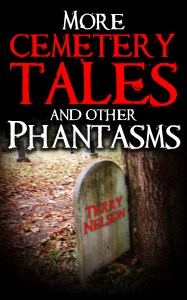
Okay these stories I bring you may not chill your bones, but might give pause, make you ponder-weak and weary- though some may haunt your mind. The following comes from my brief synopsis from Cemetery Tales and other Phantasms:

Tales for the darkness in your mind. Eight stories from the twilight zone of shadows, cemeteries, castles; where life and death mingle in haunting dimensions of reality and unreality, of eerie journeys, strange beginnings, strange endings, and revenge from the grave.

A man quits his job and finds himself drawn into a world that does not really exist. In another story, a young high school graduate journeys to a strange English castle. In “Due Date” a writer returns to his home town to find the young woman who inspired his writing  journey and meets her in a shadow world. The final four stories take place in a cemetery where some are dying to get in while others are dying to get out.

Here are two reviews:

“If you’re a reader who’s tired of blood and gore, or who’s never liked it, you should enjoy these suspenseful Twilight-Zone style stories. Some of them leave the reader wondering (which can be good or bad) but most are neatly tied up.” -Miss Scarlett, Amazon review.

“Eight stories with neat little Twilight Zone twists that sometimes work and sometimes don’t. My favourites were ‘Flowers For Martha Clements’, for the hauntingly melancholy vibe that sucks you into the story, and ‘Desecration’, for the fact that revenge is justly served.”-Rachel, Amazon review

2.99 click to my Amazon page for this e-Book

But wait says the Undertaker, there is more. This from More Cemetery Tales and Other Phantasms:

“There is a theatre that runs favorite films of every member of the audience. But the price may be high. There is a house in the woods that may or may not be haunted; it is for you to decide. There is a man walking in a cemetery who has trouble communicating with those he meets. The fourth story is my humble attempt to reimagine the ending of Mary Shelley’s “Frankenstein.” There is a crazed killer who-no, I can’t tell you. Another story is about a boy going to his first parade. Ah, how sweet. So you might think before reading this story. There is a man who wakes up and finds a dead woman in his bed and has no idea who she is. And the final story is about what happens to a writer creating stories like the previous seven, a story where some characters will be familiar.

It has not been reviewed, but feel free to do so, if reviewing doesn’t scare you that is.

2.99 click to enter Amazon and purchase these stories.

Cemetery_Tales_and_other_PhantasmsA-351x597coyotemoon_cemetaryb

Why Word.doc IS a Writer’s Tool Despite What Some Think

The following revised and updated blog entry was first published in 2013 in my first blog that I wrote under The Quill, the e-word, the looniness. I like the title, but though it had many followers, it was too long of a title, so I reset to this blog. This was my opening blog, my first entry into blogging. I hope you like it:

“There is a bestselling writer, definitely old school, who is adamant that using Word doc. is not writing. He contends writers write longhand, or, his choice of weapon, the typewriter.

Sholes typewriter, 1873. Museum, Buffalo and E...

Sholes typewriter, 1873. Museum, Buffalo and Erie County Historical Society. (Photo credit: Wikipedia)

I must say the statement was made some years ago and I am only 95% sure of who made the statement, and he may have revised his original opinion in the interim, which is why I won’t reveal his name.

I have written two e-book novels in my loony series (three now) and his statement fits within my view of the world. We are all a bit loony.

But consider the absurdity of the statement. Shakespeare used a quill pen to write. Had the typewriter been invented during his life, would he have rejected it because only a true writer uses a quill? Old Will would have learned how to use the new tool and be thrilled not to be continually dipping his quill in ink over and over.

The quill was the tool of Will’s day. A typewriter is a tool. A PC with Word doc. is a tool. All writers are storytellers and they use the tool that more easily tells the story. And writing in Word is far easier than a typewriter that has no spell check, no grammar check, nor needs reams of typewriter paper. With Word you can revise as you write.

That being said, the experience of Word and formatting, in my case, blogs, movie reviews, and e-book novels, is far from easy. Word may be easier than the quill and the typewriter, but both Word and Cyberspace bring their own set of problems.

And that is what led me to create a blog, one I hope you, whether a writer or not, will interact with me on, to discuss the looniness of writing in cyber world.

Speaking of spellcheck and looniness, as I wrote the previous paragraph a red line popped up under ‘looniness’ indicating it is misspelled or is not a word. But my American Heritage dictionary says otherwise.

So I hope you will join me on this journey, sharing the looniness of writing in cyber world. Quill pen anyone?”

I did not use a quill, pen and paper, or a typewriter in creating these cyber books.

dugout (1)Loonies_In_Hollywood-375x712coyotemoon_silentmurder (1)Cemetery_Tales_and_other_PhantasmsA-351x597coyotemoon_cemetaryb


How Can A Four Star Amazon Review Hurt-Read And Learn

There was a new review of my e-novel mystery Loonies in Hollywood, based on the true life unsolved mystery of silent film director William Desmond Taylor. Of course my fictional screenwriter amateur sleuth solved it.

But . . .

This is not a complaint about the four star review.

However, you need to read it see what we must chat about: “This book was very entertaining in that it provided a believable solution to the murder of WDT. I was quite disconcerted, however, with the amount of spelling and grammatical errors; it’s as if the entire book had been edited by a third grader! Therefore, while the book was entertaining, the experience of reading was compromised.”

What happened?

I used a software formatter to change the Word. doc to a file for Amazon. Before doing that I checked through my document dozens of times. I did a spell check in Word, found no errors. My formatter found no errors. Two for two. When I loaded the book at Amazon I did their spell check. No errors. Three for three.

So what happened? I did everything I could to insure the reading experience was good. So I went to the formatter and sent the same file to Amazon. After the book was uploaded, there was a spell check and Amazon found no errors. 

I believe the person who wrote the review. No one is going to give a four star review and complain about spelling and grammar mistakes.

Clearly something goes wrong. So I checked with Amazon. Here is what they said:

“I checked and confirmed that there were 4 potential typo errors found by our spellcheck tool, but no grammatical or other errors were found.

Here are the ones:

booklegger: location 1425
jimjam: location 28
melo: location 2343
xxxxxx: location 2709

I understand that the above mentioned errors may actually be contextually accurate so no action would be required to correct them which is why the tool also gives the option to ignore them. It’s possible the issue is with their device or reading app that some spacing or other formatting errors may appear.

Rest assured, we’ve not received any complaints regarding the content of the eBook from any customers that we could confirm were present. We would’ve certainly notified you of the same since we strive to maintain very high standards for content published through our platform.”

Now that drives me a bit crazy. Amazon found no issues other than the four above mentioned, and all are slang words or used contextually. Is the problem with the reviewers Kindle? I don’t know.

We all want the best experience in the digital world of reading. I am sorry the customer had a bad experience, but am grateful for the four star review.

Amazon also said it is possible to contact the customer and leave a comment. And that I did.

If you purchase any of my e-Books let me know if you have problems. Thanks. My Amazon Page

Loonies_In_Hollywood-375x712coyotemoon_silentmurder (1)Cemetery_Tales_and_other_PhantasmsA-351x597


Why I Created Three Fictional Characters-And How

It started so strangely.

There was a real person named Charlie Faust, 1880-1915, who once pitched for the New York Giants in 1911. Sort of.  A biography of Charlie, though much of his life is unknown, was written by Gabriel Schecter, called Victory Faust.

But who was Charlie?

That is what baseball people wanted to know. He was strange, and though many of his famous Giant teammates talked about him, and wrote about him, Charlie remains elusive. He could have been the most naïve country hick in history. Or he could have had mental issues. Perhaps-in the language of the day-retarded. But nobody knows for sure.

A few people have tried to write a fictional story of his life, but according to Mr. Schecter, nobody had. So a few years ago I decided to explore Charlie. To tell his story I used a rookie fresh off a Storden, Minnesota farm. Chet Koski was born in 1888 and in 1911 at the time of the story he is 22, his birthday being in October. He is not the rube that Charlie is, but it is his first time in a big city, and in a true sense it is his coming of age story, though by stories end, Chet does not fully bloom.

So we see Charlie through Chet who ends up as Charlie’s friend and at times guardian angel.

Now a young man in New York needs a girlfriend and she is Eveleen Sullivan, born in Ireland, 1890. Red hair, green eyes, she is all Irish. Her dreams are of the Broadway stage. When we meet her she is doing small parts, mostly in the chorus. She has another suitor, a British actor, who I will say little about. I won’t say he is a cad, but there is something about him I don’t trust.

Chet and Eveleen, like any young couple whose dreams lie in different direction, are unsure of themselves, of each other, and of any future. They might have a chance together, but then again, who knows.

The e-Novel is a satire on fame and celebrity. Charlie after all, though he is more a good luck omen, like a rabbits foot, or a horseshoe, becomes famous, not only in New York where he appears on Broadway within weeks of his mysterious arrival in New York, but all around baseball and the cities he sort of played in.

The baseball action and the scores are accurate. I researched the season and the games. Since Chet is fictional, I substituted him for a real player from time to time, but though he is fictional, what he does is what really happened.

Not only do we meet Christy Mathewson, Rube Marquard, manager John McGraw and other Giant players, we also meet Bat Masterson, George M. Cohan, and sportswriter Damon Runyon.

I said in the heading there were three fictional characters and I have mentioned only two, Chet and Eveleen. The third is Clancy. At the time of this story she is eleven years old and is not in Loonies in the Dugout. She shows up at the age of 22 in Loonies in Hollywood. She is the daughter of a rich California banker, and a carpe diem flapper with an extroverted personality. She is, as anyone would say, a handful. She was to be a plot device, nothing more; enter and leave the story in one scene, and a brief one at that. But she dominated the scene and as writers know, a character, yes a fictional one, can force their way into a story. She has become my favorite character. As I said she is a handful. 

And of course Clancy became friends with Eveleen and Chet, helping their murder investigations in two published books and one mystery in progress.

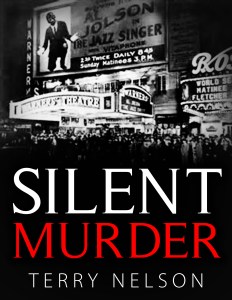
Though the three characters appear in two stories, Silent Murder being the second, you do not have to read them in sequence as each is a stand alone story.

You can find them on Amazon here. Loonies in the Dugout, with two four star reviews, only 99 cents.

dugout (1)Loonies_In_Hollywood-375x712coyotemoon_silentmurder (1)


Hey Kindle Readers-Want A Free e-Book

I was going to enter Writers Digest contest for self published e-Books, but there was a $110 entry fee. What?

No thanks.

But I do have the code for the free gift, so the first person who wants the free e-Book gets it. If you have a Kindle or Kindle app (free from Amazon) just write your email address in comments so I can send you the book. I will not allow email addresses to be seen publically as I will not approve comments, thus they should not be shown.

The e-Book is Loonies in the Dugout. Click above on title for synopsis. It has 2 four star reviews. Based on a true story about Charlie Faust and the 1911 New York Giants baseball team, the book is a satire on fame and celebrity and works as both baseball fiction and literary fiction.

dugout (1)


Are These 10 Novels The Best In History-You Decide

I picked up  “The Novel 100” by Daniel S. Burt published in 2004 at a sale. I mention the date because there is a 2010 revised edition and I have not seen it, so I must stick with his 2004 list. He ranks the greatest 100 novels of all time. Like any writer of a list written by someone with integrity, Burt has the good sense to invite disagreement, going as far to say in his introduction ” If you disagree violently with some of my choices, I shall be pleased.” I advise to not get violent.

I am not going to list all 100, but stick to his top ten and give my thoughts along the way.

  1. Don Quixote by Miguel de Cervantes. Burt claims it is the second best-selling book in history. Flaubert wrote in 1852 that “What is prodigious about Don Quixote is the absence of art. . .” Flaubert is a bit enamored here. Cervantes clearly has written an artistic book. Flaubert’s comments reminds me of the novelist and Beowulf scholar, John Gardner  who told our college English class that Treasure Island (not on top 100, but Honorable Mention) was not fiction, but something  else entirely, though he could not articulate exactly what he meant. I read Don Quixote decades ago and have forgotten most of it. Certainly deserves top 100, but . . Free Kindle edition here.
  2. War and Peace by Leo Tolstoy. I recall seeing a hardback edition in my home when growing up. I don’t think anyone in the household had read it. It was thick and intimidating for me, so I stuck to The Hardy Boys.  There is a free Kindle edition here. I just clicked the fun button, so will put it in my reading list, but there are 296 books ahead of it. Must do some weeding soon.
  3. Ulysses by James Joyce. A formerly banned book makes the list. I have a vague memory of either reading a few pages of it in College or actually trying to read it, can’t recall which, but once again a free Kindle edition. It is, I am told, a difficult read, but I believe I can handle it having much reading experience since college. While it has received much praise, D.H. Lawrence, H.G. Wells, and Virginia Woolf thought the book essentially garbage. So it must be good, being controversial and all.
  4. In Search of Lost Time by Marcel Proust. This is now the preferred title to Remembrances of Things Past., at least according to Burt. I had no idea until now, so am at a loss to know who made this decision. Keep in mind it is seven volumes. Should make good winter reading. If you begin reading this after Ulysses you are a brave soul as you risk mind and memory. A 99 cent Kindle edition is worth a try
  5. The Brothers Karamazov by Fyodor Dostoevsky. Another book I have not read and the second Russian to make the list. Sigmund Freud said the book is ” the most significant novel ever written.” If you trust Freud then a free illustrated Kindle edition with one click.  I love clicking for free books, especially classics, and I have some catching up to do. I have read Crime and Punishment though, so I get some points.
  6. Moby Dick by Herman Melville. Time for a bit of a rant. I tried twice to read this book and both times got to a long non-fictional account of whaling that broke up the narrative flow, and I grew bored, then irritated, then gave up. A not needed sidebar and Melville, I believe, was getting paid by the word. Aha! I loved Melville’s short story Bartelby, but I guess I am not into whaling. But Amazon does offer a free Kindle edition.
  7. Madame Bovary by Gustave Flaubert. I read this, like Don Quixote, decades ago. I would like to read it again because I recall nothing. Burt said the book has elements that make it perhaps the first “modern novel”  but I think I read it because I heard there were some sex scenes. Were there? Or was that in the movie? No matter. If I read it again it will be for literary value. If there are some sex scenes, so much the better. Literary Free Kindle Edition.
  8. Middlemarch by George Eliot. For those who do not know this was the pen name for Mary Ann Evans. Full disclosure, I have not read the book. Most people prefer two of her other novels Adam Bede or The Mill on the Floss, neither of which I have read. I have read Jane Austen and the Bronte’s in College, so considering my now growing list of unread novels, Eliot will not get into my reading list. Nothing personal mind you. Could not find free book, but there is an illustrated Kindle for 99 cents.
  9. Magic Mountain by Thomas Mann. I have read other works by Mann, but not Magic Mountain. Once again I can not offer my opinion, not that it would matter anyway. Burt says, ” it “is the great philosophical novel of the 20th century.” I found a study guide for the book, but no Kindle edition. Don’t know why.
  10. The Tale of the Genji by Murasaki Shikibu. This is the most interesting and intriguing book on the list. In western tradition the novel is traced back to Don Quixote in the 16th century, but Tale of the Genji was written in China in the 11th century. It was written by a woman, one that little is known about, but according to Burt, “With its realistic social setting, individualized characters, and psychological richness, the Genji is deservedly considered unprecedented and the first great novel. I could not find a free edition despite it written a millennium ago and while there are Kindle versions ranging up to 20.99 their is a 99 cent Kindle edition. If this book is everything they say it is, it moves up the line in my reading bin.

Of the top ten I have read only two books, failed at one (Moby Dick) and tasted a bit of few others. Not good for a Bachelor of Arts in English Literature. But I have read 32 of the top 100. That makes me a .320 hitter, pretty good for baseball.

None of my following books made a any list, but did get some good reviews.

dugout (1)coyotemoon_silentmurder (1)Cemetery_Tales_and_other_PhantasmsA-351x597coyotemoon_cemetarybLoonies_In_Hollywood-375x712


Who Was Dr. John Yeoman And What He Did For Writers ?

I subscribed to Dr. John Yeoman’s blog on writing for years. He died last month and I felt it time to share not only who he was, but some of his helpful blogs and his e-novels. Not only was John’s blogs helpful, written very conversational, but often with humor, and certainly intelligence.

First who he was can be found here 

Now a dozen of my favorite Dr. Yeoman blogs:

How To Shape Great Stories With Word Games

How to Plot A Story (Even If Plotting Scares You Silly)

7 Great Ways To Close A Story (and How Famous Authors Did It)

Do You Make These Six Big Mistakes With Your Writing Blog

How To Cope With Bad Feedback On Your Work

Nine Big Lies That Agents Tell You

Could This ‘Magic’ Trick Rescue Your Story

How To Sell 100,000 novels Without (Really) Trying

Three Ways (Not) To Kill Your Story In Its Cradle

Top Ten Tips For Promoting Your Book-From A Dog

How To Write A Kindle Best Seller

Five Top Tips For Being a Happy Writer

And he practiced what he preached and taught. Here is his Amazon Page. I have read “The Cunning Man” and “The Hog Lane Murders” and they are great for new writers for you can read the e-novel like you read any book, but is also has footnote markers. When you click a footnote number he shows the why and how he wrote that scene and you can learn from seeing what he is doing. Great writing tool.

Thanks John!

dugout (1)coyotemoon_silentmurdercoyotemoon_cemetaryb

CAN YOU FETCH A FETCHING

This post was posted from a previous incarnation of my writing blog.

Of late, since I seem to have nothing better to do, I became immersed  in the odd relationship between fetch and fetching.

I associate the word ‘fetch’ with dogs. When playing catch with a dog and a stick or ball is thrown the owner yells, “Go fetch!” I have heard this phrase many times, though in truth the dog knows to go fetch; he or she does not have to be told. They love to fetch.

I am also aware that ‘fetch’ can imply what something costs, though this is a somewhat archaic usage. I have not heard, “It fetched a good price” in a long time. So let us stick to ‘fetch’ defined as retrieving, to grab, seize, catch, and so on.

Okay, now we come to the word fetching. It means charming, enchanting, alluring, captivating, and is most used in describing a woman, or at least it once was, as in “She has a fetching appearance.” It was once a way of saying, “Man she’s hot!” And that phrase once meant something else. But anyway, how do we get from a dog fetching to a comely woman? How do we associate a dog with a cute woman? 

I know chauvinistic men would like a woman to fetch them a beer on demand, but that is not me. I can fetch my own thank you.

Was there something sinister behind the similarity of the two words, some wordsmith conspiracy to layer an insult to women, that they were dogs?  I had to uncover the truth.

I went to a well known establishment that provides  haircuts, or styling if you will, to men; the establishment, a national one that has fetching young ladies that cut your hair, a cut that fetch’s a good price mind you. I posed the question to the young woman cutting my hair about fetch and fetching. Leave it to a woman to figure it out.

She cut to the heart of the matter with the quickness of the snip of a scissor. “Fetch means the woman is worth fetching.”

I had to laugh, though I felt like a dog for thinking there was some conspiracy. I must refrain from saying a terrible pun like offering a beautiful diamond ring will fetch the woman.  That would be improper. Because you see, it is the woman tossing the ball or stick and the man, the dog that he is, will fetch it. And that is because the woman is so fetching the man can not resist.

If you would like to fetch on of my e-books, you can grab one here.

dugout (1)Loonies_In_Hollywood-375x712coyotemoon_silentmurderCemetery_Tales_and_other_PhantasmsA-351x597coyotemoon_silentmurder