Why telling a story around a campfire makes you a writer

I was looking at some of my blogs from a previous incarnation and ran across this post and thought I would share it.

I have no illusions about my writing. I am not a great writer, though if you want to disagree I shall not object. Like most Indie authors who write e-novels and short stories, I have flaws. But I have read novels from writers who have an actual publisher and agent, and I wonder how they got published.

I contend that writing advice is often more analytical after the fact. What I mean is that the advice about structure and plot usually give examples to dissect, to show how it was done. That is fine, but how many writers actually sit down and write a structural outline, with character arcs, denouements, epiphanies, and other literary  analytics.

Of course there are writers that do and my congratulations to all of you, but it seems backward. If you have sat around a campfire and told a story, you are actually writing as you speak. The story you tell has its own built in structure, its own twist, its own climax. When you sit down at the keyboard, instead of keeping all that advice in your mind; advice that can clutter, confuse and cause writer insanity, consider telling a story by narrating in your mind.

Imagine you are telling a story. Listen to your voice, forget grammar, forget everything and just tell your story.  You don’t need long, complex sentences with heavy use of adverbs and colorful description. Trying to impress will backfire. When you hear the phrase ‘a writer’s voice’ it is more than writers style and technique; it can also have something to do with how the author speaks with his voice.

In a good documentary film the narrator can captivate you with his words as he tells the story. That is what story telling is. Narration. You can even speak your words aloud as you pound out keystrokes. I don’t because I am already nuts, but I do listen to my words as I type. I narrate a story (Including dialogue of course). I don’t write it.

I bet you can do the same.

Cemetery_Tales_and_other_PhantasmsA-351x597coyotemoon_cemetarybLoonies_In_Hollywood-375x712


What did Sue Grafton say about writing

Besides being an author and blogger, I volunteer at the local library. One of my two sections covers all the books about writing. There is always a book or two that catch my eye while I am checking the Dewey decimals on each book ensuring they are in proper order. One day I ran across “Why We Write.” Twenty best selling authors telling you there tips, tricks, and secrets. (There are no secrets, for if you share, it is not a secret-but I digress.)

In the introduction, the editor of the book , Meredith Maran, quotes George Orwell’s four motives for writing. They are: Sheer egoism (to be talked about, remembered); Aesthetic enthusiasm (for the pleasure of sound and rhythm of what you wrote); Historical impulse (to see things as they are, find true facts); Political purposes (The opinion that art should have nothing do to with politics is itself a political attitude).

Writers are quirky. Isabel Allende begins every novel on January 8th. She begins with a ‘sort of an idea’ and the first four weeks are wasted. Eventually it begins to pull together. What we can take away is her perseverance. She doesn’t quit, she works her way through her process. So if you feel bogged down with your story remember Isabel and stay with it; persevere and you will feel great, having, in the end, worked out of the dense jungle you found yourself in.

David Baldacci says ” ‘Writing for your readers’ is a euphemism for ‘writing what you think people will buy.’ Don’t fall for it! Write for the person you know best: yourself.” Many writers have said this. Write your story for yourself first-it will turn out better. This has been said since Mark Twain, maybe earlier.

Jennifer Egan says not to worry about bad writing. “One should accept bad writing as a way of priming the pump, a warm-up exercise that allows you to write well.” She also says you must write on a regular basis, even 15 minutes a day, something to keep you in the habit.

Sue Grafton, with all her success, says “Most days when I sit down at my computer, I’m scared half out of my mind. I’m always convinced that my last book was my last book, that my career is at an end. . . ” She, like Allende, perseveres.  Grafton gave my favorite quote, “There are no secrets and there are no shortcuts. As an aspiring writer, what you need to know is that learning to write is self-taught, and learning to write well takes years.”

dugout (1)Loonies_In_Hollywood-375x712cropped-048.jpg


Off-the-Wall Books for Writers

Creative writers own books on writing. Those books are easy to find, but there are other books that writers can learn from, ones you may not think about and I am here to help.

Games People Play by Eric Berne. It is a basic book about transactional analysis. STOP. Don’t get scared and run away. This book has sold millions and was published back in 1964. The title says it all. People play games; life games, marital games, sexual games, underworld games, and on and on. None of it on video by the way. This is how people interact, the games we play with each other. This is good for writers to develop characters. What type of person is your character? How about the “If it weren’t for you game.” A character who blames other people for holding them back in some way. A writer can learn how the game is played and how the person plays it out and use that trait in developing  a character. An insightful book on human behavior, one that can make a writers characters real.

I will pause here before continuing to scary books for advanced writers.  Spunk and Bite by Arthur Plotnik is not only a fun read, but one whose message is we should forget the classic book on writing style “The Elements of Style” by Strunk and White  because it is wrong, at least for today’s writers. And when you read the book you will agree. Crisp, witty, perceptive, Plotnik makes the profound simple and delightful.

And now for post graduate work.

Berne’s book will work for any creative writer. but if you want something more advanced and you want to write something complex, say along the lines of Dostoyevsky you may want to dive into Denial of Death by Ernest Becker. It won a Pulitzer Prize winner and is in one word-challenging. The book talks about the philosopher Kierkegaard, the psychoanalyst Sigmund Freud, how we deny death, psychology, religion, and the heroic individual. You can run away now if you like, or you could read Man and His Symbols by Carl Jung. An excellent book for reading about dreams, symbols, deep psychological and cultural meanings. This is a book for those who seek metaphor. So if you have a bent for James Joyce, D.H. Lawrence, and the like this book will be helpful.

Or you can pick up any book on mythology and use those cast of characters to draw from, giving them new names and new stories and in doing so, you create a new mythos using previously created symbols and metaphors. And you can bypass those ‘heavy’ books. Aren’t you glad you didn’t run away?

dugout (1)coyotemoon_silentmurder (1)coyotemoon_cemetarybcropped-048.jpg


The frustration of translating dreams into digital adventures

Writers can relate. So too can anyone who has tried to write a story.

It begins with a dream, an idea, a thought, a fragment, a vision, a nightmare; it begins in some form within the writers brain, a sometimes partner, but more a landscape like that of the moors in “Hound of the Baskerville’s,” foggy, swampy, and empty, where the writer as detective searches out storylines, but finding none let’s his mind go, then without seeking, ideas bounce around in his head like and ball caroming off walls on a handball court, fast and furious, coming at all angles. Stop. Let me catch one.

Then more frustration. The writer sees in his mind the characters, he can see what will happen, he know where and how it will go. It is all played out in his mind. That is the fun part, the imagination given free reign, a daydream the writer escapes into. But how to accurately translate what is in the writers brain onto paper or the digital magic of Word is the problem.

The language must be precise. What is the right word? There might be a better word that more acutely gives the proper nuance. Sometimes the writer knows the word is there someplace, but it is elusive, just out of his mental grasp. Search the Thesaurus. But while doing that the rest of the thought, the rest of the paragraph may dissipate like morning fog when the sun comes up. Gone. What was I going to say? Exactly.

The brain works faster than the writers hand can write, faster than the writers fingers can type. And while writing, typing, trying to translate with perfection the thought, the description, the dialogue, the everything, it can never be perfect. Frustration. Something, no matter how slight the shading, gets lost in translation. It is never perfect. But it can be in one sentence. It can be in one paragraph. Here and there something comes out exactly, or as close to exactly as possible, but on the whole, in its entirety, the translation is never what was racing through the writers landscape.  

Even in rewriting, the art of clarification, of rhythm, of making sense, the writer has a chance to make the dream whole and complete. But he is merely fixing, not realizing. By the end of the story, the origin of the daydream, the vision, what is left is the ghost of the story, but often it is good enough.

dugout (1)Loonies_In_Hollywood-375x712coyotemoon_silentmurderCemetery_Tales_and_other_PhantasmsA-351x597coyotemoon_cemetaryb


Oscar Wilde, abandoned books, and us

Oscar Wilde said, “Books are never finished. They are merely abandoned.”

I know what he meant. If you have read Charles Dickens, Leo Tolstoy, or even “Infinite Jest” by David Foster Wallace, you know there are writers who write long, thick books that take a year to read. They love their characters, they love to see what their characters will do, and they love to escape into the world they created for their characters.  The real world can not be controlled, it is out of all our hands. But a writer can create a world, he can control what happens.

Using myself as an example. When I finished my first e-novel “Loonies in the Dugout” I realized, in part because of the ending, and in part because I loved my two main fictional characters, that I could not end their story. I had to abandon the book, it was finished, at least that one, so I took my two favorite people and placed them in a new story 11 years later in another town where I could hang out with them some more.

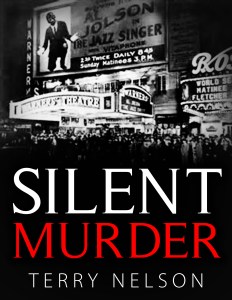
In the course of that e-novel “Loonies in Hollywood” I created another character, a flapper named Clancy. I fell in love with her as well, so when this book was abandoned because it must come to an end, I had to write a third e-book with all three of my friends. “That was “Silent Murder.”

Once that was abandoned I started another e-book with the same three characters. So I understand what Wilde meant. At least my interpretation of what he meant. He could also have been talking about the agony of rewriting and proofreading and that the writer reaches a point where he says ‘enough.’ But I think it has more to do with never wanting to escape the world the writer not only created, but inhabits with his characters, sharing their adventures. The writer is the fly on the wall.

Writers and readers do share a common bond and that is we both like to escape. The writers escaping into his world with his friends, secretly hoping to never have the story end, to write about them forever. And the reader escaping into a time and place, the world created by the writer, one the reader can also escape into. Perhaps we can find each other in this world. If you spot me, say hello.

dugout (1)Loonies_In_Hollywood-375x712coyotemoon_silentmurder (1)


My quest for the perfect ‘it’ and why

Whether it is called hook, logline, blurb, selling point, promo copy, or the old fashioned description, a writer needs to create something that entices, lures, snares, traps or otherwise induces the innocent to tap or click the buy button to download  the writers self published e-Book, a book that will enthrall, entertain, dazzle and delight. The writer needs the ‘it.’

In truth it is a calling card. Write a good description, one that shows some degree of writing ability and the potential reader is likely to make a purchase. If you write good copy then it follows the book must also be good. But writing that brief description is the hardest part of writing for many, myself included.

Over the past few years I have rewritten, edited, and changed the copy for all five of my books innumerable times and like the Great White Hunter of Bigfoot, my search continues. I revisit my descriptions to see what is wrong, how better can I make it. The following is an example for “Loonies in the Dugout.” 

The book is a fictional account of the mysterious Charlie Faust and how he influenced the Giants to win the pennant. His story is told through the eyes of rookie Chet Koski who is trying to woo chorus girl Eveleen Sullivan while trying to figure out big league pitching. A satire on fame and celebrity based on a true story in which Chet and Charlie meet Bat Masterson, George M. Cohen, Damon Runyon, and many others.

BORING.

I did not think so at the time, but with fresh eyes I see how dreadful it is. It is flat, matter-of-fact, does not engage, does not indicate a sense of style. I recently changed it to the following.

How does a 21-yeard old rookie off a Minnesota farm figure out how to hit big league pitching in New York when he is trying to woo chorus girl Eveleen Sullivan? Harder still when you find yourself becoming the guardian angel for the mysterious Charlie Faust who believes apple pie gives him pitching strength, even though he never pitches. Based on a true story about the 1911 New York Giants and the influence of Charlie Faust, featuring Bat Masterson, Damon Runyon, George M. Cohan, and the New York Giants of 1911.

Is it perfect.? No. But it is an improvement. It poses a question that engages the reader to think-however briefly. Within the first sentence it is indicated that this kid is in the big city, is trying to ‘figure out’ pitching and wooing, indicating perhaps a coming of age story. The next sentence indicates the kid is good guy because he is looking after a strange man, posing another question, a mystery of who this Charlie Faust is. Why does he love apple pie? Why does he think it gives him pitching strength-and he never pitches. And silly, yes maybe, but. . .it is based on a true story.

I think the second description is more colorful, less dry, more engaging. But of course, in a few months I may look at it and go “Yuck!”

But this is what writing is. Rewriting. And you are not stuck with your novel either. Yes, you can rewrite that as well. Mary Shelley did that with “Frankenstein” changing the nature of the good doctor and cutting a scene or two in a revised edition. Usually a writers first instincts are best and her original story is far superior.

But that is not true when searching for the perfect pitch to your novel.

dugout (1)


Writers are diseased-and there is proof

“Many suffer from the incurable disease of writing, and it becomes chronic in their sick minds.”

The above quote comes from Decimus Lunius Luvenalis, but we know him as Juvenal, a first-second century poet know for his satires that are considered a scathing indictment of Roman life and culture, not to mention politics. He may have been trying to be funny in the above quote, but it turns out he may be right.

There is a disease called hypergraphia. Fyodor Dostoyevsky suffered from it. He was a compulsive writer who suffered from epilepsy, a type of epilepsy in the brain that compelled him to write, write, and write, not just novels and novellas, but short stories,  journals, and of course, what writers frequently did in the days before email, write letters. He believed his best writing came when he was sick.

Writers of fiction write because they want to communicate. Consider the  narrator in the Rime of the Ancient Mariner. He stops a young man on his way to a wedding. It was rude of him to waylay that young man, but he was compelled to tell his story and that man was going to be his audience, come hell or high water. As Joan Didion once wrote, ” In many ways writing is the act of saying I, of imposing oneself upon other people, of saying listen to me, to see it my way, change your mind.”

Storytellers must tell their story and if said storyteller is an extroverted gregarious sort, he will not be a writer, but a big blowhard who never shuts up. But if the storyteller is an introvert with a sensate personality he tells his story in fiction. And how nice of him not to bother young men on the way to weddings. Though if he is clever, the writer will slip his book into the young man’s jacket pocket; the equivalent of an Amazon promotion where you give your book away for free for a limited time.

Most fiction writers are methodical,  keeping to a schedule, or trying to, but few of us have the mad disease that compels us to write, forsaking family, friends, and cats. Few of us are as sick as Dostoyevsky, but we writers must communicate, and because we write better than we speak, we put our words to paper-or digital algorithms.  We are introverts after all. We like to speak from a safe distance, the better to control our type of madness.

To learn more about hypergraphia there is a book by Alice Flaherty, who is both neurologist and writer. She writes from her experience with a postpartum mood disorder. The book is “Midnight Disease.”

dugout (1)Loonies_In_Hollywood-375x712coyotemoon_silentmurder (1)Cemetery_Tales_and_other_PhantasmsA-351x597coyotemoon_cemetaryb


Need a plot for your mystery novel-try this

Loonies_In_Hollywood-375x712

If you want to write a murder mystery, or something more mysterious click/tap here for a list of unsolved murders and deaths dating from before 1800 to present day. If one intrigues you then take a hand at solving the murder on your own. I did this with “Loonies in Hollywood” in which I took the true life, unsolved murder, of silent film director William Desmond Taylor, and using the crime scene evidence, the most mentioned suspects, I chose the one mostly likely-to my thinking- and ‘solved’ the murder. 

Edgar Allan Poe also used the unsolved murder of Mary Rogers, a popular young woman, perhaps the first to became famous for doing nothing other than being so beautiful, that she attracted dozens of men each day to the cigar store in which she worked, attracting so many that newspapers began writing about her. For doing nothing. Poe took the story and using all the evidence wrote “The Mystery of Marie Roget.”

Those are but two examples and if you do a little research you will find many murder mysteries written by authors who based their story on an actual murder. They, like you, can do the research, examine the crime scene, take a look at the suspects, come to your own conclusion, and  then write the mystery. The benefit is that the story ingredients are all there for you, ripe for the picking that you can pluck straight off the tree and cook up the solution. It makes coming up with an idea on your own a mute point. And if it is a famous case, you will tend to sell more books, because famous cases, no matter how old, have followers.

I offer this as an option. I wrote “Silent Murder” based on nothing but my imagination, and if yours is hyperactive then drain your brain of all it has to offer. But if you get stuck for an idea, by all means, use the resource by clicking/tapping here.

coyotemoon_silentmurder (1)

Creating a character through dialogue

There are many ways of creating characters in fiction. What they wear says a lot about a person, colorful clothes, drab clothes, formal, casual, rich, poor. Character quirks also work. Maybe they walk funny, maybe they limp, walk quickly, or just amble. Describing their apartment or house furnishings can also indicate what type of person they might be; orderly to the point of being a neat freak, or messy to the point of a hoarder. Or sparse with no personality.

But another way is through dialogue. In my e-mystery in progress a 1927 flapper named Clancy reveals a lot about herself in the following scene.

Grover looked at Clancy like a thirsty man in a dessert who just found a well of water in an oasis. He was actually drooling a bit. “Are you married? I’m not. Do you want to go on a picnic with me?”

Clancy said, “Well Grover, November is not a good month for a picnic. Way too cold for this California flapper. But I must tell you dear Grover I am not the marrying kind. Nothing personal, mind you.  I have heard people say you are selfish if you do not marry, but that makes no sense. It is selfish to spend your entire life making one man happy and far more generous to share yourself with as many men as possible, or in your case, women, of course. Why make one man happy when you can make dozens of men happy? So you see marrying one person to spend your life with is just selfish. And I am nothing if not generous.”

“But that is not nice, having lots of men and all. Women in the bible are called harlots. We have whores in this town, not many; at least I don’t think so. I don’t want to know them.”

“Well Mr. Grover I am neither of those types of women. I have some integrity after all. But there is another reason. Marriage is a contract, therefore you are obligated to love your husband, but being single I am free to love the man-forever if I want to-because I have the freedom to do so, not under an obligation you see. Don’t you think that makes sense to you Mr. Grover; that a person should love out of freedom, not out of obligation?”

We learn more than Clancy’s feelings on marriage. We see she is insouciant, a free thinker, not shy, a bit flippant, probably living in the moment and a bit of a challenge for any male suitor. Good luck winning her heart.

In “Loonies in Hollywood” in which she made her first appearance I wrote a scene to describe how she affected men. The scene follows:

Clancy swiftly glided past police desks with me as her tail, detectives and uniformed men stopping what they were doing, staring at her like a silver screen goddess who came down off the screen to mingle with the normal folk. She was accustomed to this type of reaction, not pausing in her sashaying glide through the station, looking neither left nor right to offer a brief heart melting smile.

From the reaction of men we learn she is attractive. Doesn’t matter about hair color, tall or short, nothing descriptive, all reaction from others. She is unattainable to the common man.

You can say a lot about character though dialogue and other’s observations.

Loonies_In_Hollywood-375x712coyotemoon_silentmurder (1)


How to properly use a writing prompt

If you are a writer and follow writing blogs you have come across someone who challenges your creativity with a writing prompt . I gave a prompt in a previous blog, quoting writer John Gardner who said, “describe a barn as seen by a man whose son has  died in a war. Do not mention death, war, or the son.” I do not need you to respond to it. I offer it as an example.

I suggest you avoid any prompts you encounter in your Internet perambulations.

Here is why. It is okay if you are bored and have nothing better to do on a rainy day, your dog won’t play with you, your cat is sleeping (when aren’t they) and all your friends are busy-or avoiding you. If you are a writer then why waste your time being creative on something you won’t use. If you need a prompt to stir your creativity then turn to the story you are working on, or the story you intended to write, but have put off because you were eating cookies while reading the new Stephen King book.

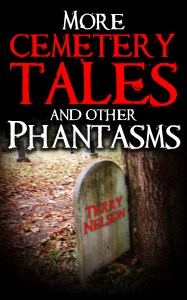
Instead of responding to another’s prompt, I respond to my own prompts. As an example, in my short story “The Castle” found in “Cemetery Tales and other Phantasms” I prompted myself with this-describe a scene where a young excited boy just out of high school has left America for the first time, arrives in a remote area of England for a new job. Do not mention America, England, the new job. I came up with this:

Taking a deep breath of fresh air Quinn felt intoxicated. He wanted to giggle, to jump up and down, but proudly he maintained his cool.  Outwardly he was sure he looked composed, confident, and worldly; inwardly he was concerned the blood racing through his pounding heart would be noticeable through his pale skin, worried people would mistake the pounding of his heart with thunder in the darkening skies. 

My goal was to capture his feeling of being in a new adventure in a new country. I think it worked.

Or from the same story, describe a scene where a character is lost somewhere, scared, where death may be imminent.  I came up with this:

He turned and saw nothing, no outline of any trees, nothing to separate sky from ground, just total blackness in a black vacuum. He had to get back to the castle. He was safe there. He tried to run towards the castle. He couldn’t. He tried to walk, gingerly putting one foot forward. He couldn’t. He had to get back to the castle. He couldn’t. The silence was deafening, the darkness blinding. The cold, dank, swampy air was crushing him.”

The point is time spent on your writing is best served prompting your scenes. Nothing wrong with prompts, they’re a good exercise, but exercising on your own story will get it done quicker.

Cemetery_Tales_and_other_PhantasmsA-351x597coyotemoon_cemetaryb