Who Was Dr. John Yeoman And What He Did For Writers ?

I subscribed to Dr. John Yeoman’s blog on writing for years. He died last month and I felt it time to share not only who he was, but some of his helpful blogs and his e-novels. Not only was John’s blogs helpful, written very conversational, but often with humor, and certainly intelligence.

First who he was can be found here 

Now a dozen of my favorite Dr. Yeoman blogs:

How To Shape Great Stories With Word Games

How to Plot A Story (Even If Plotting Scares You Silly)

7 Great Ways To Close A Story (and How Famous Authors Did It)

Do You Make These Six Big Mistakes With Your Writing Blog

How To Cope With Bad Feedback On Your Work

Nine Big Lies That Agents Tell You

Could This ‘Magic’ Trick Rescue Your Story

How To Sell 100,000 novels Without (Really) Trying

Three Ways (Not) To Kill Your Story In Its Cradle

Top Ten Tips For Promoting Your Book-From A Dog

How To Write A Kindle Best Seller

Five Top Tips For Being a Happy Writer

And he practiced what he preached and taught. Here is his Amazon Page. I have read “The Cunning Man” and “The Hog Lane Murders” and they are great for new writers for you can read the e-novel like you read any book, but is also has footnote markers. When you click a footnote number he shows the why and how he wrote that scene and you can learn from seeing what he is doing. Great writing tool.

Thanks John!

dugout (1)coyotemoon_silentmurdercoyotemoon_cemetaryb

Yearly Writing Goal 1,200,000 words!! Who can do this?

There is no way I could write 1,200,000 words a year, but according to Wikipedia, the author of the best selling Perry Mason mystery novels, Erle Stanley Gardner, 1889-1970, in his early days writing for pulp magazines had a goal of just that, 1,200,000 words a year.

TIME OUT.

Lets do some math. Feel free to double check as math is not my strong suit. Let us start with 360 writing days, taking off for Thanksgiving, Christmas, Mother’s Day, and two flex days. Dividing words by days I get 3,333 words per day. Assuming a 10-hour day that is 333 words per hour. I wonder if he kept a running total at his desk. Did he fall behind and do an extra few hours each day to catch up. There is no way he could do that today with Social Media and the Internet to distract him. Oh what a cut cat video!

Okay I can see 333 words an hour, but doing so ten hours a day, 360 days a year is obsessive compulsive; in other words, just plain nuts.

On the other hand, when Gardner started writing pulp fiction stories he would get three cents a word. If he wrote 1,200,000 words that comes out $36,000 a year which in those days was big money.

Now keep in mind Gardner wrote 82 Perry Mason novels as well as a series about a private detective agency Cool and Lam, another series about District Attorney Doug Selby, and used pseudonyms like AA Fair, Carleton Kendrake, Charles J Kenny, and  Charles M Green. He also wrote at least 205 short stories mostly for pulp fiction magazines, and in his spare time wrote non-fiction travel books.

According to Goodreads Gardner has 344 books listed. Were they counting reissues? I did not count them, and have no plans to do so as that would take up time needed to meet my writing goals; just short of 1,000,000 words. That’s for the next 10 years, fifteen if I take off holidays, Mondays and cat videos. If he did indeed write 344 books as well as short stories then perhaps he did reach his stated goal of 1,200,000.

I had hoped that reading about Gardner’s words goal I would get inspired to write more, to get me a kick in the pants. But the more I think of those ten hour days, I am already tired. I need a nap.

dugout (1)coyotemoon_silentmurder (1)coyotemoon_cemetaryb


WHY THINKING IS BAD FOR WRITERS

The following is reposted from a previous incarnation of my writing blog “The quill, the e-word, the looniness.”

Thinking is not good for writers. Thinking means analyzing what you are doing, dissecting your sentence, your paragraph, your page. Is everything you want to say there? Is it said the correct way? And are you following all the rules those creative books say you should do? Does doing this numb the mind? If you want to improve your writing, then stop thinking and just write. And here is why.

In his book “Zen in the Art of Writing” Ray Bradbury says,  “. . . the more swiftly you write, the more honest you are. In hesitation is thought. In delay comes the effort for a style; instead of leaping upon truth which is the only style worth deadfalling or tiger-trapping.”

I don’t know what Bradbury means by ‘deadfalling or ‘tiger-trapping’, but I understand what he is talking about.

Style can not be calculated. Style is how you write and that reflects who you are; a writers style comes out of his being. Don’t be who you are not. It is impossible for me to write a tragedy, a serious drama, a heart warming love story, or an inspiring story. The reason is that my sense of humor, good or bad, always finds its way into the story. I can’t help myself. That is why the titles of my first two e-novels begins with the word “‘Loonies.” It is part of my world view that there is something loony about humanity, with how we think, our actions, and so on. Whether we recognize it or not we are kind of funny in a weird way.

So I write without thinking. I write with what is coming out of my head, entering my characters mouths’ giving me the opportunity to blame them for their actions or inactions. Consider these two phrases; “He who hesitates is lost?” and “To thine own self be true?” They apply to writing. Don’t think, just let you mind flow and be who you are. I write what I write in the way I write because that is who I am. It will work for you as well. So go trap a tiger.

dugout (1)Loonies_In_Hollywood-375x712coyotemoon_silentmurder (1)


How to create a story-FROM WHAT?

While reading “The Curse of Beauty: The Scandalous & Tragic Life of Audrey Munson, America’s First Supermodel” I was struck by lightning, or to put it another way, a light bulb lit up over my head in a cartoon panel; in other words I had an idea.

Audrey Munson was a young woman of great beauty in the early years of the 20th century. She posed for every great sculptor of her time, not to mention painters, illustrators, and photographers. She was in high demand because during this neo-classical time before modernism became the mode of the day, she had, according to artists, the classical Greek form. She also appeared in two early silent films, appearingnude, which she frequently did posing for sculptors.,

In the book the author talked about the artists and how they would make sketches from all angles before making a clay model, then onto the actual sculpture. It dawned on me as the light bulb grew to full illumination that a writer can do the same thing, make sketches I mean.

I could in essence sketch the story before writing. So I thought I would try it for a short story that I must submit by September 1st. I have the beginning of the story, the problem that the protagonist encounters and what problems would arise with said problem and how it will end. You may think I created an outline, but I did not and this is why. It was free form, writing what came to mind without any undue thought process, one thing leading to another, thoughts, ideas within ideas, flowing from brain to fingertips, fingertips to tapping keys, and showing up in Word.doc. I wasn’t outlining by thinking, I was sketching by not thinking, coming up with a sentence here and there, more words, phrases, something to work from.

I would show you exactly what I did, but then you will have all you need to write your story from my notes, win yourself a Pulitzer, get a book deal with a New York publisher, make millions, have swimsuit models draped on your arm-or undraped if you prefer-and get you face on the cover of Writers Digest. I think you understand why I can’t share. Besides with success come problems. You will have too much money and fame, and that leads to drugs, addiction and the murder of a swimsuit model, and you spend the rest of your life in prison. So I am saving you from a life you don’t want. You’re very welcome.

So if you want to write a story, write a sentence or an idea, and then let your mind roam, writing down any thought that comes based on the sentence. Think of it as word association, but using at times more than one word. Example: Using the famous opening, “It was a dark and stormy night”-dark-power outage in the neighborhood-what kind of storm-rain? Meteor? Sand? Maybe a rainstorm in a desert-what is going wrong with the climate- a climatologist is in danger-is it the apocalypse? Well you get the idea. Let you mind go crazy and create a sketch of ideas to build your story on.

dugout (1)Loonies_In_Hollywood-375x712coyotemoon_silentmurder (1)Cemetery_Tales_and_other_PhantasmsA-351x597coyotemoon_cemetaryb

Why telling a story around a campfire makes you a writer

I was looking at some of my blogs from a previous incarnation and ran across this post and thought I would share it.

I have no illusions about my writing. I am not a great writer, though if you want to disagree I shall not object. Like most Indie authors who write e-novels and short stories, I have flaws. But I have read novels from writers who have an actual publisher and agent, and I wonder how they got published.

I contend that writing advice is often more analytical after the fact. What I mean is that the advice about structure and plot usually give examples to dissect, to show how it was done. That is fine, but how many writers actually sit down and write a structural outline, with character arcs, denouements, epiphanies, and other literary  analytics.

Of course there are writers that do and my congratulations to all of you, but it seems backward. If you have sat around a campfire and told a story, you are actually writing as you speak. The story you tell has its own built in structure, its own twist, its own climax. When you sit down at the keyboard, instead of keeping all that advice in your mind; advice that can clutter, confuse and cause writer insanity, consider telling a story by narrating in your mind.

Imagine you are telling a story. Listen to your voice, forget grammar, forget everything and just tell your story.  You don’t need long, complex sentences with heavy use of adverbs and colorful description. Trying to impress will backfire. When you hear the phrase ‘a writer’s voice’ it is more than writers style and technique; it can also have something to do with how the author speaks with his voice.

In a good documentary film the narrator can captivate you with his words as he tells the story. That is what story telling is. Narration. You can even speak your words aloud as you pound out keystrokes. I don’t because I am already nuts, but I do listen to my words as I type. I narrate a story (Including dialogue of course). I don’t write it.

I bet you can do the same.

Cemetery_Tales_and_other_PhantasmsA-351x597coyotemoon_cemetarybLoonies_In_Hollywood-375x712


What did Sue Grafton say about writing

Besides being an author and blogger, I volunteer at the local library. One of my two sections covers all the books about writing. There is always a book or two that catch my eye while I am checking the Dewey decimals on each book ensuring they are in proper order. One day I ran across “Why We Write.” Twenty best selling authors telling you there tips, tricks, and secrets. (There are no secrets, for if you share, it is not a secret-but I digress.)

In the introduction, the editor of the book , Meredith Maran, quotes George Orwell’s four motives for writing. They are: Sheer egoism (to be talked about, remembered); Aesthetic enthusiasm (for the pleasure of sound and rhythm of what you wrote); Historical impulse (to see things as they are, find true facts); Political purposes (The opinion that art should have nothing do to with politics is itself a political attitude).

Writers are quirky. Isabel Allende begins every novel on January 8th. She begins with a ‘sort of an idea’ and the first four weeks are wasted. Eventually it begins to pull together. What we can take away is her perseverance. She doesn’t quit, she works her way through her process. So if you feel bogged down with your story remember Isabel and stay with it; persevere and you will feel great, having, in the end, worked out of the dense jungle you found yourself in.

David Baldacci says ” ‘Writing for your readers’ is a euphemism for ‘writing what you think people will buy.’ Don’t fall for it! Write for the person you know best: yourself.” Many writers have said this. Write your story for yourself first-it will turn out better. This has been said since Mark Twain, maybe earlier.

Jennifer Egan says not to worry about bad writing. “One should accept bad writing as a way of priming the pump, a warm-up exercise that allows you to write well.” She also says you must write on a regular basis, even 15 minutes a day, something to keep you in the habit.

Sue Grafton, with all her success, says “Most days when I sit down at my computer, I’m scared half out of my mind. I’m always convinced that my last book was my last book, that my career is at an end. . . ” She, like Allende, perseveres.  Grafton gave my favorite quote, “There are no secrets and there are no shortcuts. As an aspiring writer, what you need to know is that learning to write is self-taught, and learning to write well takes years.”

dugout (1)Loonies_In_Hollywood-375x712cropped-048.jpg


Off-the-Wall Books for Writers

Creative writers own books on writing. Those books are easy to find, but there are other books that writers can learn from, ones you may not think about and I am here to help.

Games People Play by Eric Berne. It is a basic book about transactional analysis. STOP. Don’t get scared and run away. This book has sold millions and was published back in 1964. The title says it all. People play games; life games, marital games, sexual games, underworld games, and on and on. None of it on video by the way. This is how people interact, the games we play with each other. This is good for writers to develop characters. What type of person is your character? How about the “If it weren’t for you game.” A character who blames other people for holding them back in some way. A writer can learn how the game is played and how the person plays it out and use that trait in developing  a character. An insightful book on human behavior, one that can make a writers characters real.

I will pause here before continuing to scary books for advanced writers.  Spunk and Bite by Arthur Plotnik is not only a fun read, but one whose message is we should forget the classic book on writing style “The Elements of Style” by Strunk and White  because it is wrong, at least for today’s writers. And when you read the book you will agree. Crisp, witty, perceptive, Plotnik makes the profound simple and delightful.

And now for post graduate work.

Berne’s book will work for any creative writer. but if you want something more advanced and you want to write something complex, say along the lines of Dostoyevsky you may want to dive into Denial of Death by Ernest Becker. It won a Pulitzer Prize winner and is in one word-challenging. The book talks about the philosopher Kierkegaard, the psychoanalyst Sigmund Freud, how we deny death, psychology, religion, and the heroic individual. You can run away now if you like, or you could read Man and His Symbols by Carl Jung. An excellent book for reading about dreams, symbols, deep psychological and cultural meanings. This is a book for those who seek metaphor. So if you have a bent for James Joyce, D.H. Lawrence, and the like this book will be helpful.

Or you can pick up any book on mythology and use those cast of characters to draw from, giving them new names and new stories and in doing so, you create a new mythos using previously created symbols and metaphors. And you can bypass those ‘heavy’ books. Aren’t you glad you didn’t run away?

dugout (1)coyotemoon_silentmurder (1)coyotemoon_cemetarybcropped-048.jpg


The frustration of translating dreams into digital adventures

Writers can relate. So too can anyone who has tried to write a story.

It begins with a dream, an idea, a thought, a fragment, a vision, a nightmare; it begins in some form within the writers brain, a sometimes partner, but more a landscape like that of the moors in “Hound of the Baskerville’s,” foggy, swampy, and empty, where the writer as detective searches out storylines, but finding none let’s his mind go, then without seeking, ideas bounce around in his head like and ball caroming off walls on a handball court, fast and furious, coming at all angles. Stop. Let me catch one.

Then more frustration. The writer sees in his mind the characters, he can see what will happen, he know where and how it will go. It is all played out in his mind. That is the fun part, the imagination given free reign, a daydream the writer escapes into. But how to accurately translate what is in the writers brain onto paper or the digital magic of Word is the problem.

The language must be precise. What is the right word? There might be a better word that more acutely gives the proper nuance. Sometimes the writer knows the word is there someplace, but it is elusive, just out of his mental grasp. Search the Thesaurus. But while doing that the rest of the thought, the rest of the paragraph may dissipate like morning fog when the sun comes up. Gone. What was I going to say? Exactly.

The brain works faster than the writers hand can write, faster than the writers fingers can type. And while writing, typing, trying to translate with perfection the thought, the description, the dialogue, the everything, it can never be perfect. Frustration. Something, no matter how slight the shading, gets lost in translation. It is never perfect. But it can be in one sentence. It can be in one paragraph. Here and there something comes out exactly, or as close to exactly as possible, but on the whole, in its entirety, the translation is never what was racing through the writers landscape.  

Even in rewriting, the art of clarification, of rhythm, of making sense, the writer has a chance to make the dream whole and complete. But he is merely fixing, not realizing. By the end of the story, the origin of the daydream, the vision, what is left is the ghost of the story, but often it is good enough.

dugout (1)Loonies_In_Hollywood-375x712coyotemoon_silentmurderCemetery_Tales_and_other_PhantasmsA-351x597coyotemoon_cemetaryb


Oscar Wilde, abandoned books, and us

Oscar Wilde said, “Books are never finished. They are merely abandoned.”

I know what he meant. If you have read Charles Dickens, Leo Tolstoy, or even “Infinite Jest” by David Foster Wallace, you know there are writers who write long, thick books that take a year to read. They love their characters, they love to see what their characters will do, and they love to escape into the world they created for their characters.  The real world can not be controlled, it is out of all our hands. But a writer can create a world, he can control what happens.

Using myself as an example. When I finished my first e-novel “Loonies in the Dugout” I realized, in part because of the ending, and in part because I loved my two main fictional characters, that I could not end their story. I had to abandon the book, it was finished, at least that one, so I took my two favorite people and placed them in a new story 11 years later in another town where I could hang out with them some more.

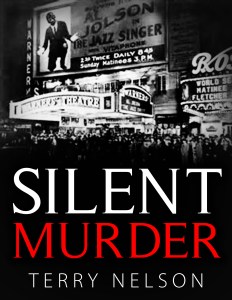
In the course of that e-novel “Loonies in Hollywood” I created another character, a flapper named Clancy. I fell in love with her as well, so when this book was abandoned because it must come to an end, I had to write a third e-book with all three of my friends. “That was “Silent Murder.”

Once that was abandoned I started another e-book with the same three characters. So I understand what Wilde meant. At least my interpretation of what he meant. He could also have been talking about the agony of rewriting and proofreading and that the writer reaches a point where he says ‘enough.’ But I think it has more to do with never wanting to escape the world the writer not only created, but inhabits with his characters, sharing their adventures. The writer is the fly on the wall.

Writers and readers do share a common bond and that is we both like to escape. The writers escaping into his world with his friends, secretly hoping to never have the story end, to write about them forever. And the reader escaping into a time and place, the world created by the writer, one the reader can also escape into. Perhaps we can find each other in this world. If you spot me, say hello.

dugout (1)Loonies_In_Hollywood-375x712coyotemoon_silentmurder (1)


My quest for the perfect ‘it’ and why

Whether it is called hook, logline, blurb, selling point, promo copy, or the old fashioned description, a writer needs to create something that entices, lures, snares, traps or otherwise induces the innocent to tap or click the buy button to download  the writers self published e-Book, a book that will enthrall, entertain, dazzle and delight. The writer needs the ‘it.’

In truth it is a calling card. Write a good description, one that shows some degree of writing ability and the potential reader is likely to make a purchase. If you write good copy then it follows the book must also be good. But writing that brief description is the hardest part of writing for many, myself included.

Over the past few years I have rewritten, edited, and changed the copy for all five of my books innumerable times and like the Great White Hunter of Bigfoot, my search continues. I revisit my descriptions to see what is wrong, how better can I make it. The following is an example for “Loonies in the Dugout.” 

The book is a fictional account of the mysterious Charlie Faust and how he influenced the Giants to win the pennant. His story is told through the eyes of rookie Chet Koski who is trying to woo chorus girl Eveleen Sullivan while trying to figure out big league pitching. A satire on fame and celebrity based on a true story in which Chet and Charlie meet Bat Masterson, George M. Cohen, Damon Runyon, and many others.

BORING.

I did not think so at the time, but with fresh eyes I see how dreadful it is. It is flat, matter-of-fact, does not engage, does not indicate a sense of style. I recently changed it to the following.

How does a 21-yeard old rookie off a Minnesota farm figure out how to hit big league pitching in New York when he is trying to woo chorus girl Eveleen Sullivan? Harder still when you find yourself becoming the guardian angel for the mysterious Charlie Faust who believes apple pie gives him pitching strength, even though he never pitches. Based on a true story about the 1911 New York Giants and the influence of Charlie Faust, featuring Bat Masterson, Damon Runyon, George M. Cohan, and the New York Giants of 1911.

Is it perfect.? No. But it is an improvement. It poses a question that engages the reader to think-however briefly. Within the first sentence it is indicated that this kid is in the big city, is trying to ‘figure out’ pitching and wooing, indicating perhaps a coming of age story. The next sentence indicates the kid is good guy because he is looking after a strange man, posing another question, a mystery of who this Charlie Faust is. Why does he love apple pie? Why does he think it gives him pitching strength-and he never pitches. And silly, yes maybe, but. . .it is based on a true story.

I think the second description is more colorful, less dry, more engaging. But of course, in a few months I may look at it and go “Yuck!”

But this is what writing is. Rewriting. And you are not stuck with your novel either. Yes, you can rewrite that as well. Mary Shelley did that with “Frankenstein” changing the nature of the good doctor and cutting a scene or two in a revised edition. Usually a writers first instincts are best and her original story is far superior.

But that is not true when searching for the perfect pitch to your novel.

dugout (1)