How I lost my identity through writing fiction.

dugout (1)coyotemoon_silentmurder (1)

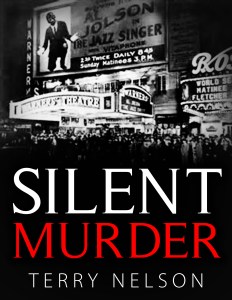
It started innocently enough. I was working on character names for my first e-novel, “Loonies in the Dugout” and thought I would use the first names of my father and two uncles for three fictional characters. But I also wanted to use my mother’s name, but this was a baseball novel and there was not going to be that many female characters. So I used my dad’s first name Chet, for the lead character, and my mother’s last name Koski for Chet’s last name. Though I got to honor my mom and dad in one character, I did not anticipate what would happen.

I enjoyed Chet and his girlfriend Eveleen so much I wanted to use them in another story, so I went from 1911 in my first book to 1922 in Hollywood for my second book in which Chet and Eveleen, now married, solve the murder of William Desmond Taylor. I had no problems in this story, but I got confused in book three.

In “Silent Murder,” set in 1927, there is a murder and it turns out the victim was a cousin of Chet. But he had no idea this was his cousin. So the police, naturally, when they find this out and inform Chet, got me into a family tree to sort out some police questions. And I nearly messed it up. Chet’s fictional last name is Finnish, but I was thinking Danish because that is my real father’s heritage. Yes, I realized later that I could have used the Finnish family tree, but the problem is it was too hard to trace for too many reasons to go into here. So I was stuck staying with a Danish tree for a Finnish character. I had to tinker a bit.

This tree was part of the plot-at the beginning of the story anyway. It is always a possibility that this plotline was a red herring. Had I known while writing the first novel that Mr. Koski would continue in two more stories and another now in progress I would have done things differently. As it is, by using my mother’s maiden name, in the third book I dug a pit that addled my brain about two families. After all I am talking about people from the 1800’s whom I never met.

If I had to do it all over again I would have used my real fathers last name and changed his first name, using perhaps Paul (my mother’s name was Pauline). Or even better, use my fathers middle name as his first, so I would have had Alvin Nelson.  Actually I don’t like that name, Paul would be better, except that is also the middle name of another relative, and that only adds more confusion.

I dug myself into a pit and I am stuck with it. Did I learn a lesson? No. I am using the names of two real life cousins who are cousins in my work in progress, but the two cousins in real life from opposite sides of the family and have never met. I don’t care. The territory is familiar to me. Besides I am too confused about my family tree I no longer know who I am. Writing as many pitfalls.

Two mandates of writing to use in your life

dugout (1)coyotemoon_silentmurderLoonies_In_Hollywood-375x712

There are two things a writer, any writer, must do or he will fail. It is unescapable and few writers, if any, like doing it, for that is where the hard work is, but the two mandates can also be applied to your life and it is a good idea to use them .

The first is proofreading. It is sitting down and reviewing what has been written to see what needs changing. And there are mistakes in writing and there are mistakes in one’s life. So in proofreading you examine how do make the story better. Your life is your story, so why not periodically sit down and review you life, check to see what needs improving; what needs fixing and how to fix it.

I remember while proofreading my first e-novel, “Loonies in the Dugout” that two sections, the writing of which I liked, still had to be cut entirely out of the story. Not cleaned up, not revised, but deleted with prejudice. Neither section advanced the story or had any character development. If there is something in your life that is not advancing your story or helping your development, then cut it out.

Cutting things out of your life, as in fiction, is called editing. Yes, you can edit your life for you are the writer, the proofreader, and the publisher. Your audience are friends and family. If you like, you can ask them what they would hope to see you edit out of your life. (not saying they’re right, but it doesn’t hurt to listen).

In the same e-novel I was trying for a theme in the first part of the book. It had to do with heat. The story was true and it began in the summer of 1911 when there was a heat wave, many people died during this time. So I had a lot of metaphors, similes, and descriptions where heat factored in the story. The problem I saw was that it did not work and had to be rewritten. As much as I liked it, it didn’t work, so it had to be changed.

That is the hard part about proofreading and editing your life. There are things you like, say eating three maple bars for breakfast. Who doesn’t love maple bars? But I don’t think three is good for you. Maybe cutting to one, then down to one half, then cutting them out would be a good idea. Blueberries in oatmeal, now that is better for your story.

So that is what I have learned from writing, to sit down, look at my life, see what needs changing, editing, fixing, and to make necessary changes. You can do the same and you don’t have to be a writer.

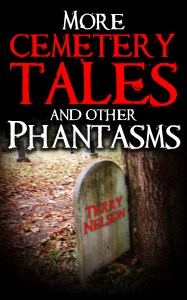
Cemetery_Tales_and_other_PhantasmsA-351x597coyotemoon_cemetaryb

What five rules of Journalism also apply to fiction

Cemetery_Tales_and_other_PhantasmsA-351x597coyotemoon_cemetaryb

Years ago I wrote brief high school sports reports on games I never saw. Honest. There were too many schools and too many games to cover in basketball, wrestling, swimming, and soccer, so somebody from outlying schools would call the newsroom, usually the winning coach, to give me all the stats, after which I would do a brief interview. The sports editor was emphatic that the five W’s should be in the first paragraph. Those five are  ‘who, what, where, when, and why.’ The rest of the article expands the five w’s.

Some fiction does begin with the five w’s, but obviously not all. A clever writer can do it and it might be a good writing exercise, especially for flash fiction.

Those five w’s also apply to fiction. The ‘who’ are the characters, notably the protagonist and the antagonist, the ones who get top billing, but all other relevant characters as well. The ‘where’ is the setting of where the story takes place and of course ‘when’ the story takes place. The’ what’ is the story, the action, the plot, the ‘whatever’ the story is including the denouement, the resolution of the plot that explains everything; in other words the ‘why.’ 

Of course the ‘why’ need  not explain everything in black and white. Often a little mystery, or something not quite resolved, or something to make the reader think about the ending is welcome. Not wrapping everything up in a nice little bow is not always for the best. It depends on what you want to leave the reader with and how you built up to that point.

The ‘how’ is sometimes considered the sixth rule of journalism, but that is iffy for a journalist, as one never gets all the facts, nor all the story so the ‘how’ is contingent on what is known. The ‘how’ in fiction, however, should be seamless because the ‘how’ are the tricks of the trade, the things a writer does to make to make the ‘how’ invisible.

Those who are avid readers know that some journalist’s stories often read like fiction in that they use fiction devices in long articles. Conversely some fiction reads like a news story. Clearly the two different modes of writing can become blurred. Not a bad thing. Everyone chooses how best to tell the story, whether it be news or entertainment. We have rules, but how we use them is where the creativity comes into play.

dugout (1)Loonies_In_Hollywood-375x712coyotemoon_silentmurder

The best writing lesson from a six word story

Ernest Hemmingway is know for many memorable novels. I prefer Fitzgerald for Jazz Age writers, but like food, it is a matter of taste. I like cheese, my brother doesn’t. And he claims to be Scandinavian. But Hemmingway’s six word story is food for a writer to digest. It is the best example of flash fiction I can think of.

In my previous blog I wrote about the simplicity of Bukowski’s opening to his novel “Post Office.” Simplicity was the theme in that post and so is this one. Hemmingway wrote, “Baby clothes for sale, never worn.”

My first thought is the story is a tragedy. The baby died. Since the clothes were never worn, did the mother lose the baby, perhaps it was stillborn. But maybe the clothes were blue and the baby was a girl and the parents want pink. I don’t know.

But what writers can learn is that they need not always be descriptive. If a writer goes into the description of the clothes, the type, the color, the why, it could be the writer is clogging the readers mind with unnecessary information. There are things to tell and things not to tell, because the details are not important.

As I said in my Bukowski blog a writer can get in the way of his story. Elmore Leonard is said to have had a rule of never writing about the weather. If true his tongue may have been in his cheek. In my novel in progress that takes place in western Washington during November of 1927, I mention that it is raining in a couple of scenes. I note that it is the thick misty type of rain that so often inundates the area. But I do no belabor the point, not going into great detail, not over doing it. And it is important to place and atmosphere of the story. But the point is, I kept it simple.

When a writer goes over what he wrote he should not fall in love with his words. He should look at how to cut, what to cut. In doing so, in making it simple, in making it clear, the story is front and center, not the vainglorious wordsmith. 

Five simple words to begin a novel

“Once upon a time” no longer works, we are past the fairy tale age, so how and why does a writer start chapter one. Writers are told to make the first paragraph interesting, give a hook, something to make the reader move to the 2nd paragraph. Some writers think that means  a slam bang opening, or beginning in the middle of some compelling mystery. Writers are free to choose their own opening, but . . .

Consider the simplicity of a single sentence. The first paragraph of Charles Bukowski’s “Post Office” is an example. He begins with five words. Bukowski writes, ” It began with a mistake.” Notice he did not say who made a mistake, not he, not her, not anybody, just ‘it.’ So what is ‘it’?  What is the mistake? What was the result of the mistake? How did the mistake affect the characters?  ‘It’ must be an action, don’t you think. Something happened that in the end was a mistake. Could the mistake have  been averted, or was it something innocent that turned out bad? There is no action, there is no beginning in the middle of something, there is no tension between hero and adversary.

Just five simple words.

Those five words bring up lots of questions and aren’t you curious to find out what the mistake was? Something bad is bound to happen, after all there was a mistake.

Writers too often try to overdo everything, including a novels opening. Like a young baseball pitcher trying to impress a manger by throwing too hard with no plan for the pitch a writer tries to hard to impress. Sentences overflowing with steroidal adverbs meant to dazzle, instead fizzle. The best thing a writer can do, the very best thing-yes I just used ‘very’-but it works here-is to get out of the way, not only of your writing, but of the characters, of the story, of everything. Writers should not draw attention to themselves, but be invisible.

Thus the simplicity of ‘It began with a mistake.’ Bukowski was not trying to impress, he was luring you into the story. And that is impressive.


Survival for writers suffering with depression.

Depression is not fun. I know because I have dysthymia, a mild form of depression for which I took a prescribed drug for many years, but I stopped due to side effects and I wanted to battle it on my own. People with dysthymia are apathetic (not always a bad thing), both mentally and physically and tend to be negative and passive. Now blend in two of the four Greco-Roman humors, those being melancholy (analytic and quiet) with choleric (short tempered and irritable) and you know more about me than I want you to know. As you may have surmised that being apathetic, negative, short tempered, and irritable I have no friends. But then I also have a twinge of paranoia.

Let me be clear. Depression is not feelings of sadness. Everyone feels sadness, not everyone is depressive. Depression is a disease. In my case and in most forms of this depression, it is a problem with the flow of serotonin in the brain. “Beating the Blues”, paperback and Kindle was helpful to me. 

Now that you know I have depression and if you a writer suffering with this disease I can tell how I battle my apathy to get going. I try to write everyday, yet I fail. It is not that I have places to go, though sometimes that is true, but there is no excuse other than I can’t overcome my apathy. What does help, though not always, is drinking Chinese tea. I suppose it is the caffeine, but it does simulate my brain. I am writing my third blog today, all drafts that will appear in the next week or two. I may do another draft as my brain is active. In other words, strike when you can. One day, full of Chinese green tea, I wrote 2,410 words of my novel in progress in three hours. I drank three cups of the same tea today and now, as I said, I am working on my third post draft.

One other thing to overcome is the quilt if you are not writing. It is hard to forgive yourself, that you are wasting valuable time, that you should be writing, but can’t. That is the hardest thing for me, as the guilt festers, multiplying the apathy, increasing the feelings of futilityThen you have to forgive yourself for the guilt over the guilt. It can be a never ending cycle.

I can tell you what doctors will say. Exercise the body, you will feel better. When I do that, I do feel better. But being apathetic, like writing, I fall away, not able to keep it up every day. It is interesting in listening to those who do not suffer from depression, who do not, can not, understand it. They say, ”Well just do it,  just sit down and write.” Ah, if only it were that easy. Even with depression and understanding it, I still don’t know why I can’t just sit down and do it.

So if you are a depressed writer, do something to stimulate your brain, whether coffee, tea, exercise, running, walking, swimming, and then remember to forgive yourself if you are not stimulated each and every day. And of course it does not hurt to just sit down and write one sentence and see where it leads. Just tell yourself, just one sentence. You never know, it may lead to another, then a paragraph, then . . .

just keep trying. 

Three reasons to advertise your book on Amazon

I avoided advertising my books because I wanted to build a library and now that I have five e-books on Amazon I thought it was time. I also delayed because being frugal (cheap), I was leery of diving into that pool. Add to that I am not a business person, nor a social media butterfly, and, in the interest of full disclosure, I am lazy. But it is good to research extensively before diving into the pool. So here is why I chose Amazon.

Reason number one to advertise with Amazon: As someone said if you do nothing, then nothing will happen. So if you want to achieve something you must do something. If it fails, you learn something and move forward. Since my books are on Amazon I researched their marketing program. It was easy to set up a campaign. You set a budget, say $100. The good thing is you are not charged up front. You are charged when someone clicks your ad to read about the book. The charge comes from what you bid-and this I do not understand at all. I was never good in math. The bad news is that there is always the chance that during the length of the campaign, nobody will buy your book and you are out $100. That is not a bad thing though as I will share on reason two. The poor result could be that the brief description of your book, the hook, the logline, the pitch, did not register with those who clicked. What you write in the ad must sell interest to click. I plan on adding a campaign with all my books, staggering them. The reason you will read about in reason three.

Reason two to advertise with Amazon: I mentioned the possibility that you could end up losing $100 if nobody bought your book. Yes that hurts. But consider this. You can read in your dashboard how many clicks you are getting. I had 48 clicks within a couple of days. The cost was just over $3. If you extend the number of clicks you can get for $100 then you have a lot of people who are now familiar with your name and that is part of building awareness. The more people who see your name, the better chance they will buy a book in the future. To build your brand ( I hate this word) you build name recognition. Consider it part of long term strategy. The only thing that happens overnight is dawn. Everything else takes time.

That brings me to reason three as to why I am staggering my add campaign with my books on Amazon. It not only has to do with getting my name out there by clicks and sales, but because I  have different audiences. I have two collection of short stories, both of which fall into the supernatural and horror category. Three other books are part of a series, though each can be read as a stand alone e-novel. The first is a satire on fame and celebrity based on a true story with the 1911 New York Giants baseball team. So that is baseball fiction. The two main characters I created I then used in two murder mysteries, with a third on the way. So I can not advertise just one book, as I have different audiences to reach.

But is Amazon the only place to advertise? No. But I had to start someplace. I will try Facebook in April and may tinker here and there with other avenues. Previously I had dipped into the water by trying Awesome Gang newsletter. They say they have over 4,000 subscribers I believe, but don’t quote me on that. It cost $10 to be in their newsletter for one day. Cheap, I like it. No sales though. But as I said I was dipping my toes in the water. There are many of these newsletters and some authors have had sales. But I would urge you to fully research these sites as many will not deliver what you want. Also, based on what I have read from other authors, be cautious of anyone promoting your book on Twitter. Writers are told not to use adverbs like ‘very’ so I will not write that you should be very cautious.

I will keep you updated.

Cornell Woolrich twists a readers mind into a pretzel in “Fright.”

Cornell Woolrich, 1903-1968, wrote great crime stories including, “It had to be Murder,” made into the classic Hitchcock film “Rear Window.” In fact over thirty movies have been made from his stories, including two by French director Francois Truffaut, “The Bride Wore Black,” and “Mississippi Mermaid.”

But one that escaped the moves is one he wrote under the name George Hopley. The title is “Fright” and it is about a man who kills a woman on the day of his wedding because she is blackmailing him and he wants nothing to upset his plans. The story goes into how he tries to evade the private detective he believes is after him. He and his wife move to another city and he believes a new man in the office is the detective that is after him. The killer murders him and another person. He clearly has that paranoia/guilt that you find in the killer of Poe’s tale, “The Tell Tale Heart.”

The story winds down to an what seems an appropriate ending, a type of justice, because after what he has just done, there is no way out. But the problem is that while you are reading this ending you are aware there is one more chapter.

I won’t tell what is revealed in the final chapter, but I will say my jaw literally dropped open. It is the  “You got to be kidding” type of ending. The phrase “I never saw this coming,” is accurate to the nth degree. It is the type of ending that makes you reflect on the entire story, makes you reevaluate, makes you ponder something more than justice, takes you on an entire new journey of thought. I read the book about a year ago and the ending still haunts me.

As a writer you can not help but admire what Woolrich did. The book is not a mere crime story. It is more than a story about guilt, worry, paranoia. It goes far beyond that. Woolrich leads you down an expected path with wonderful writing, then twists your mind into a pretzel.

Does Woolrich play a trick on the reader? I will never tell. But it is a perfect book for writers to study, to figure out for themselves how to construct a great ending.

At the top of this site is info on who I am and  what my novels and short stories are about. My Seattle Mariner blog  is here. Thanks for reading.


Confusing pronouns confuse readers, okay maddens readers

I won’t mention the novel, nor will I mention the author, as it is not my intent to embarrass a fellow writer. I enjoyed his story even though I got perturbed, mad, and upset with confusing pronouns. 

What I mean about confusing pronouns is when there are two characters in a scene and then a pronoun, such as ‘he’ is used, but the way the sentence or paragraph is written, you do not know which character the author is referring to. Confusion means the reader stops. Damn it, the flow is gone, who is talking, who is doing what, who is ‘he.’

It is an easy mistake for a writer because the writer knows who ‘he’ is. That ‘he’ is in the writers mind, but it is not in the reader’s mind and that is the problem. This problem surfaced a few times in the novel and was frustrating.

All writers know writing is fun and proofreading is torture. I hate proofreading, but finding and correcting, commas, misspellings, inserting missing quotation marks is the least of it. They are more noticeable, though it can-and has-taken me dozens of times to find them all. At least I think I have found those bugaboos. But a proofreader must read word by word seeking clarity in each sentence and to do this the author must have a clear mind. And that is why it is recommended a writer wait six months-at least by some-before proofreading. That way your mind is clear, you have forgotten much, and you are more likely to see mistakes. I tried waiting, but I could go only three months as the itch to publish was itching so badly I felt I needed a cream, but the only alternative was to proofread. I found things I would not have seen before. What I thought was clear in a paragraph became three months later a mess.  I tried to blame it on Word.doc and some sort of self correcting flaw in the software. But I knew better, though I liked to blame the computer. It made me feel better.

The easy thing for a writer to do in correcting confusing pronouns is to simply place the character’s name where he should be. It works better for the reader who wants a good flow, no confusion, so keep the readers  reading.

Though this is my first post on this site, I have had two  blogs for some time. I have one on writing called “The quill, the e-word, and the looniness.” Near the end of 2015 I closed my long time website, terrynelson.net, to create this site for my blogs and my e-Books. So I will have the quill blog up for a while, but if you have followed me on that blog, I hope you will follow, not stalk, me here. At the top of this site is info on who I am and  what my novels and short stories are about. My Seattle Mariner blog  is here. Thanks for reading.