John Calvin and His Book that Bombed

John Calvin (1509-1564) is best known as a religious reformer. He, like Luther and many others, broke from the Catholic Church when the Church become too corrupted with rampant scandals.

But I am not religious and I am here to talk about his first book,  Commentary on Lucius Anneas Seneca’s Two Books on Clemency, and not religious historyHe was 23 at the time and like any scholar with ambition eager to make his name known. He had to pay for the publication himself and like any author sat back to see what happened.

Nothing happened. As in zero book sales. Now you might look at the title and wonder why anyone would buy the book in the first place. But it was an age of ideas and change and literate people and other scholars relished argument, debate, and ideas. Except the Inquisition party-poopers of course. Besides there was no Stephen King books. Fiction? What was that?

Timing is everything and Calvin’s timing was off. His book was not to condemn the catholic Church, but an inoffensive argument, not a bad one to be sure, but not one the public was eager for. They had been, but now were very anti-pope and wanted an attack not something conciliatory and mild.

I mention this because other works of Calvin did sell and he made quite a name for himself with books, sermons, and letters. So if you write and self-publish, or write e-Books for the digital age, or even are a first time published writer, do not get discouraged if the book does not sell.

There are a few million book titles on Amazon. And with considerable competition growing daily it is easy to get the blues, become despondent and eat a freezer of ice cream and a semi of maple-leaf crème cookies. Yum!

Loonies in Hollywood sells better than my other books and it is my second e-Book. So write your second book, then your third. The future is bleak only when you give up.

Here are my five books at Amazon
dugout (1)Loonies_In_Hollywood-375x712coyotemoon_silentmurder (1)

Falling Books Kill; e-Books Don’t-Alkan’s Mystery Death

Charles-Valentin Alkan, 1813-1888,  was a French-Jewish composer whose death was said to be caused by a falling bookcase. If you are an inveterate reader, is there a better death, than being buried under a bookcase and books? How sweet.

It was believed he was reaching on a high shelf for the Talmud when the bookcase fell on him. However, years later a letter from one of his students who wrote that Alkan died in his kitchen from a heavy coat-umbrella stand. His story goes that his concierge heard moaning and found him lying on the kitchen floor. He was taken to his bed where he died that night.

Well that kills my joy. But I ask, which story is better. Killed by an umbrella stand/coat rack or a bookcase?

It was further thought the bookcase story derived from the following legend about Aryeh Leib Asher Gunzberg, 1695-1785. I quote from Wiki.

“A legend exists of his death. During his studies a book-case fell on him, covering him with books. His students were able to rescue him after an hour or so and he related to them that he had been covered by the books of the authors with whom he had quarreled. He had asked forgiveness from all of them and they all complied save for one, Mordecai Yoffe (known as the Levush) who refused. He knew therefore that he was not long for this world, and pronounced the verse in Hebrew “Aryeh shoag mi loi yiroh”; i.e. that Aryeh (the lion, meaning himself) shoag (roars), but mi (an acronym of Mordecai Yoffeh, but can also mean ‘who’) loi yiroh (is not afraid).[2]

It is speculated that this legend is the source of the urban myth surrounding the death of the French-Jewish composer Charles-Valentin Alkan, whose family originated from Metz.[3]

Personally I will belive the myth of Alkan’s death. I find it inspiring.

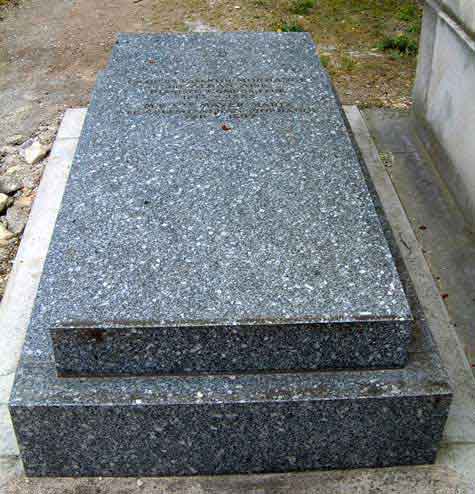
Alkan’s grave.

The good thing about e-Books is your death will not result from a falling bookcase.

dugout (1)Loonies_In_Hollywood-375x712coyotemoon_silentmurder (1)Cemetery_Tales_and_other_PhantasmsA-351x597coyotemoon_cemetaryb

Do You Agree With Pliny’s Quote about bad books?

“It is very rarely that a bad book does not contain some merit in the cultivated man.”- Pliny the Elder.

Writers will notice Pliny used the word ‘very’ and writers know to use that word, if at all, sparingly, very sparingly, but we must forgive the Roman Pliny for he lived from 26 AD to 79 AD and was unfamiliar with modern grammarians.

I admire Pliny for he loves to read, loves book, even bad ones, for he can find something of value where others can not.

But . .

Notice the phrase ‘cultivated man.’ The implication is that if you find nothing of merit in a bad book, something to take away from the book, you are not cultivated, therefore, or as Pliny would say ‘ergo’ you are unsophisticated, uncultured, unrefined, ignorant, perhaps outright stupid.   

Well who wants to be uncultured?

So we who want to be cultured, must of course, according to Pliny, find something in all books, no mater how bad, that we can learn from, or that brings up a pleasant memory, something we understand, that connects with us no matter how tangentially, anything at all.

I have tried. I have started books that had great reviews, or at least great blurbs on the back book jacket, and after twenty pages or so I am bored. I get what is going on. I just don’t care. Books talk to us. Each of respond differently to words, sentences, stories, just as we respond differently to food. Our taste buds are different. Sushi-never for me. Moby Dick-never for me.

Conversely, I have read books without any burbs whatsoever and found the story, the writing, everything about the book an absolute delight. Sometimes we are lucky and find these little treasures.

I do try to find something of merit Mr. Pliny, but I have many unread books, so I can set aside something that doesn’t taste quite right at the moment and try something else that looks more appetizing. But I do agree, every book does contain something for all of us, it is just a matter of connection.

Loonies_In_Hollywood-375x712coyotemoon_silentmurder (1)dugout (1)Cemetery_Tales_and_other_PhantasmsA-351x597coyotemoon_cemetaryb

MYSTERY OF THE WORD ‘BOOK’ AND HOW TO SAVE A BEECH TREE

I don’t know about you, but I have an interest in words. Where a particular word comes from, its origin, the root of the word, for some reason fascinates me. So I did some research wanting to know why we call a book a book.

One Internet search claims that ‘book’ is derived from the Danish word for bog, and or beech tree. Keep in mind this was a search done some while ago and I do not have the exact information, but it was Danish. Being half Danish and a writer I was proud of the Danish connection to ‘book.’ I surfed the Internet trying to find that information recently, but nothing showing the Danish connection was found, instead it was those Germanic languages taking claim.

One site said ‘book’ came from “Old English boc “book, writing, written document,” traditionally from Proto-Germanic *bokiz “beech” (cf. German Buch “book” Buche “beech;” I see the word beech, a tree, connected to the Danish origin which I had previously found. But notice it is now Germanic. Like World War 2, the Danes once again are at the mercy of those Germanic invaders from the south.

I found another site which echoed the above origin, almost word for word. But as we all know-at least I think we do-the Internet is not that reliable, and one mistake will be repeated over and over. Example: in researching a theatre, I found every website said the theatre, built in 1930, cost $200,000. I believed it, but they were wrong. I uncovered the original document which said it cost $60,000.

Now I am not saying that the origin of the word ‘book’ being Germanic is wrong, but more research needs to be done. There does seem to be an agreement that early Indo-European writings were etched on beech wood. Thus beech evolved into book, probably because of the sound of the word for beech.

Danish is a northern Germanic language-so the Internet tells me-and so I will hold out that the origin of the word ‘book’ is traced back to my Danish ancestors. The weather in Denmark is dreary most of the year, and the Danes, like Hamlet-who was based on a real Danish prince-are melancholy, so I am sure the Danes began writing and reading on beech wood because there was no television or Internet, and they needed something to do. Which is why this half-Dane wrote this blog in the first place.

No beech trees, or any type of trees, were harmed in the making of these delightful e-books that you can find here. Each book you buy saves a beech tree.


dugout (1)Loonies_In_Hollywood-375x712coyotemoon_silentmurder (1)Cemetery_Tales_and_other_PhantasmsA-351x597coyotemoon_cemetaryb

WHY I TALK TO MY BOOKS-A LAMENT

If you live long enough this will happen.

Today I have a firm handle on my remaining books. I dust them, talk to them, pet them like a cat, reorganize them on shelves. They are happy.

Why you ask do I do this?

I realized I had to do something.

I frequently go to library sales, Goodwill stores, thrift shops, and other places where books are found at cheap prices. During these expeditions I run across a book that gives me pause. I recall that I read the book years ago. I remember nothing of the story. Nothing. Then, as in the case of Robert Penn Warren for example, I recall other books of his I read. And though I recall titles, the story is lost, gone, as if never read.

Recently this happened when I found Paul Auster’s “Brooklyn Follies.” I recall reading his New York trilogy, but the stories, the characters, as elusive as the wind. What does this say about my memory? What would Marcel Proust say? Would I be a character in his seven volume opus? I think I would be more likely to end up in a Kafka novel as a comical, schizoid paranoiac character.

This happens so often two things occur to me. One is that I have read for more books than I have thought. So many stories they have disappeared from my memory; only when seeing the title, like a familiar face from the past, do I recognize it as a friend. And how many still forgotten books that I read are waiting for the title to be seen before I say, “Oh yeah, I remember reading that book.”

How, I ask myself, can a story that absorbed all my thoughts, that captured all my emotions, that engrossed my entire attention, be forgotten. How can this be? How can it be, in the end, so transitory?

The second thing is where are those books, where have they gone? I don’t remember disposing of them, not all of them anyway. Did I recycle them to second-hand stores? Did I give them to friends? Were some lost in moving? Did my mother throw them away like my baseball cards? (No!)

But still they have gone somewhere.

I wonder if being on my shelf for so long, feeling neglected, undusted, they decided to leave like a cat who thinks it is time to find a better home.

They must have snuck out in the middle of night, one here, one there, meeting up at a secret location, perhaps some used book store. A slow steady stream of books over time slinking out unnoticed.

With the story lost, they must not have had a reason to stay.

That is why I talk to my books today. I want them to stay around.

Loonies_In_Hollywood-375x712coyotemoon_silentmurder (1)coyotemoon_cemetaryb


The Dark Side of Being Organized

I recently downloaded an app that I thought would help me be better organized. Instead of writing Post-Its or making notations in a notebook near my keyboard, using scraps of paper, paper towels, or toilet tissue, I could put everything on this very organized app. I am going to tell you how it works, what I did, and how it created a dark side.

The app is called Get it Done and it is very helpful. There is an inbox, a today file, a next, a scheduled and a someday file. There is also a projects list where you can add and edit projects. You can do the same for something called Smart Groups. I have no idea what this is, but it is there. You can also add and edit people (if it were only that easy).

Keep in mind that this app is free, though there are certain functions for which you need to register and pay $39 per year. But for my needs the free features work quite well, thank you.

I have two items in my inbox. One will remain as it is a reminder of something I need to focus on each day, the other concerns upcoming events.  I have five items in my today function, one for today and the others for upcoming days. What I need to do, where to go, appointments; a daily calendar. I have 12 items in my someday file, though that could be in the projects folder as it has do to with my writing plans, projects I am working on and upcoming projects. So I may move it to that location.

Now keep in mind I had to set all this up, deciding what I needed to focus on, how I want it arranged and then typing in all my notes and so on. Upon completion my desk was clear and my life was organized in my cute little app. However, it took so long for me to organize my organizer that I had no time to write the blog I intended to write.

I also went to a book sale the next day and though I only bought nine books, in order to better organize things I had to spend three hours reorganizing my room in order to make my book case and shelves better organized, putting in alphabetical order all my unread books-now over 300 including e-Books-by size, alphabetized in three sections; hardback, trade, and paperback. All tidy, pretty, and organized. The problem of course is that I had no time to write my blog for the second consecutive day.

As you can tell, being organized is time consuming and leaves little time to get done what is on your list. I had to forego the blog I intended to write as I thought I should warn you about the dark side of being organized. It isn’t all it’s cracked up to be.

dugout (1)Cemetery_Tales_and_other_PhantasmsA-351x597coyotemoon_silentmurderPicture 022


Oscar Wilde, abandoned books, and us

Oscar Wilde said, “Books are never finished. They are merely abandoned.”

I know what he meant. If you have read Charles Dickens, Leo Tolstoy, or even “Infinite Jest” by David Foster Wallace, you know there are writers who write long, thick books that take a year to read. They love their characters, they love to see what their characters will do, and they love to escape into the world they created for their characters.  The real world can not be controlled, it is out of all our hands. But a writer can create a world, he can control what happens.

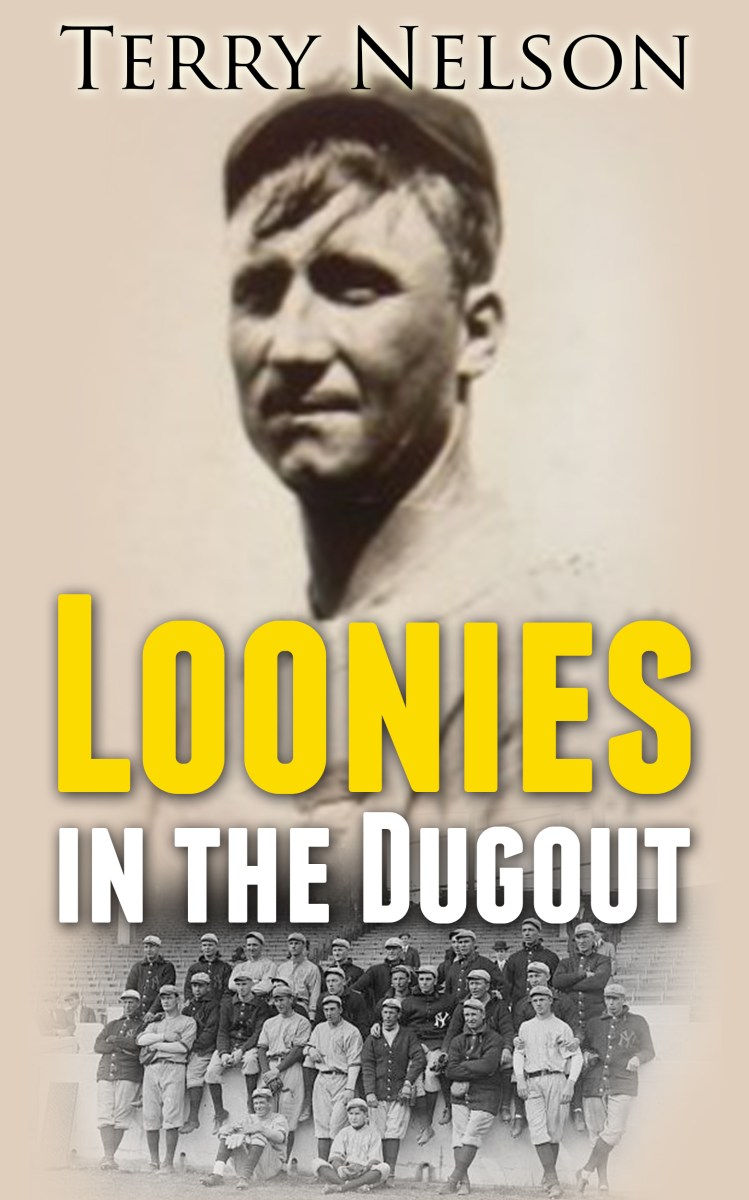
Using myself as an example. When I finished my first e-novel “Loonies in the Dugout” I realized, in part because of the ending, and in part because I loved my two main fictional characters, that I could not end their story. I had to abandon the book, it was finished, at least that one, so I took my two favorite people and placed them in a new story 11 years later in another town where I could hang out with them some more.

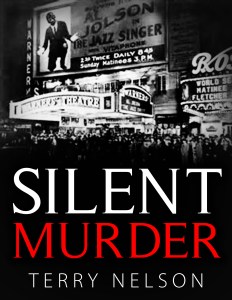
In the course of that e-novel “Loonies in Hollywood” I created another character, a flapper named Clancy. I fell in love with her as well, so when this book was abandoned because it must come to an end, I had to write a third e-book with all three of my friends. “That was “Silent Murder.”

Once that was abandoned I started another e-book with the same three characters. So I understand what Wilde meant. At least my interpretation of what he meant. He could also have been talking about the agony of rewriting and proofreading and that the writer reaches a point where he says ‘enough.’ But I think it has more to do with never wanting to escape the world the writer not only created, but inhabits with his characters, sharing their adventures. The writer is the fly on the wall.

Writers and readers do share a common bond and that is we both like to escape. The writers escaping into his world with his friends, secretly hoping to never have the story end, to write about them forever. And the reader escaping into a time and place, the world created by the writer, one the reader can also escape into. Perhaps we can find each other in this world. If you spot me, say hello.

dugout (1)Loonies_In_Hollywood-375x712coyotemoon_silentmurder (1)


My quest for the perfect ‘it’ and why

Whether it is called hook, logline, blurb, selling point, promo copy, or the old fashioned description, a writer needs to create something that entices, lures, snares, traps or otherwise induces the innocent to tap or click the buy button to download  the writers self published e-Book, a book that will enthrall, entertain, dazzle and delight. The writer needs the ‘it.’

In truth it is a calling card. Write a good description, one that shows some degree of writing ability and the potential reader is likely to make a purchase. If you write good copy then it follows the book must also be good. But writing that brief description is the hardest part of writing for many, myself included.

Over the past few years I have rewritten, edited, and changed the copy for all five of my books innumerable times and like the Great White Hunter of Bigfoot, my search continues. I revisit my descriptions to see what is wrong, how better can I make it. The following is an example for “Loonies in the Dugout.” 

The book is a fictional account of the mysterious Charlie Faust and how he influenced the Giants to win the pennant. His story is told through the eyes of rookie Chet Koski who is trying to woo chorus girl Eveleen Sullivan while trying to figure out big league pitching. A satire on fame and celebrity based on a true story in which Chet and Charlie meet Bat Masterson, George M. Cohen, Damon Runyon, and many others.

BORING.

I did not think so at the time, but with fresh eyes I see how dreadful it is. It is flat, matter-of-fact, does not engage, does not indicate a sense of style. I recently changed it to the following.

How does a 21-yeard old rookie off a Minnesota farm figure out how to hit big league pitching in New York when he is trying to woo chorus girl Eveleen Sullivan? Harder still when you find yourself becoming the guardian angel for the mysterious Charlie Faust who believes apple pie gives him pitching strength, even though he never pitches. Based on a true story about the 1911 New York Giants and the influence of Charlie Faust, featuring Bat Masterson, Damon Runyon, George M. Cohan, and the New York Giants of 1911.

Is it perfect.? No. But it is an improvement. It poses a question that engages the reader to think-however briefly. Within the first sentence it is indicated that this kid is in the big city, is trying to ‘figure out’ pitching and wooing, indicating perhaps a coming of age story. The next sentence indicates the kid is good guy because he is looking after a strange man, posing another question, a mystery of who this Charlie Faust is. Why does he love apple pie? Why does he think it gives him pitching strength-and he never pitches. And silly, yes maybe, but. . .it is based on a true story.

I think the second description is more colorful, less dry, more engaging. But of course, in a few months I may look at it and go “Yuck!”

But this is what writing is. Rewriting. And you are not stuck with your novel either. Yes, you can rewrite that as well. Mary Shelley did that with “Frankenstein” changing the nature of the good doctor and cutting a scene or two in a revised edition. Usually a writers first instincts are best and her original story is far superior.

But that is not true when searching for the perfect pitch to your novel.

dugout (1)


Does the Bible inspire murder

It follows like morning from night that when some mass murder or odious crime is committed moralists bring out their standard polemic condemning Hollywood for violence in movies, or they blame books like “Catcher in the Rye” because Mark Chapman carried it when he killed John Lennon.

I thought of this again when reading “The Beautiful Cigar Girl” about the murder in 1841 of Mary Rogers and how Edgar Allan Poe wrote his mystery “The Murder of Marie Roget” based on the facts of the case, which has never been solved.

Mary may have been one of the first to become famous for doing nothing. Take that Kardashians. She was young and so beautiful that men flocked to the cigar store where she worked, so many and so often, that newspapers took note and wrote about her popularity. She became so well known that when she disappeared for a few days there was near panic. She returned saying she was visiting someone. But a few years later she was found floating in the Hudson River, brutally murdered.

In the book, author Daniel Stashhower quotes James Gordon Bennett, a newspaper editor, who wrote about the murder in 1836 of Helen Jewett, a 23-year old prostitute. In her room was found Lord Byron’s book of poetry “Don Juan.”  Bennett wrote “the book has no doubt produced more wretchedness in the world than all the other moral writers of the age can check.” And the “Journal of Public Morals stated, “Avoid the perusal of novels.”

Don’t read books or Lord Byron’s poetry for they will lead you into prostitution and death.

I’m sure we can research back further in time and find more moral outrage. But blaming movies, TV, music, videogames, even Dungeons and Dragons, or anything antithetical to Ivory Tower moralists is misdirection. Many will bring up the Bible as the good book, the book of comfort and morality. Do these moralists know how many people were murdered in the Old Testament, how many were slaughtered, how many sins of Bible heroes were committed. Could the Bible have led to murder and sins of it’s readers? No, you say. How about the Crusades, the Inquisition, burning witches at the stake to free their souls? Or anti-abortionists who kill doctors and nurses?

Maybe moralists have a point. Reading is dangerous.

On the other hand, is it not truer to say that people who were inspired to murder, mayhem, and other crimes, had something wrong with them to begin with. More people have not committed murder from reading the Bible than have committed murder. More people have read “Catcher in the Rye” and not killed than those who have.

In short there is no correlation between art and crimes. People commit crimes; people point fingers. Those fingers are pointed the wrong way.

dugout (1)Loonies_In_Hollywood-375x712coyotemoon_silentmurder (1)Cemetery_Tales_and_other_PhantasmsA-351x597coyotemoon_cemetaryb

Three reasons to advertise your book on Amazon

I avoided advertising my books because I wanted to build a library and now that I have five e-books on Amazon I thought it was time. I also delayed because being frugal (cheap), I was leery of diving into that pool. Add to that I am not a business person, nor a social media butterfly, and, in the interest of full disclosure, I am lazy. But it is good to research extensively before diving into the pool. So here is why I chose Amazon.

Reason number one to advertise with Amazon: As someone said if you do nothing, then nothing will happen. So if you want to achieve something you must do something. If it fails, you learn something and move forward. Since my books are on Amazon I researched their marketing program. It was easy to set up a campaign. You set a budget, say $100. The good thing is you are not charged up front. You are charged when someone clicks your ad to read about the book. The charge comes from what you bid-and this I do not understand at all. I was never good in math. The bad news is that there is always the chance that during the length of the campaign, nobody will buy your book and you are out $100. That is not a bad thing though as I will share on reason two. The poor result could be that the brief description of your book, the hook, the logline, the pitch, did not register with those who clicked. What you write in the ad must sell interest to click. I plan on adding a campaign with all my books, staggering them. The reason you will read about in reason three.

Reason two to advertise with Amazon: I mentioned the possibility that you could end up losing $100 if nobody bought your book. Yes that hurts. But consider this. You can read in your dashboard how many clicks you are getting. I had 48 clicks within a couple of days. The cost was just over $3. If you extend the number of clicks you can get for $100 then you have a lot of people who are now familiar with your name and that is part of building awareness. The more people who see your name, the better chance they will buy a book in the future. To build your brand ( I hate this word) you build name recognition. Consider it part of long term strategy. The only thing that happens overnight is dawn. Everything else takes time.

That brings me to reason three as to why I am staggering my add campaign with my books on Amazon. It not only has to do with getting my name out there by clicks and sales, but because I  have different audiences. I have two collection of short stories, both of which fall into the supernatural and horror category. Three other books are part of a series, though each can be read as a stand alone e-novel. The first is a satire on fame and celebrity based on a true story with the 1911 New York Giants baseball team. So that is baseball fiction. The two main characters I created I then used in two murder mysteries, with a third on the way. So I can not advertise just one book, as I have different audiences to reach.

But is Amazon the only place to advertise? No. But I had to start someplace. I will try Facebook in April and may tinker here and there with other avenues. Previously I had dipped into the water by trying Awesome Gang newsletter. They say they have over 4,000 subscribers I believe, but don’t quote me on that. It cost $10 to be in their newsletter for one day. Cheap, I like it. No sales though. But as I said I was dipping my toes in the water. There are many of these newsletters and some authors have had sales. But I would urge you to fully research these sites as many will not deliver what you want. Also, based on what I have read from other authors, be cautious of anyone promoting your book on Twitter. Writers are told not to use adverbs like ‘very’ so I will not write that you should be very cautious.

I will keep you updated.