Oscar Wilde, abandoned books, and us

Oscar Wilde said, “Books are never finished. They are merely abandoned.”

I know what he meant. If you have read Charles Dickens, Leo Tolstoy, or even “Infinite Jest” by David Foster Wallace, you know there are writers who write long, thick books that take a year to read. They love their characters, they love to see what their characters will do, and they love to escape into the world they created for their characters.  The real world can not be controlled, it is out of all our hands. But a writer can create a world, he can control what happens.

Using myself as an example. When I finished my first e-novel “Loonies in the Dugout” I realized, in part because of the ending, and in part because I loved my two main fictional characters, that I could not end their story. I had to abandon the book, it was finished, at least that one, so I took my two favorite people and placed them in a new story 11 years later in another town where I could hang out with them some more.

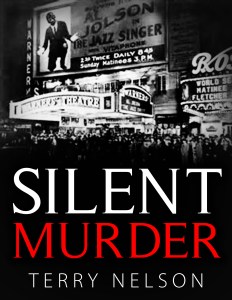
In the course of that e-novel “Loonies in Hollywood” I created another character, a flapper named Clancy. I fell in love with her as well, so when this book was abandoned because it must come to an end, I had to write a third e-book with all three of my friends. “That was “Silent Murder.”

Once that was abandoned I started another e-book with the same three characters. So I understand what Wilde meant. At least my interpretation of what he meant. He could also have been talking about the agony of rewriting and proofreading and that the writer reaches a point where he says ‘enough.’ But I think it has more to do with never wanting to escape the world the writer not only created, but inhabits with his characters, sharing their adventures. The writer is the fly on the wall.

Writers and readers do share a common bond and that is we both like to escape. The writers escaping into his world with his friends, secretly hoping to never have the story end, to write about them forever. And the reader escaping into a time and place, the world created by the writer, one the reader can also escape into. Perhaps we can find each other in this world. If you spot me, say hello.

dugout (1)Loonies_In_Hollywood-375x712coyotemoon_silentmurder (1)


Writers are diseased-and there is proof

“Many suffer from the incurable disease of writing, and it becomes chronic in their sick minds.”

The above quote comes from Decimus Lunius Luvenalis, but we know him as Juvenal, a first-second century poet know for his satires that are considered a scathing indictment of Roman life and culture, not to mention politics. He may have been trying to be funny in the above quote, but it turns out he may be right.

There is a disease called hypergraphia. Fyodor Dostoyevsky suffered from it. He was a compulsive writer who suffered from epilepsy, a type of epilepsy in the brain that compelled him to write, write, and write, not just novels and novellas, but short stories,  journals, and of course, what writers frequently did in the days before email, write letters. He believed his best writing came when he was sick.

Writers of fiction write because they want to communicate. Consider the  narrator in the Rime of the Ancient Mariner. He stops a young man on his way to a wedding. It was rude of him to waylay that young man, but he was compelled to tell his story and that man was going to be his audience, come hell or high water. As Joan Didion once wrote, ” In many ways writing is the act of saying I, of imposing oneself upon other people, of saying listen to me, to see it my way, change your mind.”

Storytellers must tell their story and if said storyteller is an extroverted gregarious sort, he will not be a writer, but a big blowhard who never shuts up. But if the storyteller is an introvert with a sensate personality he tells his story in fiction. And how nice of him not to bother young men on the way to weddings. Though if he is clever, the writer will slip his book into the young man’s jacket pocket; the equivalent of an Amazon promotion where you give your book away for free for a limited time.

Most fiction writers are methodical,  keeping to a schedule, or trying to, but few of us have the mad disease that compels us to write, forsaking family, friends, and cats. Few of us are as sick as Dostoyevsky, but we writers must communicate, and because we write better than we speak, we put our words to paper-or digital algorithms.  We are introverts after all. We like to speak from a safe distance, the better to control our type of madness.

To learn more about hypergraphia there is a book by Alice Flaherty, who is both neurologist and writer. She writes from her experience with a postpartum mood disorder. The book is “Midnight Disease.”

dugout (1)Loonies_In_Hollywood-375x712coyotemoon_silentmurder (1)Cemetery_Tales_and_other_PhantasmsA-351x597coyotemoon_cemetaryb


An inside look at the life of a 21st century writer-no punches pulled

I was going to begin working on my new novel this morning, but first I had to write this post. A writer must have self imposed deadlines and schedules. There are certain days to write and publish posts for this blog. And I might add, a great warm up exercise for the days writing.

Of course I, as any writer, must also Tweet about my five e-books available at Amazon Kindle, and another Tweet or two, or three, directing other Tweeters to my website where they can learn about me and my books. Since I am on Twitter I should search for other people to follow, to see if they will also follow me.

And as long as I am being sociable, there are thirty communities at Google+ that I have to visit in order to comment on posts, give them the ‘+’ all in the hopes they will do the same for me. After commenting, promoting, and ‘+’ others, I can then promote my e-books, my blogs, my website. I promote the others first of course, not only because I am generous with my time, but also because if I don’t I will be chastised, exorcised from circle of friends, and banned from the community.

Having done all the above it was time for lunch. I did not make any progress on my new novel, but at least I was not wasting time.

After lunch I needed to make a decision about Facebook. It really does little good promoting my books to family and friends. Though some are encouraging (some as in few, very few), most don’t have a Kindle, and others don’t care. They are busy posting funny videos of cats and sharing recipes for Risengrod (tap for recipe). So do I now create a Facebook fan page when I have not enough fans to make it worthwhile. And what do I do on my fan page anyway?

Then their is marketing to consider. Do I try Amazon merchandising campaign ads to promote my books?  You must spend money to make money is the old adage. No doubt coined by an ad salesman to make money from those who won’t make money.

Prior to the Internet, writing was a solitary art, now it is a social art. My question is, when do I find time to write my next book? It is dinner time after all. Maybe after viewing those cat videos.

coyotemoon_silentmurder (1)Cemetery_Tales_and_other_PhantasmsA-351x597coyotemoon_cemetarybdugout (1)Loonies_In_Hollywood-375x712

This post was revised and edited from one of my posts on a different website.


Two mandates of writing to use in your life

dugout (1)coyotemoon_silentmurderLoonies_In_Hollywood-375x712

There are two things a writer, any writer, must do or he will fail. It is unescapable and few writers, if any, like doing it, for that is where the hard work is, but the two mandates can also be applied to your life and it is a good idea to use them .

The first is proofreading. It is sitting down and reviewing what has been written to see what needs changing. And there are mistakes in writing and there are mistakes in one’s life. So in proofreading you examine how do make the story better. Your life is your story, so why not periodically sit down and review you life, check to see what needs improving; what needs fixing and how to fix it.

I remember while proofreading my first e-novel, “Loonies in the Dugout” that two sections, the writing of which I liked, still had to be cut entirely out of the story. Not cleaned up, not revised, but deleted with prejudice. Neither section advanced the story or had any character development. If there is something in your life that is not advancing your story or helping your development, then cut it out.

Cutting things out of your life, as in fiction, is called editing. Yes, you can edit your life for you are the writer, the proofreader, and the publisher. Your audience are friends and family. If you like, you can ask them what they would hope to see you edit out of your life. (not saying they’re right, but it doesn’t hurt to listen).

In the same e-novel I was trying for a theme in the first part of the book. It had to do with heat. The story was true and it began in the summer of 1911 when there was a heat wave, many people died during this time. So I had a lot of metaphors, similes, and descriptions where heat factored in the story. The problem I saw was that it did not work and had to be rewritten. As much as I liked it, it didn’t work, so it had to be changed.

That is the hard part about proofreading and editing your life. There are things you like, say eating three maple bars for breakfast. Who doesn’t love maple bars? But I don’t think three is good for you. Maybe cutting to one, then down to one half, then cutting them out would be a good idea. Blueberries in oatmeal, now that is better for your story.

So that is what I have learned from writing, to sit down, look at my life, see what needs changing, editing, fixing, and to make necessary changes. You can do the same and you don’t have to be a writer.

Cemetery_Tales_and_other_PhantasmsA-351x597coyotemoon_cemetaryb

Survival for writers suffering with depression.

Depression is not fun. I know because I have dysthymia, a mild form of depression for which I took a prescribed drug for many years, but I stopped due to side effects and I wanted to battle it on my own. People with dysthymia are apathetic (not always a bad thing), both mentally and physically and tend to be negative and passive. Now blend in two of the four Greco-Roman humors, those being melancholy (analytic and quiet) with choleric (short tempered and irritable) and you know more about me than I want you to know. As you may have surmised that being apathetic, negative, short tempered, and irritable I have no friends. But then I also have a twinge of paranoia.

Let me be clear. Depression is not feelings of sadness. Everyone feels sadness, not everyone is depressive. Depression is a disease. In my case and in most forms of this depression, it is a problem with the flow of serotonin in the brain. “Beating the Blues”, paperback and Kindle was helpful to me. 

Now that you know I have depression and if you a writer suffering with this disease I can tell how I battle my apathy to get going. I try to write everyday, yet I fail. It is not that I have places to go, though sometimes that is true, but there is no excuse other than I can’t overcome my apathy. What does help, though not always, is drinking Chinese tea. I suppose it is the caffeine, but it does simulate my brain. I am writing my third blog today, all drafts that will appear in the next week or two. I may do another draft as my brain is active. In other words, strike when you can. One day, full of Chinese green tea, I wrote 2,410 words of my novel in progress in three hours. I drank three cups of the same tea today and now, as I said, I am working on my third post draft.

One other thing to overcome is the quilt if you are not writing. It is hard to forgive yourself, that you are wasting valuable time, that you should be writing, but can’t. That is the hardest thing for me, as the guilt festers, multiplying the apathy, increasing the feelings of futilityThen you have to forgive yourself for the guilt over the guilt. It can be a never ending cycle.

I can tell you what doctors will say. Exercise the body, you will feel better. When I do that, I do feel better. But being apathetic, like writing, I fall away, not able to keep it up every day. It is interesting in listening to those who do not suffer from depression, who do not, can not, understand it. They say, ”Well just do it,  just sit down and write.” Ah, if only it were that easy. Even with depression and understanding it, I still don’t know why I can’t just sit down and do it.

So if you are a depressed writer, do something to stimulate your brain, whether coffee, tea, exercise, running, walking, swimming, and then remember to forgive yourself if you are not stimulated each and every day. And of course it does not hurt to just sit down and write one sentence and see where it leads. Just tell yourself, just one sentence. You never know, it may lead to another, then a paragraph, then . . .

just keep trying. 

Cornell Woolrich twists a readers mind into a pretzel in “Fright.”

Cornell Woolrich, 1903-1968, wrote great crime stories including, “It had to be Murder,” made into the classic Hitchcock film “Rear Window.” In fact over thirty movies have been made from his stories, including two by French director Francois Truffaut, “The Bride Wore Black,” and “Mississippi Mermaid.”

But one that escaped the moves is one he wrote under the name George Hopley. The title is “Fright” and it is about a man who kills a woman on the day of his wedding because she is blackmailing him and he wants nothing to upset his plans. The story goes into how he tries to evade the private detective he believes is after him. He and his wife move to another city and he believes a new man in the office is the detective that is after him. The killer murders him and another person. He clearly has that paranoia/guilt that you find in the killer of Poe’s tale, “The Tell Tale Heart.”

The story winds down to an what seems an appropriate ending, a type of justice, because after what he has just done, there is no way out. But the problem is that while you are reading this ending you are aware there is one more chapter.

I won’t tell what is revealed in the final chapter, but I will say my jaw literally dropped open. It is the  “You got to be kidding” type of ending. The phrase “I never saw this coming,” is accurate to the nth degree. It is the type of ending that makes you reflect on the entire story, makes you reevaluate, makes you ponder something more than justice, takes you on an entire new journey of thought. I read the book about a year ago and the ending still haunts me.

As a writer you can not help but admire what Woolrich did. The book is not a mere crime story. It is more than a story about guilt, worry, paranoia. It goes far beyond that. Woolrich leads you down an expected path with wonderful writing, then twists your mind into a pretzel.

Does Woolrich play a trick on the reader? I will never tell. But it is a perfect book for writers to study, to figure out for themselves how to construct a great ending.

At the top of this site is info on who I am and  what my novels and short stories are about. My Seattle Mariner blog  is here. Thanks for reading.