WHY THINKING IS BAD FOR WRITERS

The following is reposted from a previous incarnation of my writing blog “The quill, the e-word, the looniness.”

Thinking is not good for writers. Thinking means analyzing what you are doing, dissecting your sentence, your paragraph, your page. Is everything you want to say there? Is it said the correct way? And are you following all the rules those creative books say you should do? Does doing this numb the mind? If you want to improve your writing, then stop thinking and just write. And here is why.

In his book “Zen in the Art of Writing” Ray Bradbury says,  “. . . the more swiftly you write, the more honest you are. In hesitation is thought. In delay comes the effort for a style; instead of leaping upon truth which is the only style worth deadfalling or tiger-trapping.”

I don’t know what Bradbury means by ‘deadfalling or ‘tiger-trapping’, but I understand what he is talking about.

Style can not be calculated. Style is how you write and that reflects who you are; a writers style comes out of his being. Don’t be who you are not. It is impossible for me to write a tragedy, a serious drama, a heart warming love story, or an inspiring story. The reason is that my sense of humor, good or bad, always finds its way into the story. I can’t help myself. That is why the titles of my first two e-novels begins with the word “‘Loonies.” It is part of my world view that there is something loony about humanity, with how we think, our actions, and so on. Whether we recognize it or not we are kind of funny in a weird way.

So I write without thinking. I write with what is coming out of my head, entering my characters mouths’ giving me the opportunity to blame them for their actions or inactions. Consider these two phrases; “He who hesitates is lost?” and “To thine own self be true?” They apply to writing. Don’t think, just let you mind flow and be who you are. I write what I write in the way I write because that is who I am. It will work for you as well. So go trap a tiger.

dugout (1)Loonies_In_Hollywood-375x712coyotemoon_silentmurder (1)


My lustful disease for books now has a name

In my July 6th post I told how I was buried under an avalanche of books, that my purchasing was outgaining my reading by 234 books. Five days later I shared what I purchased at a recent book sale and wondered what disease I had. I was not a compulsive buyer of books, though it seems that way, but I am not. Honest.

What I discovered subsequent to that post is that a bibliophile is  a lover of books. However, a bibliophile can quench his lust in a library without buying books. No what I am is a book collector. Some people bring home stray cats and give them a home. When you consider the cost of a litter box, bowls for food and water, shots, cat food and assorted accoutrements, you are better off bringing home stray books and give them a warm home.  

Years ago I read Bernard Malamud’s “The Natural” and that book has disappeared. It may have been a runaway. I hope it has found a nice home. But I now have two copies. One is a small 1952 Dell paperback purchased because of the cover, a painting by Bill George, on the left, and a 1966 edition from Time Life, cover art by Karl Stucklin on the right, purchased because of an introduction by Robert Angell, Hall of Fame baseball writer. 

DSCF0392DSCF0393

I collect fiction, non-fiction, whatever captures my eye and my lust.

In the book “The Man who Loved Books Two Much”  by Allison Hoover Bartlett, Walter Benjamin is quoted, “Ownership is the most intimate relationship that one can have to objects. Not that they come alive in him; it is he who comes alive in them.” I must admit when purchasing books I get a bit of a high, that coming alive feeling. I love reading the copyright page where you find what edition the book is, which printing it is. I love reading the first paragraph, flipping through the pages, and of course, the cover art.

Other books about the insanity are:

A Gentle Madness by Nicholas Basbanes

To Have and To Hold by Philipp Blom

Anatomy of Bibliomania by Holbrook Jackson

Collecting: An Unruly Passion by Werner Muensterberger

If there is a cure, I don’t want to know about it. I am content.

dugout (1)Loonies_In_Hollywood-375x712coyotemoon_silentmurderCemetery_Tales_and_other_PhantasmsA-351x597coyotemoon_cemetaryb


Here is what I purchased to feed my lustful disease

In my previous post I mentioned I was buried under an avalanche of books and that I was going to a book sale at the local library that raises funds for said library. Before I show you what I bought, I tried to find a name for the disease of those of us who-it might be said-are compulsive book buyers-but I found none specific to book buyers, but Google does no always find what I am looking for. The closest word is oniomania. It is a compulsive buying disorder that causes problems with everyday life. Book Buyers exempt.

The word ‘bookaholic’ does not really apply. It is a person who loves books, but when you continue to buy and your reading can’t keep pace with the purchasing then there must be a better, more accurate term. But I am not compulsive. It certainly does not interfere with daily life as daily life continues no matter what I do.

I may be in denial, having bought 21 books plus one Justice League of America comic book on Saturday, days after receiving two hardbacks from Amazon, “Paper,” a book on the history of paper, and “You May Also Like” a book on taste in the age of endless choices. It tells us why we choose what we do. (At least I have heard it will, as it remains unread for the moment).

Saturday sale 

Paperbacks:

Callander Square-Anne Perry

The Rose Rent-Ellis Peters

The Snake, the Crocodile, and the Dog-Elizabeth Peters

Live to Tell-Lisa Gardner

Nightmare in Pink-John McDonald

five mysteries by Dana Stabenow-set in Alaska.

Mr.. Murder-Dean Koontz

House of Sand and Fog-Andrus Dubus

Foucault’s Pendulum-Umberto Eco

The Island of the Day Before-Eco

Grendel-John Gardner

What Killed Jane Austen and other medical mysteries 

Hardbacks:

John Dickson Carr Treasury-two novels

Light Thickens-Ngaio Marsh

Book of Lies-Brad Meltzer

Faithless-Karen Slaughter

The World’s Last Mysteries-Readers Digest 

One Justice League of America comic 

21 books + one comic. Cost $6, tip included at Friends of the Library Sale


Sale continued Monday:

The New Yorker Album of cartoons 1925-195o (oversized

The New Yorker Album of cartoons 1955-1965 (oversized)

Hardbacks:

Bag of Bones-Stephen King

Devices and Desires-P.D. James

The Red House Mystery-A.A. Milne (Yes the Winnie the Pooh guy)

This Side of Paradise-F Scott Fitzgerald

Tender is the Night-F Scott Fitzgerald

The Dark-Carrie Brown ( a professor from my alma mater)

Paperback:

Something from the Nightside-Simon R. Green

The Natural-Bernard Malamud

Freedom From Fear-Pulitzer Prize winner from David Kennedy. The American people in the depression and war 1929-1945

And finally a book all book lovers MUST have on their shelf. It is “The Man Who Loved Books Too Much,” by Allison Hoover Bartlett. It is about a man who loves books and steals a fortune in rare books, not to sell, but for himself and the detective on his trail. I hope he is never caught. On the back of the book in the description it says this. . . “deep into the rich world of fanatical book lust. . .” Book lust, that must be the disease, an erotic, lust of books.

Cost-$6 (tip included)

dugout (1)coyotemoon_silentmurderLoonies_In_Hollywood-375x712Picture 022


HELP! I’M BURIED UNDER AVALANCHE OF BOOKS

In an April 4th post about three cheap ways to become a bookaholic I mentioned  that I had 81 unread e-Books and 133 unread old fashioned books, the type you hold in your hand without use of a device, unless, of course, you recognize hands as a device. This amounted to 234 books waiting for me to crack open, or in the case of an e-Book tap open.

Two months and a few days since that post there is no relief as the avalanche continues to bury me. Unread e-Books up to 96 and the old fashioned kind up to 157. This adds  up to 253, a 19 book gain. And keep in mind I have read and finished books during this time, hoping to lighten the load bearing down on me.

And it is going to get worse. This Saturday and again on Monday the Friends of the Library is holding one of there sales. The proceeds go to the library to help them purchase new books,  to aid library programs and buy supplies for kids. So everybody wins. Except for a book hoarder like myself; I can barely breath, let alone move under the weight of unread books.

How good is the sale you ask? Hardback books at 50 cents or 3 for a $1. Who does this? This is as close to giving books away as you can get. Do they expect me to stay away, do they think I have discipline? I believe they have these sales knowing they will make a fortune off me. And paperbacks are 25 cents each or 6 for a $1. The same goes for VHS tapes, CD’s and audio books. To be honest the CD’s they had at previous sale were mostly music to accompany your yoga workout, or music from countries I did not know existed. But I go for the books anyway.

I will spend the next few days reading books nearest my hands, as many as I can, foregoing meals, bathroom trips, sleeping, and doing anything that prevents me from getting out from under this cataclysmic cascade of opus delicti.

cropped-048.jpgLoonies_In_Hollywood-375x712coyotemoon_silentmurder


The frustration of translating dreams into digital adventures

Writers can relate. So too can anyone who has tried to write a story.

It begins with a dream, an idea, a thought, a fragment, a vision, a nightmare; it begins in some form within the writers brain, a sometimes partner, but more a landscape like that of the moors in “Hound of the Baskerville’s,” foggy, swampy, and empty, where the writer as detective searches out storylines, but finding none let’s his mind go, then without seeking, ideas bounce around in his head like and ball caroming off walls on a handball court, fast and furious, coming at all angles. Stop. Let me catch one.

Then more frustration. The writer sees in his mind the characters, he can see what will happen, he know where and how it will go. It is all played out in his mind. That is the fun part, the imagination given free reign, a daydream the writer escapes into. But how to accurately translate what is in the writers brain onto paper or the digital magic of Word is the problem.

The language must be precise. What is the right word? There might be a better word that more acutely gives the proper nuance. Sometimes the writer knows the word is there someplace, but it is elusive, just out of his mental grasp. Search the Thesaurus. But while doing that the rest of the thought, the rest of the paragraph may dissipate like morning fog when the sun comes up. Gone. What was I going to say? Exactly.

The brain works faster than the writers hand can write, faster than the writers fingers can type. And while writing, typing, trying to translate with perfection the thought, the description, the dialogue, the everything, it can never be perfect. Frustration. Something, no matter how slight the shading, gets lost in translation. It is never perfect. But it can be in one sentence. It can be in one paragraph. Here and there something comes out exactly, or as close to exactly as possible, but on the whole, in its entirety, the translation is never what was racing through the writers landscape.  

Even in rewriting, the art of clarification, of rhythm, of making sense, the writer has a chance to make the dream whole and complete. But he is merely fixing, not realizing. By the end of the story, the origin of the daydream, the vision, what is left is the ghost of the story, but often it is good enough.

dugout (1)Loonies_In_Hollywood-375x712coyotemoon_silentmurderCemetery_Tales_and_other_PhantasmsA-351x597coyotemoon_cemetaryb


Oscar Wilde, abandoned books, and us

Oscar Wilde said, “Books are never finished. They are merely abandoned.”

I know what he meant. If you have read Charles Dickens, Leo Tolstoy, or even “Infinite Jest” by David Foster Wallace, you know there are writers who write long, thick books that take a year to read. They love their characters, they love to see what their characters will do, and they love to escape into the world they created for their characters.  The real world can not be controlled, it is out of all our hands. But a writer can create a world, he can control what happens.

Using myself as an example. When I finished my first e-novel “Loonies in the Dugout” I realized, in part because of the ending, and in part because I loved my two main fictional characters, that I could not end their story. I had to abandon the book, it was finished, at least that one, so I took my two favorite people and placed them in a new story 11 years later in another town where I could hang out with them some more.

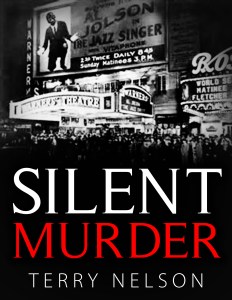
In the course of that e-novel “Loonies in Hollywood” I created another character, a flapper named Clancy. I fell in love with her as well, so when this book was abandoned because it must come to an end, I had to write a third e-book with all three of my friends. “That was “Silent Murder.”

Once that was abandoned I started another e-book with the same three characters. So I understand what Wilde meant. At least my interpretation of what he meant. He could also have been talking about the agony of rewriting and proofreading and that the writer reaches a point where he says ‘enough.’ But I think it has more to do with never wanting to escape the world the writer not only created, but inhabits with his characters, sharing their adventures. The writer is the fly on the wall.

Writers and readers do share a common bond and that is we both like to escape. The writers escaping into his world with his friends, secretly hoping to never have the story end, to write about them forever. And the reader escaping into a time and place, the world created by the writer, one the reader can also escape into. Perhaps we can find each other in this world. If you spot me, say hello.

dugout (1)Loonies_In_Hollywood-375x712coyotemoon_silentmurder (1)


My quest for the perfect ‘it’ and why

Whether it is called hook, logline, blurb, selling point, promo copy, or the old fashioned description, a writer needs to create something that entices, lures, snares, traps or otherwise induces the innocent to tap or click the buy button to download  the writers self published e-Book, a book that will enthrall, entertain, dazzle and delight. The writer needs the ‘it.’

In truth it is a calling card. Write a good description, one that shows some degree of writing ability and the potential reader is likely to make a purchase. If you write good copy then it follows the book must also be good. But writing that brief description is the hardest part of writing for many, myself included.

Over the past few years I have rewritten, edited, and changed the copy for all five of my books innumerable times and like the Great White Hunter of Bigfoot, my search continues. I revisit my descriptions to see what is wrong, how better can I make it. The following is an example for “Loonies in the Dugout.” 

The book is a fictional account of the mysterious Charlie Faust and how he influenced the Giants to win the pennant. His story is told through the eyes of rookie Chet Koski who is trying to woo chorus girl Eveleen Sullivan while trying to figure out big league pitching. A satire on fame and celebrity based on a true story in which Chet and Charlie meet Bat Masterson, George M. Cohen, Damon Runyon, and many others.

BORING.

I did not think so at the time, but with fresh eyes I see how dreadful it is. It is flat, matter-of-fact, does not engage, does not indicate a sense of style. I recently changed it to the following.

How does a 21-yeard old rookie off a Minnesota farm figure out how to hit big league pitching in New York when he is trying to woo chorus girl Eveleen Sullivan? Harder still when you find yourself becoming the guardian angel for the mysterious Charlie Faust who believes apple pie gives him pitching strength, even though he never pitches. Based on a true story about the 1911 New York Giants and the influence of Charlie Faust, featuring Bat Masterson, Damon Runyon, George M. Cohan, and the New York Giants of 1911.

Is it perfect.? No. But it is an improvement. It poses a question that engages the reader to think-however briefly. Within the first sentence it is indicated that this kid is in the big city, is trying to ‘figure out’ pitching and wooing, indicating perhaps a coming of age story. The next sentence indicates the kid is good guy because he is looking after a strange man, posing another question, a mystery of who this Charlie Faust is. Why does he love apple pie? Why does he think it gives him pitching strength-and he never pitches. And silly, yes maybe, but. . .it is based on a true story.

I think the second description is more colorful, less dry, more engaging. But of course, in a few months I may look at it and go “Yuck!”

But this is what writing is. Rewriting. And you are not stuck with your novel either. Yes, you can rewrite that as well. Mary Shelley did that with “Frankenstein” changing the nature of the good doctor and cutting a scene or two in a revised edition. Usually a writers first instincts are best and her original story is far superior.

But that is not true when searching for the perfect pitch to your novel.

dugout (1)


Why vampire lovers should thank John Polidori

What we know of vampires in today’s culture through movies, television, and books, are not the vampires of ancient folklore. No, the vampires of old were far different, often bloated, monstrous looking creatures. They had no charm. There was nothing sensuous about them, nothing seductive, nothing like Count Dracula; in fact they were not sexy at all, far from it.

If you think Bram Stoker’s novel “Dracula” published in 1897 changed all that you would be correct-to a point. The book first published in England was not a best seller. It became one over time and movies helped, especially “Nosferatu” in 1922. In fact Stoker died nearly broke in 1912. His widow was forced to sell Stoker’s notes and outline for the book at an auction in 1913 and got around two pounds. And how much would they be worth today?

So it was movies and stage plays that got readers interested in “Dracula.” But literature, like folklore is built over time, and often on the shoulders of others. This is not plagiarism, however, it is literary evolution. A writer gets inspiration from another writer and advances the mythos. Whether Stoker read the short story “Vampyre” by John Polidori I don’t know, but Polidori’s story, published without his permission, nevertheless saw print in New Monthly Magazine, 1819, in England.

Polidori created his vampire, Lord Ruthven, from a character Lord Byron created in his unfinished vampire tale “Fragment of a Novel.” It could be that is why Polidori, and Byron,  did not want the story published. For Polidori, perhaps he was concerned he might have been plagiarizing-the story was first attributed to Byron- and for Byron, perhaps he had plans to finish his story. 

The Polidori story came about during that famous summer when, according to Mary Shelley, she, Percy Shelley, Byron, Polidori, told ghost stories one weekend, out of which grew Mary Shelley’s “Frankenstein.” It was believed this is where Polidori got the idea for his story.

This is where literary murkiness creeps in. Stoker gets credit for the modern vampire, yet Polidori wrote a character who was a nobleman like Dracula, but that character was based on a character created by Byron. All three can make claim to creating the modern vampire. And, of course, there are others in the wings, who were creating the ‘new vampire’ about this time. But I will stick with these Byron, Polidori, and Stoker, for their fangs are sharper.

If you are interested in the stories that came out of that weekend, including “Frankenstein,” “Vampyre,” along with both Byron’s unfinished story and Percy Shelley’s unfinished ghost story and have an e-reader, you can click “A Dark and Stormy Night.”

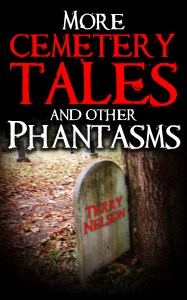
No vampires in my stories below, but you can still get spooked. Cemetery Tales or More Cemetery Tales

Cemetery_Tales_and_other_PhantasmsA-351x597coyotemoon_cemetaryb

Writers are diseased-and there is proof

“Many suffer from the incurable disease of writing, and it becomes chronic in their sick minds.”

The above quote comes from Decimus Lunius Luvenalis, but we know him as Juvenal, a first-second century poet know for his satires that are considered a scathing indictment of Roman life and culture, not to mention politics. He may have been trying to be funny in the above quote, but it turns out he may be right.

There is a disease called hypergraphia. Fyodor Dostoyevsky suffered from it. He was a compulsive writer who suffered from epilepsy, a type of epilepsy in the brain that compelled him to write, write, and write, not just novels and novellas, but short stories,  journals, and of course, what writers frequently did in the days before email, write letters. He believed his best writing came when he was sick.

Writers of fiction write because they want to communicate. Consider the  narrator in the Rime of the Ancient Mariner. He stops a young man on his way to a wedding. It was rude of him to waylay that young man, but he was compelled to tell his story and that man was going to be his audience, come hell or high water. As Joan Didion once wrote, ” In many ways writing is the act of saying I, of imposing oneself upon other people, of saying listen to me, to see it my way, change your mind.”

Storytellers must tell their story and if said storyteller is an extroverted gregarious sort, he will not be a writer, but a big blowhard who never shuts up. But if the storyteller is an introvert with a sensate personality he tells his story in fiction. And how nice of him not to bother young men on the way to weddings. Though if he is clever, the writer will slip his book into the young man’s jacket pocket; the equivalent of an Amazon promotion where you give your book away for free for a limited time.

Most fiction writers are methodical,  keeping to a schedule, or trying to, but few of us have the mad disease that compels us to write, forsaking family, friends, and cats. Few of us are as sick as Dostoyevsky, but we writers must communicate, and because we write better than we speak, we put our words to paper-or digital algorithms.  We are introverts after all. We like to speak from a safe distance, the better to control our type of madness.

To learn more about hypergraphia there is a book by Alice Flaherty, who is both neurologist and writer. She writes from her experience with a postpartum mood disorder. The book is “Midnight Disease.”

dugout (1)Loonies_In_Hollywood-375x712coyotemoon_silentmurder (1)Cemetery_Tales_and_other_PhantasmsA-351x597coyotemoon_cemetaryb


Need a plot for your mystery novel-try this

Loonies_In_Hollywood-375x712

If you want to write a murder mystery, or something more mysterious click/tap here for a list of unsolved murders and deaths dating from before 1800 to present day. If one intrigues you then take a hand at solving the murder on your own. I did this with “Loonies in Hollywood” in which I took the true life, unsolved murder, of silent film director William Desmond Taylor, and using the crime scene evidence, the most mentioned suspects, I chose the one mostly likely-to my thinking- and ‘solved’ the murder. 

Edgar Allan Poe also used the unsolved murder of Mary Rogers, a popular young woman, perhaps the first to became famous for doing nothing other than being so beautiful, that she attracted dozens of men each day to the cigar store in which she worked, attracting so many that newspapers began writing about her. For doing nothing. Poe took the story and using all the evidence wrote “The Mystery of Marie Roget.”

Those are but two examples and if you do a little research you will find many murder mysteries written by authors who based their story on an actual murder. They, like you, can do the research, examine the crime scene, take a look at the suspects, come to your own conclusion, and  then write the mystery. The benefit is that the story ingredients are all there for you, ripe for the picking that you can pluck straight off the tree and cook up the solution. It makes coming up with an idea on your own a mute point. And if it is a famous case, you will tend to sell more books, because famous cases, no matter how old, have followers.

I offer this as an option. I wrote “Silent Murder” based on nothing but my imagination, and if yours is hyperactive then drain your brain of all it has to offer. But if you get stuck for an idea, by all means, use the resource by clicking/tapping here.

coyotemoon_silentmurder (1)