Three bobbling writers heads to inspire

webPoeBobbleRoyal-500x500

Bobbleheads are popular in baseball. Every team has a bobblehead giveaway of their popular players every season. On my computer desk I have Seattle Mariners Felix Hernandez, Jaimie Moyer, and Lou Piniella. I also have  Desmond Mason from the NBA’s Seattle Supersonics. Also a former TV broadcasting duo from the Milwaukee Brewers Daron and Bill. Little did I know there are also Bobbleheads of writers.

dickensmark%20twain%20bobble%20head-1000x700

I searched on Amazon for the fun of it and found Edgar Allan Poe, Mark Twain, and Charles Dickens. I also found a Poe (above) on the Poe Museum website in Richmond, Virginia. What a great way for us writers to find inspiration than sitting down at the computer, looking at the shelf above your head and beginning the day by asking the Big Three if they like your writing, then tipping the heads’ of Poe, Twain, and Dickens, seeing their bobbing heads, imaging they are urging you on “Yes! Yes! please write more.” Nothing beats inspiration from those three writing icons.

In truth I was searching for Mary Wollstonecraft Shelley, but alas a Google search found none. If you know if there is one please provide a link. I can see a Bobblehead of Mary with the Frankenstein monster behind her. Bobble on! I will settle for an action figure of course.

It turns out there are Bobbleheads of most anyone, from Gandhi and Pope Francis to Fidel Castro and John Wilkes Booth. There are philosophers, Socrates and Aristotle, and for scientific nerds, Nikola Tesla and Albert Einstein. I am chagrined there is a Bobblehead for Booth, but not for Mary Shelley.

But back to the writers. It turns out that there are different versions of some writers, different bobbling, so you can choose a more fitting representation to suit your taste. Until I find my Mary, I will start with Poe, then go for Charles and Mark.

frankensteinbobbleheadLook who just bobbled in. Hey, where’s Mary ?


Amazon’s marketing analytics for writers must change

dugout (1)

I previously posted a blog about my ad campaign for “Loonies in the Dugout,” selling for .99 by the way. The campaign was approved, then soon after it began Amazon stopped it because of low relevance. To be honest how does one get ‘low relevance’ on the third day. I assumed the problem was that there were no categories in the marketing campaign listings for my e-book that is ‘sports fiction/satire’ so I  used literary fiction, the closest I could get. In my second attempt, after learning the campaign was stopped, I added sports/outdoors. The campaign was approved for the second time.

I had bid .70 cost per click, and I was getting .60. That seems good, but maybe I’m wrong. In the information I received from Amazon, it was estimated that my campaign, May 13 through June 8 would generate only five sales. They stopped the campaign on the third day and I had sold seven books, two more than projected, and I still had 22 days to go. Yet the email said customers were not engaging with the ad. Huh? Seven sales in less than three days, more than they said I would get.

They also suggested I increase my bid as it could be getting beat by other ads that were bidding higher for better placement. Sorry, I’m not taking the bait. I like my book, I want people to read it. That was why I lowered the price and created the ad campaign. But I will not increase my bid when it started so well.

In my original email to Amazon I said they should consider adding ‘sports fiction’ and ‘satire’ in their marketing campaign listings for targeting. They answered that they appreciate the feedback and would consider it at a future date. In their second email to me after telling them I had sold 7 books in first three days, out doing their projections, I received the following, “I’ll take your concern as feature request and communicate the same to our business team for consideration as we plan future improvements. I’m unable to promise a timeframe at this time, however, we are still evolving and feedback like yours motivate us to dive deep and unearth ways and means which helps us in making publishing on KDP a happy experience.  Please be sure to check our forums periodically for updates.”

Nothing against the forums, I have used them, but it takes a lot of ambling around to find the specifics you seek and the answers are not always helpful, nor are they necessarily correct. Why doesn’t Amazon just post something on the appropriate marketing page, saying ‘new and improved.’

I do like Amazon. I have made many purchases with them and I am sure they have enjoyed my money. I will take them at their word, that they are evolving and are seeking ways to improve (making more money), that they will ‘dive deep and unearth ways to improve,’ but I will also continue to check in to see if and when they change their methodology. They clearly need a better understanding of low relevance. Consider that they say they compare ‘like’ ads for effectiveness, but also say they don’t have specific numbers. If you compare things you learn something, yet they imply otherwise.

I will try again with other titles this summer, hoping my relevance improves.

Loonies_In_Hollywood-375x712coyotemoon_silentmurder (1)Cemetery_Tales_and_other_PhantasmsA-351x597coyotemoon_cemetaryb


Does the Bible inspire murder

It follows like morning from night that when some mass murder or odious crime is committed moralists bring out their standard polemic condemning Hollywood for violence in movies, or they blame books like “Catcher in the Rye” because Mark Chapman carried it when he killed John Lennon.

I thought of this again when reading “The Beautiful Cigar Girl” about the murder in 1841 of Mary Rogers and how Edgar Allan Poe wrote his mystery “The Murder of Marie Roget” based on the facts of the case, which has never been solved.

Mary may have been one of the first to become famous for doing nothing. Take that Kardashians. She was young and so beautiful that men flocked to the cigar store where she worked, so many and so often, that newspapers took note and wrote about her popularity. She became so well known that when she disappeared for a few days there was near panic. She returned saying she was visiting someone. But a few years later she was found floating in the Hudson River, brutally murdered.

In the book, author Daniel Stashhower quotes James Gordon Bennett, a newspaper editor, who wrote about the murder in 1836 of Helen Jewett, a 23-year old prostitute. In her room was found Lord Byron’s book of poetry “Don Juan.”  Bennett wrote “the book has no doubt produced more wretchedness in the world than all the other moral writers of the age can check.” And the “Journal of Public Morals stated, “Avoid the perusal of novels.”

Don’t read books or Lord Byron’s poetry for they will lead you into prostitution and death.

I’m sure we can research back further in time and find more moral outrage. But blaming movies, TV, music, videogames, even Dungeons and Dragons, or anything antithetical to Ivory Tower moralists is misdirection. Many will bring up the Bible as the good book, the book of comfort and morality. Do these moralists know how many people were murdered in the Old Testament, how many were slaughtered, how many sins of Bible heroes were committed. Could the Bible have led to murder and sins of it’s readers? No, you say. How about the Crusades, the Inquisition, burning witches at the stake to free their souls? Or anti-abortionists who kill doctors and nurses?

Maybe moralists have a point. Reading is dangerous.

On the other hand, is it not truer to say that people who were inspired to murder, mayhem, and other crimes, had something wrong with them to begin with. More people have not committed murder from reading the Bible than have committed murder. More people have read “Catcher in the Rye” and not killed than those who have.

In short there is no correlation between art and crimes. People commit crimes; people point fingers. Those fingers are pointed the wrong way.

dugout (1)Loonies_In_Hollywood-375x712coyotemoon_silentmurder (1)Cemetery_Tales_and_other_PhantasmsA-351x597coyotemoon_cemetaryb

HUH? Amazon approves ad campaign, then suspends when it starts HUH?

dugout (1)

The above e-novel was my first, of what is now five, e-Books published on Amazon.  It has been reviewed twice, both with four star reviews. If you want to learn more about it, you can tap the link at top of page. I loved writing the book and the two main fictional characters in this book, based on a true story, have now appeared in three e-novels. Baseball fiction does not sell well, unless you are named W.P. Kinsella, or Darryl Brock. So in order to gain more readers, because, as I said, I love this satire on fame and celebrity, I lowered price to 99 cents. 

I also decided to avail myself of Amazon’s marketing services and created an ad campaign with them. It is easy to setup. When submitted, either robots, humans, or some digital logarithms places the campaign in review to make sure it meets their standards of decency and all that jazz.  The campaign was approved. It was to begin May 9th and on that day I received an e-mail from their marketing service stating the campaign was stopped due to ‘low relevance.’

What, you ask, is ‘low relevance.’ Amazon says the following “There are a number of factors that impact relevance including the targeting you choose for your ad. Refining your targeting options to focus on related products or genres may improve your ad’s relevance.”

When I created the campaign you have a choice on whether to target by ‘interest’ or ‘product.’ For writers ‘interest’ is best. As I said baseball fiction is not a big seller and when choosing targeted relevance I chose literary fiction because neither sports fiction or satire was listed. But literary fiction was as close as I could get. I could select up to two I believe, so thought I should select another.

I redid campaign and submitted it again, this time adding ‘sports and outdoors’ under ‘other.’  I don’t know if this will work as campaign is under review, and even if approved, it may, like my first attempt, get approved then stopped on my new day to begin the campaign.

The only other problem I had in marketing with Amazon was the knife you see on the cover that I had to remove because of the image and what it means. I dealt with it, not a deal breaker. So I will see what happens with my new ‘relevance’ and in the interim I will contact marketing services to suggest they expand their list to include sports fiction and satire.

coyotemoon_silentmurdercoyotemoon_silentmurder (1)

Mystery of The Agony Column, Charlie Chan, and a free book

Earl Derr Biggers was known for his six  Charlie Chan mysteries and the movies made from them. But before he created the famous detective he wrote other mysteries. One of which “The Agony Column” is a mystery within a mystery. I bring this book up because it is worth examining for writers as well as readers. You may find the book a great read, or you can argue the novel is too cute, too clever for it’s own good. It is a public domain novel you can download to your reading app for nothing on Amazon. You can tap for the free book and judge for yourself.

It was written in 1916 and the story takes place in 1914 just before England enters World War I. Here is the set up. The title is derived from a column in a London newspaper. It is one where people can exchange messages with anonymity. An man is seated at a restaurant table when a lovely woman and her father enter, sit down and begin talking. The man, infatuated with the lovely young American learns she loves reading the Agony Column. So he places an ad that references where she had lunch. She answers saying she loves mystery and romance and if he can continue to keep her interested she will meet him.

We learn in his second letter that the man above his apartment has been murdered and over the course of his letters a great mystery with many twists and turns ensue as the young man is helping in the investigation, not something he expected to have happen and indeed he becomes a suspect as well, and for good reason. Is he innocent or will he confess in his last letter? Would it not be a great twist to have the narrator be the killer? In each letter he professes his admiration and love for her, but is unsure of his future because of the murder investigation. 

It is a clever structure to have the mystery told by the narrator through letters. Not something I have run across before. The mystery of what happened draws the reader in and because of the time 1914 with war about to break out in Europe it seems a likely spy is in the midst of the murder and one who may be with the British government. But  there is also good reason to believe someone else is the killer, including the letter writer.

But as with any great mystery there is a twist and that I can not share, but the twist is where the reader, and perhaps a writer might think it was a twist that should not have been made. I will understand if some don’t like the ending, I get it. But from a writers standpoint I see something else at work. The narrator is the writer, the woman is his audience, and Biggers is the author and we are his audience. Even in a wonderful mystery, Biggers is having fun, holding up a mirror to the construct and artifice of writing, poking and prodding his audience to the end when he says “Got Ya!”

Loonies_In_Hollywood-375x712coyotemoon_silentmurder (1)

Three cheap ways to become a bookaholic

After counting and doing a recount I have 234 unread books; 133 of the old fashioned kind, hardback and paperback and 81 21st century e-books. And I accumulated these books quite cheaply. And I have my eye on “The Autobiography of Mark Twain, volume 1” for $2 and an American Heritage book of the Civil War; pictures, illustrations, with words from Bruce Catton and James McPherson for $3. If you love books, here are my legitimate secrets. And I am not talking about Goodwill, yard sales, and the like.

  1. In Western Washington, the Timberland Library has a section where customers can buy books. Paperbacks $1 and hardbacks generally $2. It raises money for the library and therefore you are doing a good thing. I don’t know what happens in other libraries, in other states or regions, but check with your local library. I have found classics like “Madame De Lafayette” by The Princess De Cleves, as well as books from Truman Capote, Kurt Vonnegut, J.A. Jance, and some terrific non-fiction books like “The Oxford History of the Classical World.” The Friends of the Library raises money for the library and once a year they have a sale. I bought ten hardbacks for $2.25 and came back after 3 o’clock when everything was half priced and bought more books. And the day before the sale there was a box and two small bins that had free books. I took ten and they were from well known writers. One was a 1951 Dell paperback edition of Bernard Malamud’s “The Natural” and the cover was priceless, the condition quite good. Over those two days, including the free books I came away with 28 books, spending less than $4 and two bags of VHS tapes that they gave away for nothing, it being after 3 o’clock and they wanted to get rid of them. All were popular and classic films.
  2. In Olympia, Washington, and there may be one near you, is Half Price Books. They also have record albums, DVD’s, and classic comic books. The condition of their books  are better than what you might find at the library and once a year they have a sale where all books are $1.00. It is here I bought two Don DeLillo books, two early Michael Crichton books written under the name of John Lange, now published in the Hard Crime series, a great collection if you like crime noir and pulp fiction. I also purchased an Elmore Leonard, a P.D. James, among other books. They have other specials during the week, but this is one sale you never miss.
  3. Turning to e-Books there are many subscription services that send you daily emails where you can get e-Books from free to $2.99 and these e-Books, in the case of BookBub, are from well know writers. With BookBub you select the type of books you want, such as mystery, historic non-fiction, science fiction, horror, romance, whatever you desire.

The problem I face, and perhaps some of you as well, is that purchasing outgrows your reading. This is how I now have 234 unread books. Remember I never said you have to read any of them. I have read one since I reached 234, that being “The Ghost Writer” and am close to finishing James Patterson’s “Swimsuit.” So you can imagine with two books gone I will be getting itchy eyes for some more choices to read. I guess the Twain biography and the Civil War book may be added by days end.

If you have some cheap ways to get books please mention in the comment section. Not just for me, but for other bookaholics.

dugout (1)coyotemoon_silentmurder (1)Cemetery_Tales_and_other_PhantasmsA-351x597

How I lost my identity through writing fiction.

dugout (1)coyotemoon_silentmurder (1)

It started innocently enough. I was working on character names for my first e-novel, “Loonies in the Dugout” and thought I would use the first names of my father and two uncles for three fictional characters. But I also wanted to use my mother’s name, but this was a baseball novel and there was not going to be that many female characters. So I used my dad’s first name Chet, for the lead character, and my mother’s last name Koski for Chet’s last name. Though I got to honor my mom and dad in one character, I did not anticipate what would happen.

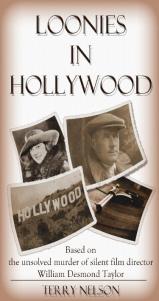
I enjoyed Chet and his girlfriend Eveleen so much I wanted to use them in another story, so I went from 1911 in my first book to 1922 in Hollywood for my second book in which Chet and Eveleen, now married, solve the murder of William Desmond Taylor. I had no problems in this story, but I got confused in book three.

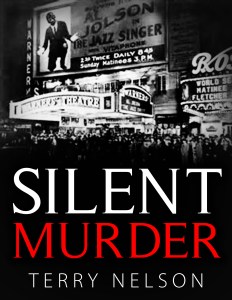
In “Silent Murder,” set in 1927, there is a murder and it turns out the victim was a cousin of Chet. But he had no idea this was his cousin. So the police, naturally, when they find this out and inform Chet, got me into a family tree to sort out some police questions. And I nearly messed it up. Chet’s fictional last name is Finnish, but I was thinking Danish because that is my real father’s heritage. Yes, I realized later that I could have used the Finnish family tree, but the problem is it was too hard to trace for too many reasons to go into here. So I was stuck staying with a Danish tree for a Finnish character. I had to tinker a bit.

This tree was part of the plot-at the beginning of the story anyway. It is always a possibility that this plotline was a red herring. Had I known while writing the first novel that Mr. Koski would continue in two more stories and another now in progress I would have done things differently. As it is, by using my mother’s maiden name, in the third book I dug a pit that addled my brain about two families. After all I am talking about people from the 1800’s whom I never met.

If I had to do it all over again I would have used my real fathers last name and changed his first name, using perhaps Paul (my mother’s name was Pauline). Or even better, use my fathers middle name as his first, so I would have had Alvin Nelson.  Actually I don’t like that name, Paul would be better, except that is also the middle name of another relative, and that only adds more confusion.

I dug myself into a pit and I am stuck with it. Did I learn a lesson? No. I am using the names of two real life cousins who are cousins in my work in progress, but the two cousins in real life from opposite sides of the family and have never met. I don’t care. The territory is familiar to me. Besides I am too confused about my family tree I no longer know who I am. Writing as many pitfalls.

Challenge your creativity with these stolen writing exercises

dugout (1)Loonies_In_Hollywood-375x712coyotemoon_silentmurder

Did the word ‘stolen’ get your attention. Shame on you.

They are not stolen, they are published in John Gardner’s “The Art of Fiction.” If you click on his name you find his Wiki page and a picture of him smoking a pipe. Writer’s back in the day-a long day past-often posed with their pipe. It made them look intellectual. He was that; a Beowulf scholar, professor, and writer. One of his students was the great short story writer, Raymond Carver. Before he died in a motorcycle accident in 1982 I met Mr. Gardner when I was in college.

There were two things I remember from his visit to my college to speak with some of us English Lit majors. First he said “Treasure Island” was something beyond fiction. He tried to explain, then realized he couldn’t explain it. It bothers me to this day. What was he trying to say when he is not sure what he is trying to say. The second is that when I had him sign my copy of his book “Grendel” he said it was his least favorite book, that it was not written well. Yet the book won an award, so there you go, a writer never satisfied with his work. And I respect that.

But he was very engaging and he offered a great writing exercise which I never forgot. He mentions it in the aforementioned book, on fiction, but I will offer some other exercises from the book to challenge your creativity and to make your work better.

For the  exercise to develop technique try this: Describe a landscape as seen by an old woman whose disgusting and detestable old husband has just died. Do not mention the husband or death. Or describe a lake as seen by a young man who has just committed murder. Do not mention murder. Or describe a landscape as seen by a bird. Do not mention the bird. 

To control tone in a complex sentence try this on for size. Write three effective long sentences: each at least 250 words, each involving a different emotion ( anger, pensiveness, sorrow, joy).

There are reasons for the exercises and that is to make your writing better, so get at it.

Thanks John.

Cemetery_Tales_and_other_PhantasmsA-351x597coyotemoon_cemetaryb


Five simple words to begin a novel

“Once upon a time” no longer works, we are past the fairy tale age, so how and why does a writer start chapter one. Writers are told to make the first paragraph interesting, give a hook, something to make the reader move to the 2nd paragraph. Some writers think that means  a slam bang opening, or beginning in the middle of some compelling mystery. Writers are free to choose their own opening, but . . .

Consider the simplicity of a single sentence. The first paragraph of Charles Bukowski’s “Post Office” is an example. He begins with five words. Bukowski writes, ” It began with a mistake.” Notice he did not say who made a mistake, not he, not her, not anybody, just ‘it.’ So what is ‘it’?  What is the mistake? What was the result of the mistake? How did the mistake affect the characters?  ‘It’ must be an action, don’t you think. Something happened that in the end was a mistake. Could the mistake have  been averted, or was it something innocent that turned out bad? There is no action, there is no beginning in the middle of something, there is no tension between hero and adversary.

Just five simple words.

Those five words bring up lots of questions and aren’t you curious to find out what the mistake was? Something bad is bound to happen, after all there was a mistake.

Writers too often try to overdo everything, including a novels opening. Like a young baseball pitcher trying to impress a manger by throwing too hard with no plan for the pitch a writer tries to hard to impress. Sentences overflowing with steroidal adverbs meant to dazzle, instead fizzle. The best thing a writer can do, the very best thing-yes I just used ‘very’-but it works here-is to get out of the way, not only of your writing, but of the characters, of the story, of everything. Writers should not draw attention to themselves, but be invisible.

Thus the simplicity of ‘It began with a mistake.’ Bukowski was not trying to impress, he was luring you into the story. And that is impressive.


Three reasons to advertise your book on Amazon

I avoided advertising my books because I wanted to build a library and now that I have five e-books on Amazon I thought it was time. I also delayed because being frugal (cheap), I was leery of diving into that pool. Add to that I am not a business person, nor a social media butterfly, and, in the interest of full disclosure, I am lazy. But it is good to research extensively before diving into the pool. So here is why I chose Amazon.

Reason number one to advertise with Amazon: As someone said if you do nothing, then nothing will happen. So if you want to achieve something you must do something. If it fails, you learn something and move forward. Since my books are on Amazon I researched their marketing program. It was easy to set up a campaign. You set a budget, say $100. The good thing is you are not charged up front. You are charged when someone clicks your ad to read about the book. The charge comes from what you bid-and this I do not understand at all. I was never good in math. The bad news is that there is always the chance that during the length of the campaign, nobody will buy your book and you are out $100. That is not a bad thing though as I will share on reason two. The poor result could be that the brief description of your book, the hook, the logline, the pitch, did not register with those who clicked. What you write in the ad must sell interest to click. I plan on adding a campaign with all my books, staggering them. The reason you will read about in reason three.

Reason two to advertise with Amazon: I mentioned the possibility that you could end up losing $100 if nobody bought your book. Yes that hurts. But consider this. You can read in your dashboard how many clicks you are getting. I had 48 clicks within a couple of days. The cost was just over $3. If you extend the number of clicks you can get for $100 then you have a lot of people who are now familiar with your name and that is part of building awareness. The more people who see your name, the better chance they will buy a book in the future. To build your brand ( I hate this word) you build name recognition. Consider it part of long term strategy. The only thing that happens overnight is dawn. Everything else takes time.

That brings me to reason three as to why I am staggering my add campaign with my books on Amazon. It not only has to do with getting my name out there by clicks and sales, but because I  have different audiences. I have two collection of short stories, both of which fall into the supernatural and horror category. Three other books are part of a series, though each can be read as a stand alone e-novel. The first is a satire on fame and celebrity based on a true story with the 1911 New York Giants baseball team. So that is baseball fiction. The two main characters I created I then used in two murder mysteries, with a third on the way. So I can not advertise just one book, as I have different audiences to reach.

But is Amazon the only place to advertise? No. But I had to start someplace. I will try Facebook in April and may tinker here and there with other avenues. Previously I had dipped into the water by trying Awesome Gang newsletter. They say they have over 4,000 subscribers I believe, but don’t quote me on that. It cost $10 to be in their newsletter for one day. Cheap, I like it. No sales though. But as I said I was dipping my toes in the water. There are many of these newsletters and some authors have had sales. But I would urge you to fully research these sites as many will not deliver what you want. Also, based on what I have read from other authors, be cautious of anyone promoting your book on Twitter. Writers are told not to use adverbs like ‘very’ so I will not write that you should be very cautious.

I will keep you updated.