Amazon could ban Hamlet ad for holding one thing

In order to get along we abide by certain standards like ‘Thou shalt not kill,’ and if you don’t abide you go to prison or death row. There will be repercussions after all for those of you refusing to abide by the rules. And, for better or worse, we live in a politically correct society, one in which people are easily offended-and we don’t want that do we. So organizations and businesses create standards to live by, hoping people will not get offended.

Amazon has standards for us writers who publish e-books on their site and they are entitled to do so. I’m sure they review their policies from time to time, but it is interesting to read what they will allow and what they will not.

Example:  Unacceptable books • Books glorifying or promoting the use of illicit drugs, drug paraphernalia or products to beat drug tests • Books with content that is obscene, defamatory, libelous, illegal, invasive of another’s privacy, or contains hate speech • Books with content that is threatening, abusive, harassing, or that discriminate or advocate against a protected group, whether based on race, color, national origin, religion, disability, sex, sexual orientation, disability, age or any other category.

No complaints from this corner. But let us move on to advertising on Amazon, what you can or can’t do.

Examples: Unacceptable ad content • Books with overtly religious or spiritual content • Books that advocate a specific political ideology, advocate for or against a specific political issue, or promote a specific candidate. Objective, educational or historical political content may be accepted • Foul, vulgar, or obscene language, including censored words that indicate foul, vulgar, or obscene language • Images of human or animal abuse, mistreatment, or distress • Images or titles glorifying or promoting the use of illicit drugs, drug paraphernalia or products to beat drug tests • Images or titles that are obscene, defamatory, libelous, illegal, invasive of another’s privacy, or contain hate speech • Images or titles that may be interpreted as threatening, abusive, harassing, or that discriminate or advocate against a protected group, whether based on race, color, national origin, religion, disability, sex, sexual orientation, disability, age or any other category. • Provocative imagery such as blatantly sexual prurient poses or poses that may be suggestive of sexual behavior, including partial nudity, excessive cleavage, or models in lingerie, underwear, or swimwear • Violent or disturbing images or titles. This includes excessive blood, injuries, mutilations, guts, corpses, and weapons being used in a violent or threatening manner.  

Keep in mind this is about ad content and ads should be somewhat clean and respectable. But for me, it seems almost puritanical to ban ‘models in lingerie, underwear or swimwear.’ If people get upset by a woman in a swimsuit, or for that matter, a man in a swimsuit, it says something about that person, something along the lines of unhealthy repression, and though I could go into more details, I may be banned for offending repressive Puritans.

And if people wanted to press the issue they can find something in all those no-no’s in books or cover art; it all depends on how picky they want to be because reading what Amazon says is unacceptable could be everything if you look closely enough.

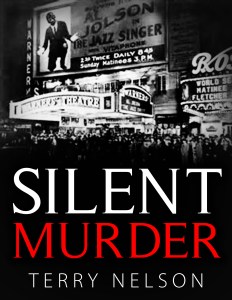
But it is not a battle worth fighting; none of the ads I created had anything offensive except for the cover of Silent Murder, the knife on the one cover is acceptable on my Amazon page, but is not acceptable in advertising. While it appears to be a double standard, perhaps hypocritical, at the same time both Amazon and myself win.

coyotemoon_silentmurdercoyotemoon_silentmurder (1)

I can see their point in much of what I read in Amazon’s policies that they sent me and other writers. I may not agree with everything as I think they have gone to the extreme a bit on some things. For example my favorite No-No that actually got me to chuckle was the following: Skulls and bones. We do not accept images of realistic skulls that may frighten or upset customers. We do not accept images of skulls or bones that appear in or around a grave, or as an exhumed body.

A skull? Really where does it end.

So Hamlet holding the skull in the graveyard in which Hamlet says, “Alas, poor Yorick, I knew him well Horatio . . .” is now forbidden as an ad image. 

Some things are just ridiculous. 

dugout (1)Loonies_In_Hollywood-375x712


Oscar Wilde, abandoned books, and us

Oscar Wilde said, “Books are never finished. They are merely abandoned.”

I know what he meant. If you have read Charles Dickens, Leo Tolstoy, or even “Infinite Jest” by David Foster Wallace, you know there are writers who write long, thick books that take a year to read. They love their characters, they love to see what their characters will do, and they love to escape into the world they created for their characters.  The real world can not be controlled, it is out of all our hands. But a writer can create a world, he can control what happens.

Using myself as an example. When I finished my first e-novel “Loonies in the Dugout” I realized, in part because of the ending, and in part because I loved my two main fictional characters, that I could not end their story. I had to abandon the book, it was finished, at least that one, so I took my two favorite people and placed them in a new story 11 years later in another town where I could hang out with them some more.

In the course of that e-novel “Loonies in Hollywood” I created another character, a flapper named Clancy. I fell in love with her as well, so when this book was abandoned because it must come to an end, I had to write a third e-book with all three of my friends. “That was “Silent Murder.”

Once that was abandoned I started another e-book with the same three characters. So I understand what Wilde meant. At least my interpretation of what he meant. He could also have been talking about the agony of rewriting and proofreading and that the writer reaches a point where he says ‘enough.’ But I think it has more to do with never wanting to escape the world the writer not only created, but inhabits with his characters, sharing their adventures. The writer is the fly on the wall.

Writers and readers do share a common bond and that is we both like to escape. The writers escaping into his world with his friends, secretly hoping to never have the story end, to write about them forever. And the reader escaping into a time and place, the world created by the writer, one the reader can also escape into. Perhaps we can find each other in this world. If you spot me, say hello.

dugout (1)Loonies_In_Hollywood-375x712coyotemoon_silentmurder (1)


Piracy hits e-writers and bloggers-You NEED to read this

As an e-Novelist I am concerned about copyright theft and piracy, not just because I lose money, but I hate those who steal and claim something as their own, when you have done all the work. 

I follow Anne R. Allen and Ruth Harris’s blog and suggest you do as well, for you will learn invaluable information every week. Their most recent blog is about book piracy, how e-Books can be stolen/pirated, and how it affects us poor writers. I had no idea what these pirates were doing and I took a suggested step from the blog that might alert me to any questionable activity of my books.

Click the above link to learn what is going on and what you can do to protect yourself and your e-Books.

Amazon’s marketing analytics for writers must change

dugout (1)

I previously posted a blog about my ad campaign for “Loonies in the Dugout,” selling for .99 by the way. The campaign was approved, then soon after it began Amazon stopped it because of low relevance. To be honest how does one get ‘low relevance’ on the third day. I assumed the problem was that there were no categories in the marketing campaign listings for my e-book that is ‘sports fiction/satire’ so I  used literary fiction, the closest I could get. In my second attempt, after learning the campaign was stopped, I added sports/outdoors. The campaign was approved for the second time.

I had bid .70 cost per click, and I was getting .60. That seems good, but maybe I’m wrong. In the information I received from Amazon, it was estimated that my campaign, May 13 through June 8 would generate only five sales. They stopped the campaign on the third day and I had sold seven books, two more than projected, and I still had 22 days to go. Yet the email said customers were not engaging with the ad. Huh? Seven sales in less than three days, more than they said I would get.

They also suggested I increase my bid as it could be getting beat by other ads that were bidding higher for better placement. Sorry, I’m not taking the bait. I like my book, I want people to read it. That was why I lowered the price and created the ad campaign. But I will not increase my bid when it started so well.

In my original email to Amazon I said they should consider adding ‘sports fiction’ and ‘satire’ in their marketing campaign listings for targeting. They answered that they appreciate the feedback and would consider it at a future date. In their second email to me after telling them I had sold 7 books in first three days, out doing their projections, I received the following, “I’ll take your concern as feature request and communicate the same to our business team for consideration as we plan future improvements. I’m unable to promise a timeframe at this time, however, we are still evolving and feedback like yours motivate us to dive deep and unearth ways and means which helps us in making publishing on KDP a happy experience.  Please be sure to check our forums periodically for updates.”

Nothing against the forums, I have used them, but it takes a lot of ambling around to find the specifics you seek and the answers are not always helpful, nor are they necessarily correct. Why doesn’t Amazon just post something on the appropriate marketing page, saying ‘new and improved.’

I do like Amazon. I have made many purchases with them and I am sure they have enjoyed my money. I will take them at their word, that they are evolving and are seeking ways to improve (making more money), that they will ‘dive deep and unearth ways to improve,’ but I will also continue to check in to see if and when they change their methodology. They clearly need a better understanding of low relevance. Consider that they say they compare ‘like’ ads for effectiveness, but also say they don’t have specific numbers. If you compare things you learn something, yet they imply otherwise.

I will try again with other titles this summer, hoping my relevance improves.

Loonies_In_Hollywood-375x712coyotemoon_silentmurder (1)Cemetery_Tales_and_other_PhantasmsA-351x597coyotemoon_cemetaryb


Free paranormal short story to chill your bones this weekend

coyotemoon_cemetarybCemetery_Tales_and_other_PhantasmsA-351x597

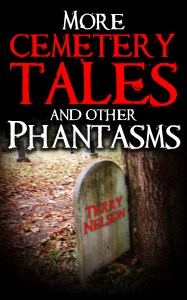
This short story, “A Walk through the Cemetery” appears in one of my e-Books, “More Cemetery Tales and other Phantasms” and is copyrighted, but I offer it for you this weekend.

A piercing shriek roared through the evergreens; loud, hard, and violent, then died as soon as it began. A small branch, high in an evergreen, snapped off from a longer limb and fell to the ground. Leaves fluttered down from nearby maples. Upon hearing the howl a man walking in the cemetery stopped and looked up at the swaying tree tops. A storm coming he thought as he looked at the dark gray clouds swiftly arriving from the east, beginning to blot out the sun.

He walked through the cemetery nearly every day since his retirement. Good for the heart. Build up the legs as well. Mountain View Cemetery took up a few city blocks in length, so it was a good walk from end to end, then a few blocks to the park with a small lake where he once saw a river otter swimming.  There was a dog park farther down from the lake. Also there were sheltered picnic areas, ball fields, and a wading pool. Years ago he attended a memorial service in one of the shelters for a deceased relative. 

He thought about that service when he was walking through the cemetery last week. There appeared to be a celebration going on. A grave had dozens of balloons, the kind you find in grocery stores with writing on them, tied down with rocks. Cars were parked along the back of the cemetery where people were greeting each other like it was a reunion; everybody drinking something from cups, kids eating hot dogs, grownups with chicken in their hands. The man did not know whether to chuckle at a picnic in a cemetery or be impressed that so many came to honor what must be a deceased relative.

Today the cemetery was quiet, nobody in sight. Except for the man sitting on a small John Deere tractor with a large claw that was digging up dirt. As he neared the man he saw that there were two by fours on each side of the rectangular pit. It was a grave, one being made new and fresh for an occupant.

He watched for a minute. Then the man got off the tractor, got a long pole and placed it in the pit at various spots. “Are you measuring to make sure it is all even,” he asked.

The man with the pole said nothing.

“I didn’t mean to bother you. I have never seen a grave dug before that’s all. It’s kind of interesting. Not to you of course. To you it’s work. Do you mind if I watch?”

The man with the pole set it down and climbed back onto the tractor. The claw scooped out more dirt, and then the arm of the claw swiveled around and dropped the dirt into a wagon. After this was done twice the man climbed down once again and did his measuring. He began to stomp down a section of the pit close to where the tractor was.

“I’m guessing it must be close to being done huh?”

The man in the pit said nothing.

“Did you hear that wind screeching a few minutes ago? That was something wasn’t it?”

The man in the pit climbed out, walked to the tractor, opened a knapsack, took out a sandwich, took a bite, then placed the sandwich in a plastic bag, and placed it in the knapsack.  

“Is there some kind of rule about not talking to gravediggers, or whatever you call yourselves? I’m just trying to be civil and thought it interesting what you were doing. Forgive me if I am being out of line, but are you a mute? I’m not trying to be funny here, just wondering why you won’t talk with me.”

The gravedigger, if that was what he was, walked about ten yards to a grave and set upright a small vase that had fallen over. He walked away leaving the man to himself. The man walked over to the grave where the grave digger had set the vase and reading the headstone realized the man resting below was a new arrival, having died a few days ago.

He looked for the gravedigger, but did not see him. The man continued his walk until he was at the entrance. He stopped, though he did not know why. But he did not want to walk to the park. For some reason he wanted to continue to walk here. So he walked, not down his normal path, but on the path that took him along the outer edges, a much longer walk. After about twenty minutes he encountered another man who was raking up some fall leaves.

“Excuse me, but do you work here?”

“Yes, can I help you with something?”

“It’s about a co-worker of yours, the other one here today.”

“I am the only one working today. What man are you talking about?”

“He was over there; you see where the tractor is. He was digging a grave, then got out and looked to be measuring the depth of the grave, I guess anyway, with a pole.”

“And when did this happen?”

“Oh, I don’t know. About half an hour ago, give or take.”

Uh huh. Well I didn’t see him.”

“I did. The tractor is about what, fifty yards or more from here. Maybe you didn’t see him because you’re here working.”

“I wasn’t here half an hour ago. Just came over here a few minutes ago.”

“Well this guy had a knapsack in the tractor and I saw him reach in and get a bite of a sandwich.”

“What kind was it? Ham and cheese?”

“I don’t know what kind?”

“Well what about this guy you’re talking about anyway. What’s the problem?”

“I was watching him and asked some questions about what he was doing. But he would not answer me. I was trying to be friendly and all and he ignored me like I wasn’t even there. Don’t see the reason for him to be rude.”

The man with the rake lost a little color in his face. “What did this man look like?”

“Well he was maybe about fifty or so, not to good with figuring a man’s age you know. But was tanned like he worked outdoors, and his skin was real smooth, kind of aristocratic you might say. Tall and lean.”

The man with the rake shook his head. “Don’t know him, never seen him, don’t want to see him.”

“What is going on here? If you don’t know him, aren’t you worried about him fooling around with your equipment? Was that your sandwich he took a bite from?”

“Look, the next time you see him, just leave him alone. And be grateful he doesn’t talk with you. He is not somebody you want to know and you, for sure, do not want to engage in any conversation with him, about anything.”

“So you do know him then? What’s his story?”

“The truth I told you. I don’t know him, but I know of him. Just let it be, forget about it.”

The man with the rake then dropped it and walked hurriedly away towards an area where the tractor was stored.


Just forget about it he says, thought the old man later as he sat in his home watching a show on TV called “Diggers,” about two men with metal detectors who go to historic sights looking for artifacts. How do you forget something like this? Why was this gravedigger, if that was what he was, being so rude and why did the man with the rake tell me to stay away from the man he has never seen in the first place. None of it made sense.

The old man did not have a restful night. Sleep came in awkward fits, awakened by the sensation of something, maybe a spider crawling up his leg; then later on his other leg. He brushed the sensation or spiders away. The sound of what seemed like somebody standing outside his window scratching softly on the glass. He felt probed and poked. He woke up, but nobody was there. Sounds real or imagined-and if imagined-just as real, for delusions have their own reality, kept him awake. He would not give into sleep. He would remain watchful, vigilant. Finally the sounds, the sensations went away. All was still. His eyes weary, feeling nothing, sleep came whether wanted or not.

He awoke the next morning without any memory of a sleepless night. In fact he felt at peace, rested and refreshed. He was not hungry, but eager for a walk, so he headed out to the cemetery.

The morning was sunny and warm, birds chirping; a late autumn gift to soothe woes, lift spirits, the last chance to enjoy the warmth of the sun before winter brings gray skies, cold weather to chill the bones.

The man enjoyed the walk through the pioneer section of the cemetery, a section thick with evergreens, dirt roads, and tombstones so old that one was tipped askew; facing a tree as if looking into a mirror, the name and dates of the deceased could not be read without bending down and around and then the weathered name was near impossible to make out.

When he came to the columbarium the evergreens gave way to a few maples, but mostly clear spaces with long rows of graves. When he walked from the dirt trail to the paved path he saw the tractor exactly where it was yesterday and standing next to it was the aristocratic man who would not speak with him. He was standing next to an open grave below a canopy, chairs aligned facing the grave.

The man walked up to the tall and lean man and asked, “Do you remember me from yesterday?”

“It wasn’t yesterday, it was a couple of days ago, but of course, I do remember you.”

“You may be younger than me, but I know it was yesterday. I am not senile. Why wouldn’t you talk with me? What’s wrong with you anyway?”

“Don’t let appearances deceive you. I am much older than you. I did not talk with you because there was nothing I had to say to you. I was aware of your questions, but really, it was obvious what I was doing. I really don’t like small talk. I knew you would return and I knew your questions would be answered. I am patient. All things in their time.”

“You’re an odd duck. I talked to your buddy yesterday. He says you don’t work here, that I shouldn’t talk with you. So what are you doing here?”

“Well, ‘my buddy’ as you call him is not my buddy. He is the caretaker here at Mountain View. I am merely the gravedigger. We have separate responsibilities and never see each other. I don’t think he likes me much, not many do I’m afraid.”

“Well if you don’t talk with people you won’t have any friends. Kind of obvious don’t you think?”

“I talk with people when the time is right.”

“I guess the time is right for me because here we are chatting.”

“Yes the time is right.”

“So who died?”

“Look for yourself.” He pointed towards the head of the grave. The man walked over and stood in front of it. He did not know whether to laugh or be mad. He looked to the tall and lean man who was smiling.

“Some joke. What’s the gag? This headstone has my name on it and yet I am here talking with you. Standing right here, standing and talking, and you are listening and talking. We are talking here.”

“Yes we are talking aren’t we?”

“Well then, I’m not dead, I’m alive.”

“Are you?”

“Of course I am you nut. I can’t be dead if I’m talking with you. That caretaker guy said there was something wrong with you, that I should stay away from you and now I know why. You’re going to get into trouble for this. What happens when the mourners arrive and see the name on the headstone?  What then huh?”

“Do you hear anything?”

“What? What do you mean ‘do I hear anything?’ Of course I do. I hear you don’t I?”

“Did you hear the cars arrive? Did you hear the car doors being opened? Do you presently hear any voices besides mine?”

The old man turned and looked. He saw his cousin Pamela first, then Denny, Brad, John, Mindy, all cousins. He saw his children, his grandchildren. He saw friends, acquaintances, business associates. Everyone he saw, he knew. He called to them. They did not answer. He walked up to them and said hello. They did not answer. Frustrated, he walked back to the tall and lean man. “I am not dead. I am standing here. I am wearing cargo pants, a Hawaiian shirt. I am not in a coffin. This is quite a prank, but it’s not funny anymore.”

“You did request, did you not, to be buried in comfortable clothing, saying cargo pants and a Hawaiian shirt?”

The old man thought for a second. “Of course you would know that. It is part of the prank. I told a few people about what I wanted. It is in my lawyer’s file. Of course you would know and be part of all this.”

“But alive you would be wearing shoes. Are you wearing shoes?”

The old man looked down. “I forgot them. I was eager to go for a walk, to see you, to find out what was going on with you yesterday, to question your rudeness.”

“And did you have breakfast. I think not.”

“I wasn’t hungry, that’s all.”

“But you always have breakfast. Don’t you?”

“This is absurd.”

Everyone was seated. Some man he did not know was speaking about the old man. The old man looked at the tall and lean man, and then turned and walked away. He was going to resume his walk. He was going to walk to the park today, to see the lake, maybe the river otter, stop at store for a candy bar. He would not take part in this stupid joke.

As he approached the building housing the tractors he saw the caretaker. He walked up to him, raking leaves as he was yesterday, and said, “That stupid gravedigger talked to me today. You were right. He is somebody you don’t want to talk with, what a nut case.”

The caretaker said nothing.

“Oh for God’s sake. Are you in on this joke too; they get to you. Who is responsible for this anyway? You must know?”

The caretaker said nothing.

“The joke’s over. I’m on to you guys. Very elaborate. Everybody I know is involved, but it’s over. You can tell me, you can talk with me.”

The caretaker said nothing.

“He can’t hear you.” It was the tall and lean man.

“You know I’m going to walk out of here you know. I just am. You can’t stop me. This is not funny.”

“You are free to walk wherever you want to go. It changes nothing. The last time you saw me I would not talk with you because it was not the right time, but the caretaker talked with you didn’t he. You were alive then. But today is your funeral. The caretaker, your family, your friends, all who came, could not see you, nor hear you. Because you are dead you see. I can talk with you now because I am the gravedigger.”

The old man stared at the tall and lean man, and then turned to stare at the caretaker; the old man’s face grimacing, he turned and walked in circles around the two men, pacing quicker and quicker, anger rising within him. He had enough. He stopped and all the frustration, all the anger, all the fed up emotion came out in one loud, bellowing scream.

A piercing shriek roared through the evergreens; loud, hard, and violent, then died as soon as it began. A small branch, high in an evergreen, snapped off from a longer limb and fell to the ground. Leaves fluttered down from nearby maples. Upon hearing the howl a woman walking slowly in the cemetery stopped and looked up at the swaying tree tops. A storm coming she thought as she looked at the dark gray clouds swiftly arriving from the east, beginning to blot out the sun.


Thanks for reading my story. I hope you enjoyed it.

coyotemoon_cemetarybCemetery_Tales_and_other_PhantasmsA-351x597


How I lost my identity through writing fiction.

dugout (1)coyotemoon_silentmurder (1)

It started innocently enough. I was working on character names for my first e-novel, “Loonies in the Dugout” and thought I would use the first names of my father and two uncles for three fictional characters. But I also wanted to use my mother’s name, but this was a baseball novel and there was not going to be that many female characters. So I used my dad’s first name Chet, for the lead character, and my mother’s last name Koski for Chet’s last name. Though I got to honor my mom and dad in one character, I did not anticipate what would happen.

I enjoyed Chet and his girlfriend Eveleen so much I wanted to use them in another story, so I went from 1911 in my first book to 1922 in Hollywood for my second book in which Chet and Eveleen, now married, solve the murder of William Desmond Taylor. I had no problems in this story, but I got confused in book three.

In “Silent Murder,” set in 1927, there is a murder and it turns out the victim was a cousin of Chet. But he had no idea this was his cousin. So the police, naturally, when they find this out and inform Chet, got me into a family tree to sort out some police questions. And I nearly messed it up. Chet’s fictional last name is Finnish, but I was thinking Danish because that is my real father’s heritage. Yes, I realized later that I could have used the Finnish family tree, but the problem is it was too hard to trace for too many reasons to go into here. So I was stuck staying with a Danish tree for a Finnish character. I had to tinker a bit.

This tree was part of the plot-at the beginning of the story anyway. It is always a possibility that this plotline was a red herring. Had I known while writing the first novel that Mr. Koski would continue in two more stories and another now in progress I would have done things differently. As it is, by using my mother’s maiden name, in the third book I dug a pit that addled my brain about two families. After all I am talking about people from the 1800’s whom I never met.

If I had to do it all over again I would have used my real fathers last name and changed his first name, using perhaps Paul (my mother’s name was Pauline). Or even better, use my fathers middle name as his first, so I would have had Alvin Nelson.  Actually I don’t like that name, Paul would be better, except that is also the middle name of another relative, and that only adds more confusion.

I dug myself into a pit and I am stuck with it. Did I learn a lesson? No. I am using the names of two real life cousins who are cousins in my work in progress, but the two cousins in real life from opposite sides of the family and have never met. I don’t care. The territory is familiar to me. Besides I am too confused about my family tree I no longer know who I am. Writing as many pitfalls.

Two mandates of writing to use in your life

dugout (1)coyotemoon_silentmurderLoonies_In_Hollywood-375x712

There are two things a writer, any writer, must do or he will fail. It is unescapable and few writers, if any, like doing it, for that is where the hard work is, but the two mandates can also be applied to your life and it is a good idea to use them .

The first is proofreading. It is sitting down and reviewing what has been written to see what needs changing. And there are mistakes in writing and there are mistakes in one’s life. So in proofreading you examine how do make the story better. Your life is your story, so why not periodically sit down and review you life, check to see what needs improving; what needs fixing and how to fix it.

I remember while proofreading my first e-novel, “Loonies in the Dugout” that two sections, the writing of which I liked, still had to be cut entirely out of the story. Not cleaned up, not revised, but deleted with prejudice. Neither section advanced the story or had any character development. If there is something in your life that is not advancing your story or helping your development, then cut it out.

Cutting things out of your life, as in fiction, is called editing. Yes, you can edit your life for you are the writer, the proofreader, and the publisher. Your audience are friends and family. If you like, you can ask them what they would hope to see you edit out of your life. (not saying they’re right, but it doesn’t hurt to listen).

In the same e-novel I was trying for a theme in the first part of the book. It had to do with heat. The story was true and it began in the summer of 1911 when there was a heat wave, many people died during this time. So I had a lot of metaphors, similes, and descriptions where heat factored in the story. The problem I saw was that it did not work and had to be rewritten. As much as I liked it, it didn’t work, so it had to be changed.

That is the hard part about proofreading and editing your life. There are things you like, say eating three maple bars for breakfast. Who doesn’t love maple bars? But I don’t think three is good for you. Maybe cutting to one, then down to one half, then cutting them out would be a good idea. Blueberries in oatmeal, now that is better for your story.

So that is what I have learned from writing, to sit down, look at my life, see what needs changing, editing, fixing, and to make necessary changes. You can do the same and you don’t have to be a writer.

Cemetery_Tales_and_other_PhantasmsA-351x597coyotemoon_cemetaryb

Three reasons to advertise your book on Amazon

I avoided advertising my books because I wanted to build a library and now that I have five e-books on Amazon I thought it was time. I also delayed because being frugal (cheap), I was leery of diving into that pool. Add to that I am not a business person, nor a social media butterfly, and, in the interest of full disclosure, I am lazy. But it is good to research extensively before diving into the pool. So here is why I chose Amazon.

Reason number one to advertise with Amazon: As someone said if you do nothing, then nothing will happen. So if you want to achieve something you must do something. If it fails, you learn something and move forward. Since my books are on Amazon I researched their marketing program. It was easy to set up a campaign. You set a budget, say $100. The good thing is you are not charged up front. You are charged when someone clicks your ad to read about the book. The charge comes from what you bid-and this I do not understand at all. I was never good in math. The bad news is that there is always the chance that during the length of the campaign, nobody will buy your book and you are out $100. That is not a bad thing though as I will share on reason two. The poor result could be that the brief description of your book, the hook, the logline, the pitch, did not register with those who clicked. What you write in the ad must sell interest to click. I plan on adding a campaign with all my books, staggering them. The reason you will read about in reason three.

Reason two to advertise with Amazon: I mentioned the possibility that you could end up losing $100 if nobody bought your book. Yes that hurts. But consider this. You can read in your dashboard how many clicks you are getting. I had 48 clicks within a couple of days. The cost was just over $3. If you extend the number of clicks you can get for $100 then you have a lot of people who are now familiar with your name and that is part of building awareness. The more people who see your name, the better chance they will buy a book in the future. To build your brand ( I hate this word) you build name recognition. Consider it part of long term strategy. The only thing that happens overnight is dawn. Everything else takes time.

That brings me to reason three as to why I am staggering my add campaign with my books on Amazon. It not only has to do with getting my name out there by clicks and sales, but because I  have different audiences. I have two collection of short stories, both of which fall into the supernatural and horror category. Three other books are part of a series, though each can be read as a stand alone e-novel. The first is a satire on fame and celebrity based on a true story with the 1911 New York Giants baseball team. So that is baseball fiction. The two main characters I created I then used in two murder mysteries, with a third on the way. So I can not advertise just one book, as I have different audiences to reach.

But is Amazon the only place to advertise? No. But I had to start someplace. I will try Facebook in April and may tinker here and there with other avenues. Previously I had dipped into the water by trying Awesome Gang newsletter. They say they have over 4,000 subscribers I believe, but don’t quote me on that. It cost $10 to be in their newsletter for one day. Cheap, I like it. No sales though. But as I said I was dipping my toes in the water. There are many of these newsletters and some authors have had sales. But I would urge you to fully research these sites as many will not deliver what you want. Also, based on what I have read from other authors, be cautious of anyone promoting your book on Twitter. Writers are told not to use adverbs like ‘very’ so I will not write that you should be very cautious.

I will keep you updated.

How I was seduced into Amazon’s supernatural invisible algorithms

It started innocently enough. I was at the local library and picked up a complimentary copy of Book Page. They also have a website bookpage.com for those who have never heard of libraries. On pages 22-23 in the non-fiction book reviews were two titles of interest to me. And now we get to the synchronicity part.

After attending a film at the local cinema, I headed home and went to Amazon ‘s website to learn more about the books and see how many reviews they garnered. I typed in “Andy Warhol was a Hoarder,” a book by Claudia Kalb in which she covers 12 different people of fame, who, shall we say, had some idiosyncrasies, and whether there is some correlation between madness and genius. I have not read the book, but I think there might be. But not full blown madness you understand. But I will read the book at some time.

But what caught my eye is that the next two books listed on Amazon under the Andy Warhol book were two more titles, totally unrelated to Warhol , hoarding, genius or any sort of mental aberration. But both of those books were listed on the same pages in Book Page as the Warhol book.

We on the outside world, the world of nerds and geeks, we who know nothing of algorithms (let alone the ability to spell it) at least have a basic understanding of what it means. So are we now in some supernatural Amazon algorithmic universe where book titles in a thin, little, complimentary, eclectic magazine magically appear on the same Amazon page? Does Amazon, like a computer that I have heard is in existence, reads a persons brain waves? No longer do you have to say anything to Siri, or to Cortana. You just have to think what you want and the computer will react and do what you wish. Beware what you think. If your wife is standing behind you, don’t think porn.

The other two books were David Denby’s “Lit Up” about his  year of observing a high school literature class for one year to see if today’s students actually have an interest in serious literature, and the other was “On My Own,” by NPR talk show host Diane Rehm. It is about the loss of her husband and non-compassionate choices of health care. These were the three books on pages 22-23 that showed up on the same Amazon page when I typed in the Andy Warhol title. Will it happen again? I am to afraid to try.

But I know in telling you about this synchronicity that I have been pixilated into Amazon’s algorithmic math. Otherwise how could I have written this blog and mentioned these books on Amazon. Somehow Amazon drew me in against my will and left me feeling like an alien abductee. We are doomed. The algorithms are after all of us. Forget Reptilians, forget the grays, forget the walking dead. Beware the algorithms.  

Confusing pronouns confuse readers, okay maddens readers

I won’t mention the novel, nor will I mention the author, as it is not my intent to embarrass a fellow writer. I enjoyed his story even though I got perturbed, mad, and upset with confusing pronouns. 

What I mean about confusing pronouns is when there are two characters in a scene and then a pronoun, such as ‘he’ is used, but the way the sentence or paragraph is written, you do not know which character the author is referring to. Confusion means the reader stops. Damn it, the flow is gone, who is talking, who is doing what, who is ‘he.’

It is an easy mistake for a writer because the writer knows who ‘he’ is. That ‘he’ is in the writers mind, but it is not in the reader’s mind and that is the problem. This problem surfaced a few times in the novel and was frustrating.

All writers know writing is fun and proofreading is torture. I hate proofreading, but finding and correcting, commas, misspellings, inserting missing quotation marks is the least of it. They are more noticeable, though it can-and has-taken me dozens of times to find them all. At least I think I have found those bugaboos. But a proofreader must read word by word seeking clarity in each sentence and to do this the author must have a clear mind. And that is why it is recommended a writer wait six months-at least by some-before proofreading. That way your mind is clear, you have forgotten much, and you are more likely to see mistakes. I tried waiting, but I could go only three months as the itch to publish was itching so badly I felt I needed a cream, but the only alternative was to proofread. I found things I would not have seen before. What I thought was clear in a paragraph became three months later a mess.  I tried to blame it on Word.doc and some sort of self correcting flaw in the software. But I knew better, though I liked to blame the computer. It made me feel better.

The easy thing for a writer to do in correcting confusing pronouns is to simply place the character’s name where he should be. It works better for the reader who wants a good flow, no confusion, so keep the readers  reading.

Though this is my first post on this site, I have had two  blogs for some time. I have one on writing called “The quill, the e-word, and the looniness.” Near the end of 2015 I closed my long time website, terrynelson.net, to create this site for my blogs and my e-Books. So I will have the quill blog up for a while, but if you have followed me on that blog, I hope you will follow, not stalk, me here. At the top of this site is info on who I am and  what my novels and short stories are about. My Seattle Mariner blog  is here. Thanks for reading.