Does the Bible inspire murder

It follows like morning from night that when some mass murder or odious crime is committed moralists bring out their standard polemic condemning Hollywood for violence in movies, or they blame books like “Catcher in the Rye” because Mark Chapman carried it when he killed John Lennon.

I thought of this again when reading “The Beautiful Cigar Girl” about the murder in 1841 of Mary Rogers and how Edgar Allan Poe wrote his mystery “The Murder of Marie Roget” based on the facts of the case, which has never been solved.

Mary may have been one of the first to become famous for doing nothing. Take that Kardashians. She was young and so beautiful that men flocked to the cigar store where she worked, so many and so often, that newspapers took note and wrote about her popularity. She became so well known that when she disappeared for a few days there was near panic. She returned saying she was visiting someone. But a few years later she was found floating in the Hudson River, brutally murdered.

In the book, author Daniel Stashhower quotes James Gordon Bennett, a newspaper editor, who wrote about the murder in 1836 of Helen Jewett, a 23-year old prostitute. In her room was found Lord Byron’s book of poetry “Don Juan.”  Bennett wrote “the book has no doubt produced more wretchedness in the world than all the other moral writers of the age can check.” And the “Journal of Public Morals stated, “Avoid the perusal of novels.”

Don’t read books or Lord Byron’s poetry for they will lead you into prostitution and death.

I’m sure we can research back further in time and find more moral outrage. But blaming movies, TV, music, videogames, even Dungeons and Dragons, or anything antithetical to Ivory Tower moralists is misdirection. Many will bring up the Bible as the good book, the book of comfort and morality. Do these moralists know how many people were murdered in the Old Testament, how many were slaughtered, how many sins of Bible heroes were committed. Could the Bible have led to murder and sins of it’s readers? No, you say. How about the Crusades, the Inquisition, burning witches at the stake to free their souls? Or anti-abortionists who kill doctors and nurses?

Maybe moralists have a point. Reading is dangerous.

On the other hand, is it not truer to say that people who were inspired to murder, mayhem, and other crimes, had something wrong with them to begin with. More people have not committed murder from reading the Bible than have committed murder. More people have read “Catcher in the Rye” and not killed than those who have.

In short there is no correlation between art and crimes. People commit crimes; people point fingers. Those fingers are pointed the wrong way.

dugout (1)Loonies_In_Hollywood-375x712coyotemoon_silentmurder (1)Cemetery_Tales_and_other_PhantasmsA-351x597coyotemoon_cemetaryb

An inside look at the life of a 21st century writer-no punches pulled

I was going to begin working on my new novel this morning, but first I had to write this post. A writer must have self imposed deadlines and schedules. There are certain days to write and publish posts for this blog. And I might add, a great warm up exercise for the days writing.

Of course I, as any writer, must also Tweet about my five e-books available at Amazon Kindle, and another Tweet or two, or three, directing other Tweeters to my website where they can learn about me and my books. Since I am on Twitter I should search for other people to follow, to see if they will also follow me.

And as long as I am being sociable, there are thirty communities at Google+ that I have to visit in order to comment on posts, give them the ‘+’ all in the hopes they will do the same for me. After commenting, promoting, and ‘+’ others, I can then promote my e-books, my blogs, my website. I promote the others first of course, not only because I am generous with my time, but also because if I don’t I will be chastised, exorcised from circle of friends, and banned from the community.

Having done all the above it was time for lunch. I did not make any progress on my new novel, but at least I was not wasting time.

After lunch I needed to make a decision about Facebook. It really does little good promoting my books to family and friends. Though some are encouraging (some as in few, very few), most don’t have a Kindle, and others don’t care. They are busy posting funny videos of cats and sharing recipes for Risengrod (tap for recipe). So do I now create a Facebook fan page when I have not enough fans to make it worthwhile. And what do I do on my fan page anyway?

Then their is marketing to consider. Do I try Amazon merchandising campaign ads to promote my books?  You must spend money to make money is the old adage. No doubt coined by an ad salesman to make money from those who won’t make money.

Prior to the Internet, writing was a solitary art, now it is a social art. My question is, when do I find time to write my next book? It is dinner time after all. Maybe after viewing those cat videos.

coyotemoon_silentmurder (1)Cemetery_Tales_and_other_PhantasmsA-351x597coyotemoon_cemetarybdugout (1)Loonies_In_Hollywood-375x712

This post was revised and edited from one of my posts on a different website.


How a gremlin tried to sabotage my e-book-writers beware!

I am the world’s worst proofreader.

In light of my declaration of inadequacy, I take offense that I was targeted by digital gremlins. They were out to sabotage me, and indeed, they partially did. I really don’t need their help. I am perfectly capable of self-sabotage. The following is a true story.

My e-book “Loonies in Hollywood” was published on Kindle Direct a few  years ago. I used an independent formatter where I proofread, then viewed changes on my Kindle app 250 times. The number came from a counter on the formatter, and the proofreading was over ten days. I knew I could not catch everything, but I had caught so much I considered something unworldly was going on.

There came a time when both my eyes and my mind were weary and bleary. Eager to publish I went ahead. Bad decision. sent a review copy to someone knowledgeable on the story I wrote. He emailed me a number of spelling and grammatical errors. I corrected all but one.

He had said there were times I used the word Edward when it should have been Edwin. I went to the formatter, did a search and replace for Edward, but it said there were no occurrences. He saw Edward, my formatter does not see Edward. I checked some pages where his name was likely to be found. I could not find Edward.

Two days later the book had a free day. The Edward-Edwin thing kept bothering me. Late in the day, that inner voice said to check the formatter one more time. I did another search and replace for Edward, and this time it found nine occurrences. What? One day none, another day nine. Truthfully, I was so confused, I am not sure what is name was. It could by Wally for all I know.

To go from zero occurrences to nine the reason must be e-world gremlins? I have heard rumors about them, even saw a documentary about them on the PCC Network (Paranormal-Cryptid-Conspiracy). Now I have had a personal encounter.

I republished the book in the middle of the free day; with I am sure, millions upon millions of eager readers wanting to devour my loony book.

But I had no choice; this is the e-world I live in, one where gremlins lay in wait like a collide rattler, ready to strike venom into my hopes, dreams, and livelihood.

Like I need any help.

coyotemoon_cemetarybcoyotemoon_silentmurder (1)dugout (1)Loonies_In_Hollywood-375x712Cemetery_Tales_and_other_PhantasmsA-351x597

This post was revised and edited from one of my previous posts on another website

10 research sites for fiction writers-or anyone

Whether you write current fiction, science fiction, romance, westerns, horror, or like me, write mysteries set in the 1920’s or short stories with a paranormal theme, you want to get things right. You don’t want Abraham Lincoln turning on a radio to get news about the war in the Western theatre. Then again you might if you are writing alternate history or science fiction, but I will stand by my statement.

One obvious place to start is the Library of Congress. Something more European, try the European library, or if you need something specific about England, try their National Archives.  Don’t want to slight Australia , so there you are.

Another site with many topics is encyclopedia.com.

Writerswrite.com is a clearing house to take you to more specific sites and is fun to browse anyway.

This is a fun site I found on Pinterest called Fiction Writing research site.

Of course I will mention Wikipedia and though I am aware one must be careful what you find here, I have primarily used when researching 1927. What happened in each month of the year, anything newsworthy I could use in my story. I also double checked the information I found to make sure.

Want to get geographical names correct try U.S. Board on geographic names. A word here on street names. When dealing with the past, some cities have changed street names. In my e-novel set in 1911, “Loonies in the Dugout,” I used a map of New York from 1911. I also used a 1927 map of Los Angeles for two e-novels. I don’t know if any of the names I used had changed, but it is wise never to assume; always use source material.

And if you want to see how wrong politicians are in their statements try Factcheck.org. Good for a laugh, or tears, or anger.

Or you can go retro like I do. I go to book sales where I find books like “The Oxford World Mythology,” “The Oxford History of the Classical World,” or “Gray’s Anatomy,” (helpful if you want a coroner to explain cause of death or any medical issues if you write murder mysteries). You can also explore your local library if you feel the need to get away from clicking, tapping, and out of your chair because your butt is getting flat, and be able to touch real books with lots of info, take notes with tools like pen and paper. Then cross check with Internet sources. Research is important and fun. You never know where your search will lead you.

If you have a site you want to share leave a comment.

coyotemoon_silentmurder (1)Loonies_In_Hollywood-375x712dugout (1)


My Personal encounter with mysterious synchronicity

If you are unfamiliar with synchronicity it was explained by Carl Jung as “meaningful coincidences” if they occur with no causal relationship, yet seem to be meaningfully related.[1] Synchronicity is not the same as coincidence, as the phrase ‘meaningful coincidence’ gives synchronicity a near mysterious, magical, type of phenomenon.

To give a personal example, I was listening to a radio talk show about synchronicity in relation in quantum physics or something else I didn’t understand and less than a week later I had a synchronistic experience. This would be a coincidence.

What happened was I published a post on my Mariner blog about the DH. As happens when I write about sports, sometimes I can get carried away. I don’t like the DH and I went over the top a bit. A woman castigated me in the comments section. It was vicious, near troll like. Though part of her argument was incorrect her anger made me revisit what I wrote. Looking at some sentences and phrases through new eyes, I realized the writing should have been better. So I revised it, making it more palatable, less histrionic.

I felt bad, not for the personal attack by the woman, but the fact that my point, though I was trying for humor, came off Trumpesque, that being mean spirited without much thought behind what I was saying. I might be too hard on myself, then as now, and I could have left it as written, but I thought the writing was not what it should have been. So I felt awful for being sloppy in making a point.

The next day, still feeling like poodle doodle, there was an email in my inbox from a blog a subscribe to. It was a guest post about “How to Recover from  criticism (and how to eliminate it!). It explained what causes the urges that may have driven the woman to say what she said. And it is also something we can learn from.

The point is that the column came when I needed it, it was meangful, something beyond coincidence, and there was no casual relationship. A Christian would say it was the hand of God, but I will stick with synchronicity.

Did Shakespeare invent football

         ‘Am I so round with you as you with me, That like a football you do spurn me thus?’ The line comes from Shakespeare’s play Comedy of Errors, Act 1, Scene 2.  And again in King Lear, act 1, scene 4, this insult ‘Nor tripped neither, you base football player.’ 

        The above lines came from my Kindle edition of the complete works of Shakespeare that cost 99 cents. Shakespeare did not of course invent football, as it existed in his time, not the soccer 21st century fans are enamored with though. This ‘football’ according to this website killed more people than swordfights. It was ‘mob’ football and I am assuming played without referees and had no concussion protocol.
        But that is beside the point. According to a children’s book “William Shakespeare & the Globe”, written and illustrated by Aliki , Shakespeare invented the word ‘football’ though I am sure NFL fans believe it was Roger Goodell. It is also claimed in this wonderful book that old Will invented about or around 2,000 words such as bandit, employer, schoolboy, moonbeam, alligator!!!, luggage, eyeball, birth-place, gloomy, blushing, puppy-dog, shudder, fairy land and phrases like ‘every inch a king’, ‘pomp and circumstance’, wild-goose chase’, ‘for goodness sakes’,  ‘sweets to the sweet’,  and with due respect to Charles, ‘what the dickens’. Also puke, hush, and tut, tut.
        I have no intention of researching all the above words and phrases, nor the others listed in the book. I will take Aliki and Scholastic at their word (pun not intended-well maybe), but it does bring up an interesting question. If Will did invent those words, and the audience in the Globe heard those words for the first time, how did they know what they meant. I can see a member of the audience saying in response to alligator ‘what was that he said’ to his companion, much like when I watch a British TV show and they use a word I am unfamiliar with, which is frequent. 
        I don’t really know if Will invented words or was the first to write them down on parchment and use them in public at the Globe, but language evolves like a Darwinian paradigm. There are words and phrases popular in their day that are gone, never used in centuries. I mentioned some of them in a post I previously wrote.
        And we can invent phrases as well. In regards to words and evolving language how about ‘Alas poor Webster, I knew him well  Roget.’ Okay, I am no Shakespeare and you are thinking that my phrase has ‘no rhyme nor reason,’ another Will invention and you are wishing me ‘good riddance,’ yes that phrase too, so I bid adieu.
“Speak the speech, I pray you, as I pronounced it to you, trippingly on the tongue; but if you mouth it, as many of your players do, I had as lief the town-crier spoke my lines.’ Hamlet, act 3, scene 2. lief means willingly, readily. Who says lief anymore?

Seven insults not to say to a woman

  1. Whipperginnie. An abusive name for a woman used in the 1600’s, it was the equivalent of a derogatory name for a man-snippersnapper, and taking the whipper part of the first word and adding it to the male name you get whippersnapper, an insulting term for a male that has lasted for centuries. My uncle called me a whippersnapper often when I was a child. I thought it meant I was smart as a whip. Now I know better. 
  2. Wallydraigle is a worthless slovenly woman. No offense to men named Wally, but wally is a term insulting somebody’s intelligence or common sense.
  3. Taw-Bess is a slut, a slattern. I have no idea who Bess was, but she was either very bad, or very good. 
  4. Tirliry-Puffkin is light-headed woman, a flighty woman, a flirt.
  5. Daggle-Tail came about from a woman’s garments that were dirtied from being trailed over wet ground, therefore she was a untidy woman, another slut or slattern. Daggle is a term that means to drag through the mud. The Tail I will let you figure out.
  6. Drassock is a drab, untidy woman. Bonus word-Drosell is another word for slut or hussy.
  7. Bronstrops is  prostitute. I think it may be fair to say a bronstrop is a professional drosell and I mean no offense to either.

These words come from the British Isles and were used centuries ago. It shows how language changes and thinking that, you wonder how many words we currently use will be lost centuries from now. There a couple of good words to call a woman of course. And they come from the book that I got these words and definitions from. The book is Poplollies and Bellibones.

Poplolly is a little darling, a female favorite, special loved one, or mistress (but not a bronstrop or drosell)

Bellibone is a lovely maiden, a pretty lass. It is anglicized from the French belle et bonne.

When you look at the seven uncomplimentary names, humorous as they sound, they are harsher than poplolly and Bellibone, both of which have a lovely sound to them. Perhaps if a word sounds bad, it is and if it sounds good, it is.

Loonies_In_Hollywood-375x712coyotemoon_silentmurder (1)

Two personality tests to see if you are a writer

dugout (1)Loonies_In_Hollywood-375x712coyotemoon_silentmurder (1)

One can argue that the true test of a writer is to have readers and followers as well as book sales with good reviews. But what if you want to write, but are unsure if you have the right personality or temperament. Years ago  I read the book “Please Understand Me” by David Keirsey and Marilyn Bates, both of whom are therapists and diagnosticians. Don’t roll your eyes, this is not a self-help book.

This is a book, test included, that tells you what your personality is and how it affects different areas of your life. For instance I am an INFJ, a rare  species representing only 1% of the population. The NF is important because this type is attracted to words, and INFJ’s tend to become either creative writers or preachers.

Now if you find out you are an NF which is ‘intuitive’ and ‘feeling’ this means that you value and perceive possibilities over facts and that you are prone to making decisions based on value judgements over logic. It is an overstatement to say ‘if it feels good, do it,’ but that is close to the truth. I would bet that if you are an NF you are a good reader, love to read.

And if you are an INFJ, that means the I is an introvert who draws energy from within, someone more solitary, whereas an extrovert finds energy from being around people. The J is a ‘organized lifestyle’ as opposed to a flexible one.

I have two links to websites. This one will tell you about the four temperament types. And this one will tell you about four types of personalities, Guardians, Idealists, Artisans, and Rationalists.

Even if you do not feel you want to be a writer, but want to learn more about yourself, both sites and the aforementioned book are fun to explore. Then again you may not have the personality or temperament for it. But INFJ’s love it.

And of course, if you want to be a writer, no matter what your temperament or personality, no one is going to stop you.


How I dropped the bloody knife for Amazon after three days

coyotemoon_silentmurdercoyotemoon_silentmurder (1)

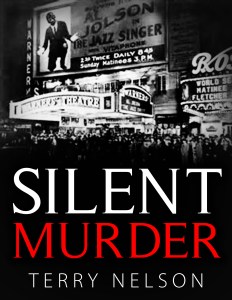
The cover on the left was done for my murder mystery about a serial killer murdering sound men in 1927 Hollywood; a killer with the crazed idea that he could prevent sound movies by killing technicians working to bring talking pictures to reality.

The victims were all killed by a knife, all from behind, and without any struggle, as if the killer silently came up behind them. Since the story takes place during the silent era of motion pictures and the killer was silent in his methods, it created, I thought, a clever play on words, not a killer pun, but a good one nonetheless. That is the reason the woman who did the cover put in the knife. I liked the image because it reflected the era and method of the serial killer.

But my opinion does not matter. Amazon’s opinion does, whether I agree of disagree. They did allow the cover, it was there on my Amazon page for a few months and no doubt would still be there except for what I tried to do. When I tried to set up an ad campaign through Amazon Marketing, the campaign was rejected because of the cover. It is their policy not to show images considered threatening, among other things. They can set their rules, it’s their right, but I doubt that censoring the image of the bloody knife is going to lessen the violence in the world.

The content of the book is anything but violent, the murders off-screen as it were, and the descriptions of the crime scenes are not overly descriptive, gory, gruesome, or yucky.

There will be times in our lives, many times, where we are faced with compromises. A smart person knows what battles to fight, and when, and how and why. This is a compromise I can live with. The funny thing is, in reference to the three days, I changed the cover following the rejection and resubmitted. It was rejected again. The change was on my Kindle Direct page where I uploaded the revised cover. But I discovered, thanks to an e-mail from Amazon, that it can take up to 72 hours for the new image to migrate to my public Amazon page. Just when we think we live in a world where things can change in one or two clicks I find we are in the dark ages. Three days!

But the migration is complete, the ad campaign is live, and the world is wonderful.

What indie writers need to edit other than their stories

An occupational hazard of writers is not being able to see the forest through the trees, though when you think about it how could you see the forest if you are stuck among trees. If you are standing on a plateau you can see both and that brings me to my point.

It is not about editing your story or novel. Writers spend a lot of time revising, proofreading, and fixing up. But there is one thing e-writers like myself sometimes forget. In my case my brain is slow, as I said in my headline, slower than a slug on salt. It is if I am standing among the trees, tall evergreens reaching high into the sky, but can not see the obvious.

The obvious is that no matter what app you use, Amazon for instance, a writer needs to periodically check his book descriptions. Your book description is your advertisement, your hook to lure the reader to your wonderful, colorful, engaging book. I have revised mine a number of times. I do not know how many times I have changed them. In the beginning the logline was descriptive, but from the plateau looking at the forest, not very interesting. It is more fun to be among the trees, unless there are snakes of course.

I have condensed, clarified, and tried to make the descriptions, which can be seen above, more attractive, more enticing. I don’t know if I am done or not. I thought I was done before, a few times. But every time I review them I see where I can make them better. It goes back to what many writers say, that before revising and proofreading story, let in sit for six months-too long for me-I ignore my story for three months-before looking at the story with fresh eyes.

But the same is true for a writers loglines, descriptions, and any type of wordage used to promote and advertise. They are a work in progress. If sales are not going well, then revise your ‘what is this book about’ loglines, descriptions, and so forth. Take another approach another angle. Nothing is written in stone except the Ten Commandments and no revisions need be done there, though many people pay no attention to them. Maybe they need a better logline.