Why I Created Three Fictional Characters-And How

It started so strangely.

There was a real person named Charlie Faust, 1880-1915, who once pitched for the New York Giants in 1911. Sort of.  A biography of Charlie, though much of his life is unknown, was written by Gabriel Schecter, called Victory Faust.

But who was Charlie?

That is what baseball people wanted to know. He was strange, and though many of his famous Giant teammates talked about him, and wrote about him, Charlie remains elusive. He could have been the most naïve country hick in history. Or he could have had mental issues. Perhaps-in the language of the day-retarded. But nobody knows for sure.

A few people have tried to write a fictional story of his life, but according to Mr. Schecter, nobody had. So a few years ago I decided to explore Charlie. To tell his story I used a rookie fresh off a Storden, Minnesota farm. Chet Koski was born in 1888 and in 1911 at the time of the story he is 22, his birthday being in October. He is not the rube that Charlie is, but it is his first time in a big city, and in a true sense it is his coming of age story, though by stories end, Chet does not fully bloom.

So we see Charlie through Chet who ends up as Charlie’s friend and at times guardian angel.

Now a young man in New York needs a girlfriend and she is Eveleen Sullivan, born in Ireland, 1890. Red hair, green eyes, she is all Irish. Her dreams are of the Broadway stage. When we meet her she is doing small parts, mostly in the chorus. She has another suitor, a British actor, who I will say little about. I won’t say he is a cad, but there is something about him I don’t trust.

Chet and Eveleen, like any young couple whose dreams lie in different direction, are unsure of themselves, of each other, and of any future. They might have a chance together, but then again, who knows.

The e-Novel is a satire on fame and celebrity. Charlie after all, though he is more a good luck omen, like a rabbits foot, or a horseshoe, becomes famous, not only in New York where he appears on Broadway within weeks of his mysterious arrival in New York, but all around baseball and the cities he sort of played in.

The baseball action and the scores are accurate. I researched the season and the games. Since Chet is fictional, I substituted him for a real player from time to time, but though he is fictional, what he does is what really happened.

Not only do we meet Christy Mathewson, Rube Marquard, manager John McGraw and other Giant players, we also meet Bat Masterson, George M. Cohan, and sportswriter Damon Runyon.

I said in the heading there were three fictional characters and I have mentioned only two, Chet and Eveleen. The third is Clancy. At the time of this story she is eleven years old and is not in Loonies in the Dugout. She shows up at the age of 22 in Loonies in Hollywood. She is the daughter of a rich California banker, and a carpe diem flapper with an extroverted personality. She is, as anyone would say, a handful. She was to be a plot device, nothing more; enter and leave the story in one scene, and a brief one at that. But she dominated the scene and as writers know, a character, yes a fictional one, can force their way into a story. She has become my favorite character. As I said she is a handful. 

And of course Clancy became friends with Eveleen and Chet, helping their murder investigations in two published books and one mystery in progress.

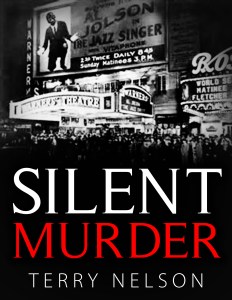
Though the three characters appear in two stories, Silent Murder being the second, you do not have to read them in sequence as each is a stand alone story.

You can find them on Amazon here. Loonies in the Dugout, with two four star reviews, only 99 cents.

dugout (1)Loonies_In_Hollywood-375x712coyotemoon_silentmurder (1)


MYSTERY OF THE WORD ‘BOOK’ AND HOW TO SAVE A BEECH TREE

I don’t know about you, but I have an interest in words. Where a particular word comes from, its origin, the root of the word, for some reason fascinates me. So I did some research wanting to know why we call a book a book.

One Internet search claims that ‘book’ is derived from the Danish word for bog, and or beech tree. Keep in mind this was a search done some while ago and I do not have the exact information, but it was Danish. Being half Danish and a writer I was proud of the Danish connection to ‘book.’ I surfed the Internet trying to find that information recently, but nothing showing the Danish connection was found, instead it was those Germanic languages taking claim.

One site said ‘book’ came from “Old English boc “book, writing, written document,” traditionally from Proto-Germanic *bokiz “beech” (cf. German Buch “book” Buche “beech;” I see the word beech, a tree, connected to the Danish origin which I had previously found. But notice it is now Germanic. Like World War 2, the Danes once again are at the mercy of those Germanic invaders from the south.

I found another site which echoed the above origin, almost word for word. But as we all know-at least I think we do-the Internet is not that reliable, and one mistake will be repeated over and over. Example: in researching a theatre, I found every website said the theatre, built in 1930, cost $200,000. I believed it, but they were wrong. I uncovered the original document which said it cost $60,000.

Now I am not saying that the origin of the word ‘book’ being Germanic is wrong, but more research needs to be done. There does seem to be an agreement that early Indo-European writings were etched on beech wood. Thus beech evolved into book, probably because of the sound of the word for beech.

Danish is a northern Germanic language-so the Internet tells me-and so I will hold out that the origin of the word ‘book’ is traced back to my Danish ancestors. The weather in Denmark is dreary most of the year, and the Danes, like Hamlet-who was based on a real Danish prince-are melancholy, so I am sure the Danes began writing and reading on beech wood because there was no television or Internet, and they needed something to do. Which is why this half-Dane wrote this blog in the first place.

No beech trees, or any type of trees, were harmed in the making of these delightful e-books that you can find here. Each book you buy saves a beech tree.


dugout (1)Loonies_In_Hollywood-375x712coyotemoon_silentmurder (1)Cemetery_Tales_and_other_PhantasmsA-351x597coyotemoon_cemetaryb

WHY I TALK TO MY BOOKS-A LAMENT

If you live long enough this will happen.

Today I have a firm handle on my remaining books. I dust them, talk to them, pet them like a cat, reorganize them on shelves. They are happy.

Why you ask do I do this?

I realized I had to do something.

I frequently go to library sales, Goodwill stores, thrift shops, and other places where books are found at cheap prices. During these expeditions I run across a book that gives me pause. I recall that I read the book years ago. I remember nothing of the story. Nothing. Then, as in the case of Robert Penn Warren for example, I recall other books of his I read. And though I recall titles, the story is lost, gone, as if never read.

Recently this happened when I found Paul Auster’s “Brooklyn Follies.” I recall reading his New York trilogy, but the stories, the characters, as elusive as the wind. What does this say about my memory? What would Marcel Proust say? Would I be a character in his seven volume opus? I think I would be more likely to end up in a Kafka novel as a comical, schizoid paranoiac character.

This happens so often two things occur to me. One is that I have read for more books than I have thought. So many stories they have disappeared from my memory; only when seeing the title, like a familiar face from the past, do I recognize it as a friend. And how many still forgotten books that I read are waiting for the title to be seen before I say, “Oh yeah, I remember reading that book.”

How, I ask myself, can a story that absorbed all my thoughts, that captured all my emotions, that engrossed my entire attention, be forgotten. How can this be? How can it be, in the end, so transitory?

The second thing is where are those books, where have they gone? I don’t remember disposing of them, not all of them anyway. Did I recycle them to second-hand stores? Did I give them to friends? Were some lost in moving? Did my mother throw them away like my baseball cards? (No!)

But still they have gone somewhere.

I wonder if being on my shelf for so long, feeling neglected, undusted, they decided to leave like a cat who thinks it is time to find a better home.

They must have snuck out in the middle of night, one here, one there, meeting up at a secret location, perhaps some used book store. A slow steady stream of books over time slinking out unnoticed.

With the story lost, they must not have had a reason to stay.

That is why I talk to my books today. I want them to stay around.

Loonies_In_Hollywood-375x712coyotemoon_silentmurder (1)coyotemoon_cemetaryb


Who Was Dr. John Yeoman And What He Did For Writers ?

I subscribed to Dr. John Yeoman’s blog on writing for years. He died last month and I felt it time to share not only who he was, but some of his helpful blogs and his e-novels. Not only was John’s blogs helpful, written very conversational, but often with humor, and certainly intelligence.

First who he was can be found here 

Now a dozen of my favorite Dr. Yeoman blogs:

How To Shape Great Stories With Word Games

How to Plot A Story (Even If Plotting Scares You Silly)

7 Great Ways To Close A Story (and How Famous Authors Did It)

Do You Make These Six Big Mistakes With Your Writing Blog

How To Cope With Bad Feedback On Your Work

Nine Big Lies That Agents Tell You

Could This ‘Magic’ Trick Rescue Your Story

How To Sell 100,000 novels Without (Really) Trying

Three Ways (Not) To Kill Your Story In Its Cradle

Top Ten Tips For Promoting Your Book-From A Dog

How To Write A Kindle Best Seller

Five Top Tips For Being a Happy Writer

And he practiced what he preached and taught. Here is his Amazon Page. I have read “The Cunning Man” and “The Hog Lane Murders” and they are great for new writers for you can read the e-novel like you read any book, but is also has footnote markers. When you click a footnote number he shows the why and how he wrote that scene and you can learn from seeing what he is doing. Great writing tool.

Thanks John!

dugout (1)coyotemoon_silentmurdercoyotemoon_cemetaryb

Why you must have a to do list

There is always tomorrow.  I don’t have time today (I do, I just don’t want to be bothered with this, not right now. I have more fun things to do).

 I am guilty of procrastination, of doing what I want today, not what I have to do. And I am guessing many of you are as well. It is so easy to put it off until tomorrow.

The problem of course is that there is always a tomorrow and putting off small things (what you think are small) pile up. And the pile is not the problem. That’s right, that now towering pile of things you meant to get to, but saved for tomorrow, is not the problem.

The problem is the unforeseen; a major event that suddenly strikes like lightning, but unlike lightning is not momentary, but stays, consuming your time.  Maybe a loved one’s illness, maybe urgent needs from your child, and now you find yourself being more of a care giver. Or maybe it is something that happens to you and your health.

It does not have to be health related. Maybe you got fired, maybe you have to move. Perhaps a divorce. There are a myriad of unseen catastrophic events that can and will find you at some time in your life. Then you are buried under an avalanche of those ‘small things’ and it is hard to catch up.

If you have a pile of tomorrows, then get it done now. Clear your chore list while you have the time because tomorrow you may not have that time. Also you will feel better for accomplishing things, even if they were not so important.

Find the ones easiest to do or won’t take much time. Make a To Do List and work through it checking off each item on the list when it is finished.

This is especially true for writers as finding time for writing is precious time and with a completed list, or a downsized list, you find more time for writing. And if you are a writer, write first, small things later, but later today.

dugout (1)Cemetery_Tales_and_other_PhantasmsA-351x597coyotemoon_silentmurder

CAN YOU FETCH A FETCHING

This post was posted from a previous incarnation of my writing blog.

Of late, since I seem to have nothing better to do, I became immersed  in the odd relationship between fetch and fetching.

I associate the word ‘fetch’ with dogs. When playing catch with a dog and a stick or ball is thrown the owner yells, “Go fetch!” I have heard this phrase many times, though in truth the dog knows to go fetch; he or she does not have to be told. They love to fetch.

I am also aware that ‘fetch’ can imply what something costs, though this is a somewhat archaic usage. I have not heard, “It fetched a good price” in a long time. So let us stick to ‘fetch’ defined as retrieving, to grab, seize, catch, and so on.

Okay, now we come to the word fetching. It means charming, enchanting, alluring, captivating, and is most used in describing a woman, or at least it once was, as in “She has a fetching appearance.” It was once a way of saying, “Man she’s hot!” And that phrase once meant something else. But anyway, how do we get from a dog fetching to a comely woman? How do we associate a dog with a cute woman? 

I know chauvinistic men would like a woman to fetch them a beer on demand, but that is not me. I can fetch my own thank you.

Was there something sinister behind the similarity of the two words, some wordsmith conspiracy to layer an insult to women, that they were dogs?  I had to uncover the truth.

I went to a well known establishment that provides  haircuts, or styling if you will, to men; the establishment, a national one that has fetching young ladies that cut your hair, a cut that fetch’s a good price mind you. I posed the question to the young woman cutting my hair about fetch and fetching. Leave it to a woman to figure it out.

She cut to the heart of the matter with the quickness of the snip of a scissor. “Fetch means the woman is worth fetching.”

I had to laugh, though I felt like a dog for thinking there was some conspiracy. I must refrain from saying a terrible pun like offering a beautiful diamond ring will fetch the woman.  That would be improper. Because you see, it is the woman tossing the ball or stick and the man, the dog that he is, will fetch it. And that is because the woman is so fetching the man can not resist.

If you would like to fetch on of my e-books, you can grab one here.

dugout (1)Loonies_In_Hollywood-375x712coyotemoon_silentmurderCemetery_Tales_and_other_PhantasmsA-351x597coyotemoon_silentmurder

HELP! I’M BURIED UNDER AVALANCHE OF BOOKS

In an April 4th post about three cheap ways to become a bookaholic I mentioned  that I had 81 unread e-Books and 133 unread old fashioned books, the type you hold in your hand without use of a device, unless, of course, you recognize hands as a device. This amounted to 234 books waiting for me to crack open, or in the case of an e-Book tap open.

Two months and a few days since that post there is no relief as the avalanche continues to bury me. Unread e-Books up to 96 and the old fashioned kind up to 157. This adds  up to 253, a 19 book gain. And keep in mind I have read and finished books during this time, hoping to lighten the load bearing down on me.

And it is going to get worse. This Saturday and again on Monday the Friends of the Library is holding one of there sales. The proceeds go to the library to help them purchase new books,  to aid library programs and buy supplies for kids. So everybody wins. Except for a book hoarder like myself; I can barely breath, let alone move under the weight of unread books.

How good is the sale you ask? Hardback books at 50 cents or 3 for a $1. Who does this? This is as close to giving books away as you can get. Do they expect me to stay away, do they think I have discipline? I believe they have these sales knowing they will make a fortune off me. And paperbacks are 25 cents each or 6 for a $1. The same goes for VHS tapes, CD’s and audio books. To be honest the CD’s they had at previous sale were mostly music to accompany your yoga workout, or music from countries I did not know existed. But I go for the books anyway.

I will spend the next few days reading books nearest my hands, as many as I can, foregoing meals, bathroom trips, sleeping, and doing anything that prevents me from getting out from under this cataclysmic cascade of opus delicti.

cropped-048.jpgLoonies_In_Hollywood-375x712coyotemoon_silentmurder


The mysterious disappearance of bloggers

In my previous post I told of how there was a gremlin on my “Loonies in Hollywood” page that show at the top of this site’s header. I am unable to create a space between paragraphs. Every other page I can do that, but this page will not cooperate due to the gremlin residing in there, somewhere.

But there is another gremlin at work as well. Over time I have clicked many blogs to follow. They showed up in my inbox or they were in my e-reader. But I noticed of late that many blogs I received have not been showing up. Yes, I read them. Most of them anyway. And My e-Reader which had dozens of blogs suddenly had only about five.

I have no idea why or how you disappeared. And I miss reading what you had to say. Most of you anyway. I frequently clicked like. And yes I commented when something worthy inspired conversation.

I feel lonely. My digital friends have disappeared. It’s not like I have real ones.

It is true that some tire of blogging, take a break; others are victims of alien abduction (I saw the movie) or who knows what has happened. But I can’t believe so many have quit or been abducted.

Gremlins? Conspiracy? Or some problem with WordPress?

But I do know that I am going to write down on something called paper the blogs that still exist, and add to the new list, on this paper thing, new blogs that I follow and make a log when your last blog was posted and see how long before some of you disappear. I must see if there is a pattern to this madness. It must stop.

I have not abandoned you, I have been cutoff. I will leave no blogger behind.

coyotemoon_silentmurder

Are you, like me, plagued by a digital gremlin

In my previous blog I wrote about trying to create the perfect ‘pitch’ the description writers use to make their book sound appealing and interesting. Now I really don’t know how many visitors to this site look at the top header and see the ‘who I am’ dropdown, or the titles of my books, but  the page of each book has a description, my pitch to see if anyone is interested in reading the story. However one of them is wrong.

I don’t mean wrong as in a lie, or a mistake. It just does not look right. If you click on any book and scan the page-or better yet, read it-you will see a space between paragraphs, nice and clean. Not so with “Loonies in Hollywood.” I have tried everything I could think of, but for some reason, it (whatever gremlin ‘it’ is) will not allow me to have separation between the first three paragraphs.

I try to have a professional looking site, but sometimes the digital world sets out to sabotage you and succeeds. I have tried deleting and rewriting. Nope. I have tried writing in Word and doing a copy and paste. Nope.

So I apologize if that page does not look correct, not neat and clean.

If anyone has any ideas I am open to trying to fix it. I dislike going to forums and searching to see if someone had a similar problem. It takes a lot of time going through threads that may or may not apply and I rarely have found a solution in the past. It can be frustrating at times, like trying to find a vampire with a suntan.

When you are trying to build an international empire where you sell 1,000,000 books a day-an hour would be better- every little gremlin can destroy your hopes, dreams, aspirations and so forth. If I find him I will stomp out it’s digital life. I hope the little bugger reads this.

Loonies_In_Hollywood-375x712coyotemoon_silentmurder (1)Cemetery_Tales_and_other_PhantasmsA-351x597coyotemoon_cemetaryb


Why vampire lovers should thank John Polidori

What we know of vampires in today’s culture through movies, television, and books, are not the vampires of ancient folklore. No, the vampires of old were far different, often bloated, monstrous looking creatures. They had no charm. There was nothing sensuous about them, nothing seductive, nothing like Count Dracula; in fact they were not sexy at all, far from it.

If you think Bram Stoker’s novel “Dracula” published in 1897 changed all that you would be correct-to a point. The book first published in England was not a best seller. It became one over time and movies helped, especially “Nosferatu” in 1922. In fact Stoker died nearly broke in 1912. His widow was forced to sell Stoker’s notes and outline for the book at an auction in 1913 and got around two pounds. And how much would they be worth today?

So it was movies and stage plays that got readers interested in “Dracula.” But literature, like folklore is built over time, and often on the shoulders of others. This is not plagiarism, however, it is literary evolution. A writer gets inspiration from another writer and advances the mythos. Whether Stoker read the short story “Vampyre” by John Polidori I don’t know, but Polidori’s story, published without his permission, nevertheless saw print in New Monthly Magazine, 1819, in England.

Polidori created his vampire, Lord Ruthven, from a character Lord Byron created in his unfinished vampire tale “Fragment of a Novel.” It could be that is why Polidori, and Byron,  did not want the story published. For Polidori, perhaps he was concerned he might have been plagiarizing-the story was first attributed to Byron- and for Byron, perhaps he had plans to finish his story. 

The Polidori story came about during that famous summer when, according to Mary Shelley, she, Percy Shelley, Byron, Polidori, told ghost stories one weekend, out of which grew Mary Shelley’s “Frankenstein.” It was believed this is where Polidori got the idea for his story.

This is where literary murkiness creeps in. Stoker gets credit for the modern vampire, yet Polidori wrote a character who was a nobleman like Dracula, but that character was based on a character created by Byron. All three can make claim to creating the modern vampire. And, of course, there are others in the wings, who were creating the ‘new vampire’ about this time. But I will stick with these Byron, Polidori, and Stoker, for their fangs are sharper.

If you are interested in the stories that came out of that weekend, including “Frankenstein,” “Vampyre,” along with both Byron’s unfinished story and Percy Shelley’s unfinished ghost story and have an e-reader, you can click “A Dark and Stormy Night.”

No vampires in my stories below, but you can still get spooked. Cemetery Tales or More Cemetery Tales

Cemetery_Tales_and_other_PhantasmsA-351x597coyotemoon_cemetaryb