Are you, like me, plagued by a digital gremlin

In my previous blog I wrote about trying to create the perfect ‘pitch’ the description writers use to make their book sound appealing and interesting. Now I really don’t know how many visitors to this site look at the top header and see the ‘who I am’ dropdown, or the titles of my books, but  the page of each book has a description, my pitch to see if anyone is interested in reading the story. However one of them is wrong.

I don’t mean wrong as in a lie, or a mistake. It just does not look right. If you click on any book and scan the page-or better yet, read it-you will see a space between paragraphs, nice and clean. Not so with “Loonies in Hollywood.” I have tried everything I could think of, but for some reason, it (whatever gremlin ‘it’ is) will not allow me to have separation between the first three paragraphs.

I try to have a professional looking site, but sometimes the digital world sets out to sabotage you and succeeds. I have tried deleting and rewriting. Nope. I have tried writing in Word and doing a copy and paste. Nope.

So I apologize if that page does not look correct, not neat and clean.

If anyone has any ideas I am open to trying to fix it. I dislike going to forums and searching to see if someone had a similar problem. It takes a lot of time going through threads that may or may not apply and I rarely have found a solution in the past. It can be frustrating at times, like trying to find a vampire with a suntan.

When you are trying to build an international empire where you sell 1,000,000 books a day-an hour would be better- every little gremlin can destroy your hopes, dreams, aspirations and so forth. If I find him I will stomp out it’s digital life. I hope the little bugger reads this.

Loonies_In_Hollywood-375x712coyotemoon_silentmurder (1)Cemetery_Tales_and_other_PhantasmsA-351x597coyotemoon_cemetaryb


My quest for the perfect ‘it’ and why

Whether it is called hook, logline, blurb, selling point, promo copy, or the old fashioned description, a writer needs to create something that entices, lures, snares, traps or otherwise induces the innocent to tap or click the buy button to download  the writers self published e-Book, a book that will enthrall, entertain, dazzle and delight. The writer needs the ‘it.’

In truth it is a calling card. Write a good description, one that shows some degree of writing ability and the potential reader is likely to make a purchase. If you write good copy then it follows the book must also be good. But writing that brief description is the hardest part of writing for many, myself included.

Over the past few years I have rewritten, edited, and changed the copy for all five of my books innumerable times and like the Great White Hunter of Bigfoot, my search continues. I revisit my descriptions to see what is wrong, how better can I make it. The following is an example for “Loonies in the Dugout.” 

The book is a fictional account of the mysterious Charlie Faust and how he influenced the Giants to win the pennant. His story is told through the eyes of rookie Chet Koski who is trying to woo chorus girl Eveleen Sullivan while trying to figure out big league pitching. A satire on fame and celebrity based on a true story in which Chet and Charlie meet Bat Masterson, George M. Cohen, Damon Runyon, and many others.

BORING.

I did not think so at the time, but with fresh eyes I see how dreadful it is. It is flat, matter-of-fact, does not engage, does not indicate a sense of style. I recently changed it to the following.

How does a 21-yeard old rookie off a Minnesota farm figure out how to hit big league pitching in New York when he is trying to woo chorus girl Eveleen Sullivan? Harder still when you find yourself becoming the guardian angel for the mysterious Charlie Faust who believes apple pie gives him pitching strength, even though he never pitches. Based on a true story about the 1911 New York Giants and the influence of Charlie Faust, featuring Bat Masterson, Damon Runyon, George M. Cohan, and the New York Giants of 1911.

Is it perfect.? No. But it is an improvement. It poses a question that engages the reader to think-however briefly. Within the first sentence it is indicated that this kid is in the big city, is trying to ‘figure out’ pitching and wooing, indicating perhaps a coming of age story. The next sentence indicates the kid is good guy because he is looking after a strange man, posing another question, a mystery of who this Charlie Faust is. Why does he love apple pie? Why does he think it gives him pitching strength-and he never pitches. And silly, yes maybe, but. . .it is based on a true story.

I think the second description is more colorful, less dry, more engaging. But of course, in a few months I may look at it and go “Yuck!”

But this is what writing is. Rewriting. And you are not stuck with your novel either. Yes, you can rewrite that as well. Mary Shelley did that with “Frankenstein” changing the nature of the good doctor and cutting a scene or two in a revised edition. Usually a writers first instincts are best and her original story is far superior.

But that is not true when searching for the perfect pitch to your novel.

dugout (1)


Why vampire lovers should thank John Polidori

What we know of vampires in today’s culture through movies, television, and books, are not the vampires of ancient folklore. No, the vampires of old were far different, often bloated, monstrous looking creatures. They had no charm. There was nothing sensuous about them, nothing seductive, nothing like Count Dracula; in fact they were not sexy at all, far from it.

If you think Bram Stoker’s novel “Dracula” published in 1897 changed all that you would be correct-to a point. The book first published in England was not a best seller. It became one over time and movies helped, especially “Nosferatu” in 1922. In fact Stoker died nearly broke in 1912. His widow was forced to sell Stoker’s notes and outline for the book at an auction in 1913 and got around two pounds. And how much would they be worth today?

So it was movies and stage plays that got readers interested in “Dracula.” But literature, like folklore is built over time, and often on the shoulders of others. This is not plagiarism, however, it is literary evolution. A writer gets inspiration from another writer and advances the mythos. Whether Stoker read the short story “Vampyre” by John Polidori I don’t know, but Polidori’s story, published without his permission, nevertheless saw print in New Monthly Magazine, 1819, in England.

Polidori created his vampire, Lord Ruthven, from a character Lord Byron created in his unfinished vampire tale “Fragment of a Novel.” It could be that is why Polidori, and Byron,  did not want the story published. For Polidori, perhaps he was concerned he might have been plagiarizing-the story was first attributed to Byron- and for Byron, perhaps he had plans to finish his story. 

The Polidori story came about during that famous summer when, according to Mary Shelley, she, Percy Shelley, Byron, Polidori, told ghost stories one weekend, out of which grew Mary Shelley’s “Frankenstein.” It was believed this is where Polidori got the idea for his story.

This is where literary murkiness creeps in. Stoker gets credit for the modern vampire, yet Polidori wrote a character who was a nobleman like Dracula, but that character was based on a character created by Byron. All three can make claim to creating the modern vampire. And, of course, there are others in the wings, who were creating the ‘new vampire’ about this time. But I will stick with these Byron, Polidori, and Stoker, for their fangs are sharper.

If you are interested in the stories that came out of that weekend, including “Frankenstein,” “Vampyre,” along with both Byron’s unfinished story and Percy Shelley’s unfinished ghost story and have an e-reader, you can click “A Dark and Stormy Night.”

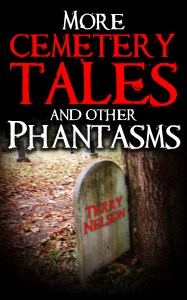
No vampires in my stories below, but you can still get spooked. Cemetery Tales or More Cemetery Tales

Cemetery_Tales_and_other_PhantasmsA-351x597coyotemoon_cemetaryb

Yale students want Shakespeare banned

An Ivy League university like Yale should be the epitome of higher learning. Yet in these hallowed halls the ivy is browning as a petition surfaced that demanded the English Department drop Shakespeare, Chaucer, Milton, Wordsworth, John Donne, among others because studying ‘white writers’ creates a ‘hostile environment for people of color.’

Now this could be a prank. The author of the petition is anonymous. This of course means he or she can hide while watching the national media pick up the story, laughing all the way to class. 

But considering the age we live in, a time in which a segment of the population, whose perception of injustice to minorities over centuries is nothing short of umbrageous hypersensitivity, then one can understand there are those who believe this an honest attempt at protest.

What purpose of dropping Shakespeare and other ‘white writers’ from the English curriculum serve? It is illogical, inane, and let’s be honest. It is racist. Racism, after all, is not the sole domain of the white race. It exists within the dark hearts of all races, nationalities, and genders.

It is not as if people of color are ignored at Yale. The most popular course, according to the article and the Fox news interview, is “Race and Gender in American Literature.” Yale also teaches classes on women writers, African-American writers, Asian writers, to name just a few other options.

I am annoyed that I even have to post a blog about a petition that is so outrageously stupid. Even if it is a prank it is stupid. I question whether the originator of the petition is even in the English program. The study of centuries dead white writers has nothing to do with race and everything to do with art. There is not one word, not one scene, not one iota of proof that the writings of these men could create any ‘hostile environment to people of color.’ One might as well argue Ray Bradbury’s “Martian Chronicles” shows hostility to aliens from other planets.

And nowhere is there an explanation-I repeat-nowhere in the petition is given any explanation as to why or how these writers create a hostile environment. No theory, no premise, no thoughts. Merely unpedantic demagoguery. In other words-bullshit. This is why I think it could be a prank, or a hoax.

If not, it is someone’s ill-intentioned, misinformed, unintellectual, ill thought, distorted thinking-or lack of thinking, misdirected prevarication that serves no purpose for people of any color. If the author of the petition-if that is the word for it-truly believes what he/she wrote, they do not belong at Yale. One must ask why the person is in a higher institution of earning when they show an inability for basic critical thinking. But the person does need to be institutionalized.


Writers are diseased-and there is proof

“Many suffer from the incurable disease of writing, and it becomes chronic in their sick minds.”

The above quote comes from Decimus Lunius Luvenalis, but we know him as Juvenal, a first-second century poet know for his satires that are considered a scathing indictment of Roman life and culture, not to mention politics. He may have been trying to be funny in the above quote, but it turns out he may be right.

There is a disease called hypergraphia. Fyodor Dostoyevsky suffered from it. He was a compulsive writer who suffered from epilepsy, a type of epilepsy in the brain that compelled him to write, write, and write, not just novels and novellas, but short stories,  journals, and of course, what writers frequently did in the days before email, write letters. He believed his best writing came when he was sick.

Writers of fiction write because they want to communicate. Consider the  narrator in the Rime of the Ancient Mariner. He stops a young man on his way to a wedding. It was rude of him to waylay that young man, but he was compelled to tell his story and that man was going to be his audience, come hell or high water. As Joan Didion once wrote, ” In many ways writing is the act of saying I, of imposing oneself upon other people, of saying listen to me, to see it my way, change your mind.”

Storytellers must tell their story and if said storyteller is an extroverted gregarious sort, he will not be a writer, but a big blowhard who never shuts up. But if the storyteller is an introvert with a sensate personality he tells his story in fiction. And how nice of him not to bother young men on the way to weddings. Though if he is clever, the writer will slip his book into the young man’s jacket pocket; the equivalent of an Amazon promotion where you give your book away for free for a limited time.

Most fiction writers are methodical,  keeping to a schedule, or trying to, but few of us have the mad disease that compels us to write, forsaking family, friends, and cats. Few of us are as sick as Dostoyevsky, but we writers must communicate, and because we write better than we speak, we put our words to paper-or digital algorithms.  We are introverts after all. We like to speak from a safe distance, the better to control our type of madness.

To learn more about hypergraphia there is a book by Alice Flaherty, who is both neurologist and writer. She writes from her experience with a postpartum mood disorder. The book is “Midnight Disease.”

dugout (1)Loonies_In_Hollywood-375x712coyotemoon_silentmurder (1)Cemetery_Tales_and_other_PhantasmsA-351x597coyotemoon_cemetaryb


Need a plot for your mystery novel-try this

Loonies_In_Hollywood-375x712

If you want to write a murder mystery, or something more mysterious click/tap here for a list of unsolved murders and deaths dating from before 1800 to present day. If one intrigues you then take a hand at solving the murder on your own. I did this with “Loonies in Hollywood” in which I took the true life, unsolved murder, of silent film director William Desmond Taylor, and using the crime scene evidence, the most mentioned suspects, I chose the one mostly likely-to my thinking- and ‘solved’ the murder. 

Edgar Allan Poe also used the unsolved murder of Mary Rogers, a popular young woman, perhaps the first to became famous for doing nothing other than being so beautiful, that she attracted dozens of men each day to the cigar store in which she worked, attracting so many that newspapers began writing about her. For doing nothing. Poe took the story and using all the evidence wrote “The Mystery of Marie Roget.”

Those are but two examples and if you do a little research you will find many murder mysteries written by authors who based their story on an actual murder. They, like you, can do the research, examine the crime scene, take a look at the suspects, come to your own conclusion, and  then write the mystery. The benefit is that the story ingredients are all there for you, ripe for the picking that you can pluck straight off the tree and cook up the solution. It makes coming up with an idea on your own a mute point. And if it is a famous case, you will tend to sell more books, because famous cases, no matter how old, have followers.

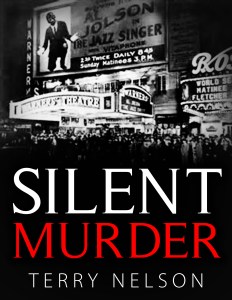
I offer this as an option. I wrote “Silent Murder” based on nothing but my imagination, and if yours is hyperactive then drain your brain of all it has to offer. But if you get stuck for an idea, by all means, use the resource by clicking/tapping here.

coyotemoon_silentmurder (1)

Creating a character through dialogue

There are many ways of creating characters in fiction. What they wear says a lot about a person, colorful clothes, drab clothes, formal, casual, rich, poor. Character quirks also work. Maybe they walk funny, maybe they limp, walk quickly, or just amble. Describing their apartment or house furnishings can also indicate what type of person they might be; orderly to the point of being a neat freak, or messy to the point of a hoarder. Or sparse with no personality.

But another way is through dialogue. In my e-mystery in progress a 1927 flapper named Clancy reveals a lot about herself in the following scene.

Grover looked at Clancy like a thirsty man in a dessert who just found a well of water in an oasis. He was actually drooling a bit. “Are you married? I’m not. Do you want to go on a picnic with me?”

Clancy said, “Well Grover, November is not a good month for a picnic. Way too cold for this California flapper. But I must tell you dear Grover I am not the marrying kind. Nothing personal, mind you.  I have heard people say you are selfish if you do not marry, but that makes no sense. It is selfish to spend your entire life making one man happy and far more generous to share yourself with as many men as possible, or in your case, women, of course. Why make one man happy when you can make dozens of men happy? So you see marrying one person to spend your life with is just selfish. And I am nothing if not generous.”

“But that is not nice, having lots of men and all. Women in the bible are called harlots. We have whores in this town, not many; at least I don’t think so. I don’t want to know them.”

“Well Mr. Grover I am neither of those types of women. I have some integrity after all. But there is another reason. Marriage is a contract, therefore you are obligated to love your husband, but being single I am free to love the man-forever if I want to-because I have the freedom to do so, not under an obligation you see. Don’t you think that makes sense to you Mr. Grover; that a person should love out of freedom, not out of obligation?”

We learn more than Clancy’s feelings on marriage. We see she is insouciant, a free thinker, not shy, a bit flippant, probably living in the moment and a bit of a challenge for any male suitor. Good luck winning her heart.

In “Loonies in Hollywood” in which she made her first appearance I wrote a scene to describe how she affected men. The scene follows:

Clancy swiftly glided past police desks with me as her tail, detectives and uniformed men stopping what they were doing, staring at her like a silver screen goddess who came down off the screen to mingle with the normal folk. She was accustomed to this type of reaction, not pausing in her sashaying glide through the station, looking neither left nor right to offer a brief heart melting smile.

From the reaction of men we learn she is attractive. Doesn’t matter about hair color, tall or short, nothing descriptive, all reaction from others. She is unattainable to the common man.

You can say a lot about character though dialogue and other’s observations.

Loonies_In_Hollywood-375x712coyotemoon_silentmurder (1)


Piracy hits e-writers and bloggers-You NEED to read this

As an e-Novelist I am concerned about copyright theft and piracy, not just because I lose money, but I hate those who steal and claim something as their own, when you have done all the work. 

I follow Anne R. Allen and Ruth Harris’s blog and suggest you do as well, for you will learn invaluable information every week. Their most recent blog is about book piracy, how e-Books can be stolen/pirated, and how it affects us poor writers. I had no idea what these pirates were doing and I took a suggested step from the blog that might alert me to any questionable activity of my books.

Click the above link to learn what is going on and what you can do to protect yourself and your e-Books.

Three bobbling writers heads to inspire

webPoeBobbleRoyal-500x500

Bobbleheads are popular in baseball. Every team has a bobblehead giveaway of their popular players every season. On my computer desk I have Seattle Mariners Felix Hernandez, Jaimie Moyer, and Lou Piniella. I also have  Desmond Mason from the NBA’s Seattle Supersonics. Also a former TV broadcasting duo from the Milwaukee Brewers Daron and Bill. Little did I know there are also Bobbleheads of writers.

dickensmark%20twain%20bobble%20head-1000x700

I searched on Amazon for the fun of it and found Edgar Allan Poe, Mark Twain, and Charles Dickens. I also found a Poe (above) on the Poe Museum website in Richmond, Virginia. What a great way for us writers to find inspiration than sitting down at the computer, looking at the shelf above your head and beginning the day by asking the Big Three if they like your writing, then tipping the heads’ of Poe, Twain, and Dickens, seeing their bobbing heads, imaging they are urging you on “Yes! Yes! please write more.” Nothing beats inspiration from those three writing icons.

In truth I was searching for Mary Wollstonecraft Shelley, but alas a Google search found none. If you know if there is one please provide a link. I can see a Bobblehead of Mary with the Frankenstein monster behind her. Bobble on! I will settle for an action figure of course.

It turns out there are Bobbleheads of most anyone, from Gandhi and Pope Francis to Fidel Castro and John Wilkes Booth. There are philosophers, Socrates and Aristotle, and for scientific nerds, Nikola Tesla and Albert Einstein. I am chagrined there is a Bobblehead for Booth, but not for Mary Shelley.

But back to the writers. It turns out that there are different versions of some writers, different bobbling, so you can choose a more fitting representation to suit your taste. Until I find my Mary, I will start with Poe, then go for Charles and Mark.

frankensteinbobbleheadLook who just bobbled in. Hey, where’s Mary ?


Amazon’s marketing analytics for writers must change

dugout (1)

I previously posted a blog about my ad campaign for “Loonies in the Dugout,” selling for .99 by the way. The campaign was approved, then soon after it began Amazon stopped it because of low relevance. To be honest how does one get ‘low relevance’ on the third day. I assumed the problem was that there were no categories in the marketing campaign listings for my e-book that is ‘sports fiction/satire’ so I  used literary fiction, the closest I could get. In my second attempt, after learning the campaign was stopped, I added sports/outdoors. The campaign was approved for the second time.

I had bid .70 cost per click, and I was getting .60. That seems good, but maybe I’m wrong. In the information I received from Amazon, it was estimated that my campaign, May 13 through June 8 would generate only five sales. They stopped the campaign on the third day and I had sold seven books, two more than projected, and I still had 22 days to go. Yet the email said customers were not engaging with the ad. Huh? Seven sales in less than three days, more than they said I would get.

They also suggested I increase my bid as it could be getting beat by other ads that were bidding higher for better placement. Sorry, I’m not taking the bait. I like my book, I want people to read it. That was why I lowered the price and created the ad campaign. But I will not increase my bid when it started so well.

In my original email to Amazon I said they should consider adding ‘sports fiction’ and ‘satire’ in their marketing campaign listings for targeting. They answered that they appreciate the feedback and would consider it at a future date. In their second email to me after telling them I had sold 7 books in first three days, out doing their projections, I received the following, “I’ll take your concern as feature request and communicate the same to our business team for consideration as we plan future improvements. I’m unable to promise a timeframe at this time, however, we are still evolving and feedback like yours motivate us to dive deep and unearth ways and means which helps us in making publishing on KDP a happy experience.  Please be sure to check our forums periodically for updates.”

Nothing against the forums, I have used them, but it takes a lot of ambling around to find the specifics you seek and the answers are not always helpful, nor are they necessarily correct. Why doesn’t Amazon just post something on the appropriate marketing page, saying ‘new and improved.’

I do like Amazon. I have made many purchases with them and I am sure they have enjoyed my money. I will take them at their word, that they are evolving and are seeking ways to improve (making more money), that they will ‘dive deep and unearth ways to improve,’ but I will also continue to check in to see if and when they change their methodology. They clearly need a better understanding of low relevance. Consider that they say they compare ‘like’ ads for effectiveness, but also say they don’t have specific numbers. If you compare things you learn something, yet they imply otherwise.

I will try again with other titles this summer, hoping my relevance improves.

Loonies_In_Hollywood-375x712coyotemoon_silentmurder (1)Cemetery_Tales_and_other_PhantasmsA-351x597coyotemoon_cemetaryb