Writers are diseased-and there is proof

“Many suffer from the incurable disease of writing, and it becomes chronic in their sick minds.”

The above quote comes from Decimus Lunius Luvenalis, but we know him as Juvenal, a first-second century poet know for his satires that are considered a scathing indictment of Roman life and culture, not to mention politics. He may have been trying to be funny in the above quote, but it turns out he may be right.

There is a disease called hypergraphia. Fyodor Dostoyevsky suffered from it. He was a compulsive writer who suffered from epilepsy, a type of epilepsy in the brain that compelled him to write, write, and write, not just novels and novellas, but short stories,  journals, and of course, what writers frequently did in the days before email, write letters. He believed his best writing came when he was sick.

Writers of fiction write because they want to communicate. Consider the  narrator in the Rime of the Ancient Mariner. He stops a young man on his way to a wedding. It was rude of him to waylay that young man, but he was compelled to tell his story and that man was going to be his audience, come hell or high water. As Joan Didion once wrote, ” In many ways writing is the act of saying I, of imposing oneself upon other people, of saying listen to me, to see it my way, change your mind.”

Storytellers must tell their story and if said storyteller is an extroverted gregarious sort, he will not be a writer, but a big blowhard who never shuts up. But if the storyteller is an introvert with a sensate personality he tells his story in fiction. And how nice of him not to bother young men on the way to weddings. Though if he is clever, the writer will slip his book into the young man’s jacket pocket; the equivalent of an Amazon promotion where you give your book away for free for a limited time.

Most fiction writers are methodical,  keeping to a schedule, or trying to, but few of us have the mad disease that compels us to write, forsaking family, friends, and cats. Few of us are as sick as Dostoyevsky, but we writers must communicate, and because we write better than we speak, we put our words to paper-or digital algorithms.  We are introverts after all. We like to speak from a safe distance, the better to control our type of madness.

To learn more about hypergraphia there is a book by Alice Flaherty, who is both neurologist and writer. She writes from her experience with a postpartum mood disorder. The book is “Midnight Disease.”

dugout (1)Loonies_In_Hollywood-375x712coyotemoon_silentmurder (1)Cemetery_Tales_and_other_PhantasmsA-351x597coyotemoon_cemetaryb


Need a plot for your mystery novel-try this

Loonies_In_Hollywood-375x712

If you want to write a murder mystery, or something more mysterious click/tap here for a list of unsolved murders and deaths dating from before 1800 to present day. If one intrigues you then take a hand at solving the murder on your own. I did this with “Loonies in Hollywood” in which I took the true life, unsolved murder, of silent film director William Desmond Taylor, and using the crime scene evidence, the most mentioned suspects, I chose the one mostly likely-to my thinking- and ‘solved’ the murder. 

Edgar Allan Poe also used the unsolved murder of Mary Rogers, a popular young woman, perhaps the first to became famous for doing nothing other than being so beautiful, that she attracted dozens of men each day to the cigar store in which she worked, attracting so many that newspapers began writing about her. For doing nothing. Poe took the story and using all the evidence wrote “The Mystery of Marie Roget.”

Those are but two examples and if you do a little research you will find many murder mysteries written by authors who based their story on an actual murder. They, like you, can do the research, examine the crime scene, take a look at the suspects, come to your own conclusion, and  then write the mystery. The benefit is that the story ingredients are all there for you, ripe for the picking that you can pluck straight off the tree and cook up the solution. It makes coming up with an idea on your own a mute point. And if it is a famous case, you will tend to sell more books, because famous cases, no matter how old, have followers.

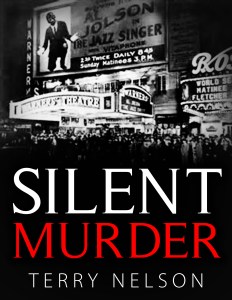
I offer this as an option. I wrote “Silent Murder” based on nothing but my imagination, and if yours is hyperactive then drain your brain of all it has to offer. But if you get stuck for an idea, by all means, use the resource by clicking/tapping here.

coyotemoon_silentmurder (1)

Creating a character through dialogue

There are many ways of creating characters in fiction. What they wear says a lot about a person, colorful clothes, drab clothes, formal, casual, rich, poor. Character quirks also work. Maybe they walk funny, maybe they limp, walk quickly, or just amble. Describing their apartment or house furnishings can also indicate what type of person they might be; orderly to the point of being a neat freak, or messy to the point of a hoarder. Or sparse with no personality.

But another way is through dialogue. In my e-mystery in progress a 1927 flapper named Clancy reveals a lot about herself in the following scene.

Grover looked at Clancy like a thirsty man in a dessert who just found a well of water in an oasis. He was actually drooling a bit. “Are you married? I’m not. Do you want to go on a picnic with me?”

Clancy said, “Well Grover, November is not a good month for a picnic. Way too cold for this California flapper. But I must tell you dear Grover I am not the marrying kind. Nothing personal, mind you.  I have heard people say you are selfish if you do not marry, but that makes no sense. It is selfish to spend your entire life making one man happy and far more generous to share yourself with as many men as possible, or in your case, women, of course. Why make one man happy when you can make dozens of men happy? So you see marrying one person to spend your life with is just selfish. And I am nothing if not generous.”

“But that is not nice, having lots of men and all. Women in the bible are called harlots. We have whores in this town, not many; at least I don’t think so. I don’t want to know them.”

“Well Mr. Grover I am neither of those types of women. I have some integrity after all. But there is another reason. Marriage is a contract, therefore you are obligated to love your husband, but being single I am free to love the man-forever if I want to-because I have the freedom to do so, not under an obligation you see. Don’t you think that makes sense to you Mr. Grover; that a person should love out of freedom, not out of obligation?”

We learn more than Clancy’s feelings on marriage. We see she is insouciant, a free thinker, not shy, a bit flippant, probably living in the moment and a bit of a challenge for any male suitor. Good luck winning her heart.

In “Loonies in Hollywood” in which she made her first appearance I wrote a scene to describe how she affected men. The scene follows:

Clancy swiftly glided past police desks with me as her tail, detectives and uniformed men stopping what they were doing, staring at her like a silver screen goddess who came down off the screen to mingle with the normal folk. She was accustomed to this type of reaction, not pausing in her sashaying glide through the station, looking neither left nor right to offer a brief heart melting smile.

From the reaction of men we learn she is attractive. Doesn’t matter about hair color, tall or short, nothing descriptive, all reaction from others. She is unattainable to the common man.

You can say a lot about character though dialogue and other’s observations.

Loonies_In_Hollywood-375x712coyotemoon_silentmurder (1)


How to properly use a writing prompt

If you are a writer and follow writing blogs you have come across someone who challenges your creativity with a writing prompt . I gave a prompt in a previous blog, quoting writer John Gardner who said, “describe a barn as seen by a man whose son has  died in a war. Do not mention death, war, or the son.” I do not need you to respond to it. I offer it as an example.

I suggest you avoid any prompts you encounter in your Internet perambulations.

Here is why. It is okay if you are bored and have nothing better to do on a rainy day, your dog won’t play with you, your cat is sleeping (when aren’t they) and all your friends are busy-or avoiding you. If you are a writer then why waste your time being creative on something you won’t use. If you need a prompt to stir your creativity then turn to the story you are working on, or the story you intended to write, but have put off because you were eating cookies while reading the new Stephen King book.

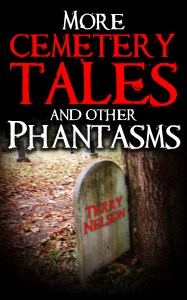
Instead of responding to another’s prompt, I respond to my own prompts. As an example, in my short story “The Castle” found in “Cemetery Tales and other Phantasms” I prompted myself with this-describe a scene where a young excited boy just out of high school has left America for the first time, arrives in a remote area of England for a new job. Do not mention America, England, the new job. I came up with this:

Taking a deep breath of fresh air Quinn felt intoxicated. He wanted to giggle, to jump up and down, but proudly he maintained his cool.  Outwardly he was sure he looked composed, confident, and worldly; inwardly he was concerned the blood racing through his pounding heart would be noticeable through his pale skin, worried people would mistake the pounding of his heart with thunder in the darkening skies. 

My goal was to capture his feeling of being in a new adventure in a new country. I think it worked.

Or from the same story, describe a scene where a character is lost somewhere, scared, where death may be imminent.  I came up with this:

He turned and saw nothing, no outline of any trees, nothing to separate sky from ground, just total blackness in a black vacuum. He had to get back to the castle. He was safe there. He tried to run towards the castle. He couldn’t. He tried to walk, gingerly putting one foot forward. He couldn’t. He had to get back to the castle. He couldn’t. The silence was deafening, the darkness blinding. The cold, dank, swampy air was crushing him.”

The point is time spent on your writing is best served prompting your scenes. Nothing wrong with prompts, they’re a good exercise, but exercising on your own story will get it done quicker.

Cemetery_Tales_and_other_PhantasmsA-351x597coyotemoon_cemetaryb

Does the Bible inspire murder

It follows like morning from night that when some mass murder or odious crime is committed moralists bring out their standard polemic condemning Hollywood for violence in movies, or they blame books like “Catcher in the Rye” because Mark Chapman carried it when he killed John Lennon.

I thought of this again when reading “The Beautiful Cigar Girl” about the murder in 1841 of Mary Rogers and how Edgar Allan Poe wrote his mystery “The Murder of Marie Roget” based on the facts of the case, which has never been solved.

Mary may have been one of the first to become famous for doing nothing. Take that Kardashians. She was young and so beautiful that men flocked to the cigar store where she worked, so many and so often, that newspapers took note and wrote about her popularity. She became so well known that when she disappeared for a few days there was near panic. She returned saying she was visiting someone. But a few years later she was found floating in the Hudson River, brutally murdered.

In the book, author Daniel Stashhower quotes James Gordon Bennett, a newspaper editor, who wrote about the murder in 1836 of Helen Jewett, a 23-year old prostitute. In her room was found Lord Byron’s book of poetry “Don Juan.”  Bennett wrote “the book has no doubt produced more wretchedness in the world than all the other moral writers of the age can check.” And the “Journal of Public Morals stated, “Avoid the perusal of novels.”

Don’t read books or Lord Byron’s poetry for they will lead you into prostitution and death.

I’m sure we can research back further in time and find more moral outrage. But blaming movies, TV, music, videogames, even Dungeons and Dragons, or anything antithetical to Ivory Tower moralists is misdirection. Many will bring up the Bible as the good book, the book of comfort and morality. Do these moralists know how many people were murdered in the Old Testament, how many were slaughtered, how many sins of Bible heroes were committed. Could the Bible have led to murder and sins of it’s readers? No, you say. How about the Crusades, the Inquisition, burning witches at the stake to free their souls? Or anti-abortionists who kill doctors and nurses?

Maybe moralists have a point. Reading is dangerous.

On the other hand, is it not truer to say that people who were inspired to murder, mayhem, and other crimes, had something wrong with them to begin with. More people have not committed murder from reading the Bible than have committed murder. More people have read “Catcher in the Rye” and not killed than those who have.

In short there is no correlation between art and crimes. People commit crimes; people point fingers. Those fingers are pointed the wrong way.

dugout (1)Loonies_In_Hollywood-375x712coyotemoon_silentmurder (1)Cemetery_Tales_and_other_PhantasmsA-351x597coyotemoon_cemetaryb

An inside look at the life of a 21st century writer-no punches pulled

I was going to begin working on my new novel this morning, but first I had to write this post. A writer must have self imposed deadlines and schedules. There are certain days to write and publish posts for this blog. And I might add, a great warm up exercise for the days writing.

Of course I, as any writer, must also Tweet about my five e-books available at Amazon Kindle, and another Tweet or two, or three, directing other Tweeters to my website where they can learn about me and my books. Since I am on Twitter I should search for other people to follow, to see if they will also follow me.

And as long as I am being sociable, there are thirty communities at Google+ that I have to visit in order to comment on posts, give them the ‘+’ all in the hopes they will do the same for me. After commenting, promoting, and ‘+’ others, I can then promote my e-books, my blogs, my website. I promote the others first of course, not only because I am generous with my time, but also because if I don’t I will be chastised, exorcised from circle of friends, and banned from the community.

Having done all the above it was time for lunch. I did not make any progress on my new novel, but at least I was not wasting time.

After lunch I needed to make a decision about Facebook. It really does little good promoting my books to family and friends. Though some are encouraging (some as in few, very few), most don’t have a Kindle, and others don’t care. They are busy posting funny videos of cats and sharing recipes for Risengrod (tap for recipe). So do I now create a Facebook fan page when I have not enough fans to make it worthwhile. And what do I do on my fan page anyway?

Then their is marketing to consider. Do I try Amazon merchandising campaign ads to promote my books?  You must spend money to make money is the old adage. No doubt coined by an ad salesman to make money from those who won’t make money.

Prior to the Internet, writing was a solitary art, now it is a social art. My question is, when do I find time to write my next book? It is dinner time after all. Maybe after viewing those cat videos.

coyotemoon_silentmurder (1)Cemetery_Tales_and_other_PhantasmsA-351x597coyotemoon_cemetarybdugout (1)Loonies_In_Hollywood-375x712

This post was revised and edited from one of my posts on a different website.


How a gremlin tried to sabotage my e-book-writers beware!

I am the world’s worst proofreader.

In light of my declaration of inadequacy, I take offense that I was targeted by digital gremlins. They were out to sabotage me, and indeed, they partially did. I really don’t need their help. I am perfectly capable of self-sabotage. The following is a true story.

My e-book “Loonies in Hollywood” was published on Kindle Direct a few  years ago. I used an independent formatter where I proofread, then viewed changes on my Kindle app 250 times. The number came from a counter on the formatter, and the proofreading was over ten days. I knew I could not catch everything, but I had caught so much I considered something unworldly was going on.

There came a time when both my eyes and my mind were weary and bleary. Eager to publish I went ahead. Bad decision. sent a review copy to someone knowledgeable on the story I wrote. He emailed me a number of spelling and grammatical errors. I corrected all but one.

He had said there were times I used the word Edward when it should have been Edwin. I went to the formatter, did a search and replace for Edward, but it said there were no occurrences. He saw Edward, my formatter does not see Edward. I checked some pages where his name was likely to be found. I could not find Edward.

Two days later the book had a free day. The Edward-Edwin thing kept bothering me. Late in the day, that inner voice said to check the formatter one more time. I did another search and replace for Edward, and this time it found nine occurrences. What? One day none, another day nine. Truthfully, I was so confused, I am not sure what is name was. It could by Wally for all I know.

To go from zero occurrences to nine the reason must be e-world gremlins? I have heard rumors about them, even saw a documentary about them on the PCC Network (Paranormal-Cryptid-Conspiracy). Now I have had a personal encounter.

I republished the book in the middle of the free day; with I am sure, millions upon millions of eager readers wanting to devour my loony book.

But I had no choice; this is the e-world I live in, one where gremlins lay in wait like a collide rattler, ready to strike venom into my hopes, dreams, and livelihood.

Like I need any help.

coyotemoon_cemetarybcoyotemoon_silentmurder (1)dugout (1)Loonies_In_Hollywood-375x712Cemetery_Tales_and_other_PhantasmsA-351x597

This post was revised and edited from one of my previous posts on another website

10 research sites for fiction writers-or anyone

Whether you write current fiction, science fiction, romance, westerns, horror, or like me, write mysteries set in the 1920’s or short stories with a paranormal theme, you want to get things right. You don’t want Abraham Lincoln turning on a radio to get news about the war in the Western theatre. Then again you might if you are writing alternate history or science fiction, but I will stand by my statement.

One obvious place to start is the Library of Congress. Something more European, try the European library, or if you need something specific about England, try their National Archives.  Don’t want to slight Australia , so there you are.

Another site with many topics is encyclopedia.com.

Writerswrite.com is a clearing house to take you to more specific sites and is fun to browse anyway.

This is a fun site I found on Pinterest called Fiction Writing research site.

Of course I will mention Wikipedia and though I am aware one must be careful what you find here, I have primarily used when researching 1927. What happened in each month of the year, anything newsworthy I could use in my story. I also double checked the information I found to make sure.

Want to get geographical names correct try U.S. Board on geographic names. A word here on street names. When dealing with the past, some cities have changed street names. In my e-novel set in 1911, “Loonies in the Dugout,” I used a map of New York from 1911. I also used a 1927 map of Los Angeles for two e-novels. I don’t know if any of the names I used had changed, but it is wise never to assume; always use source material.

And if you want to see how wrong politicians are in their statements try Factcheck.org. Good for a laugh, or tears, or anger.

Or you can go retro like I do. I go to book sales where I find books like “The Oxford World Mythology,” “The Oxford History of the Classical World,” or “Gray’s Anatomy,” (helpful if you want a coroner to explain cause of death or any medical issues if you write murder mysteries). You can also explore your local library if you feel the need to get away from clicking, tapping, and out of your chair because your butt is getting flat, and be able to touch real books with lots of info, take notes with tools like pen and paper. Then cross check with Internet sources. Research is important and fun. You never know where your search will lead you.

If you have a site you want to share leave a comment.

coyotemoon_silentmurder (1)Loonies_In_Hollywood-375x712dugout (1)


My Personal encounter with mysterious synchronicity

If you are unfamiliar with synchronicity it was explained by Carl Jung as “meaningful coincidences” if they occur with no causal relationship, yet seem to be meaningfully related.[1] Synchronicity is not the same as coincidence, as the phrase ‘meaningful coincidence’ gives synchronicity a near mysterious, magical, type of phenomenon.

To give a personal example, I was listening to a radio talk show about synchronicity in relation in quantum physics or something else I didn’t understand and less than a week later I had a synchronistic experience. This would be a coincidence.

What happened was I published a post on my Mariner blog about the DH. As happens when I write about sports, sometimes I can get carried away. I don’t like the DH and I went over the top a bit. A woman castigated me in the comments section. It was vicious, near troll like. Though part of her argument was incorrect her anger made me revisit what I wrote. Looking at some sentences and phrases through new eyes, I realized the writing should have been better. So I revised it, making it more palatable, less histrionic.

I felt bad, not for the personal attack by the woman, but the fact that my point, though I was trying for humor, came off Trumpesque, that being mean spirited without much thought behind what I was saying. I might be too hard on myself, then as now, and I could have left it as written, but I thought the writing was not what it should have been. So I felt awful for being sloppy in making a point.

The next day, still feeling like poodle doodle, there was an email in my inbox from a blog a subscribe to. It was a guest post about “How to Recover from  criticism (and how to eliminate it!). It explained what causes the urges that may have driven the woman to say what she said. And it is also something we can learn from.

The point is that the column came when I needed it, it was meangful, something beyond coincidence, and there was no casual relationship. A Christian would say it was the hand of God, but I will stick with synchronicity.

Did Shakespeare invent football

         ‘Am I so round with you as you with me, That like a football you do spurn me thus?’ The line comes from Shakespeare’s play Comedy of Errors, Act 1, Scene 2.  And again in King Lear, act 1, scene 4, this insult ‘Nor tripped neither, you base football player.’ 

        The above lines came from my Kindle edition of the complete works of Shakespeare that cost 99 cents. Shakespeare did not of course invent football, as it existed in his time, not the soccer 21st century fans are enamored with though. This ‘football’ according to this website killed more people than swordfights. It was ‘mob’ football and I am assuming played without referees and had no concussion protocol.
        But that is beside the point. According to a children’s book “William Shakespeare & the Globe”, written and illustrated by Aliki , Shakespeare invented the word ‘football’ though I am sure NFL fans believe it was Roger Goodell. It is also claimed in this wonderful book that old Will invented about or around 2,000 words such as bandit, employer, schoolboy, moonbeam, alligator!!!, luggage, eyeball, birth-place, gloomy, blushing, puppy-dog, shudder, fairy land and phrases like ‘every inch a king’, ‘pomp and circumstance’, wild-goose chase’, ‘for goodness sakes’,  ‘sweets to the sweet’,  and with due respect to Charles, ‘what the dickens’. Also puke, hush, and tut, tut.
        I have no intention of researching all the above words and phrases, nor the others listed in the book. I will take Aliki and Scholastic at their word (pun not intended-well maybe), but it does bring up an interesting question. If Will did invent those words, and the audience in the Globe heard those words for the first time, how did they know what they meant. I can see a member of the audience saying in response to alligator ‘what was that he said’ to his companion, much like when I watch a British TV show and they use a word I am unfamiliar with, which is frequent. 
        I don’t really know if Will invented words or was the first to write them down on parchment and use them in public at the Globe, but language evolves like a Darwinian paradigm. There are words and phrases popular in their day that are gone, never used in centuries. I mentioned some of them in a post I previously wrote.
        And we can invent phrases as well. In regards to words and evolving language how about ‘Alas poor Webster, I knew him well  Roget.’ Okay, I am no Shakespeare and you are thinking that my phrase has ‘no rhyme nor reason,’ another Will invention and you are wishing me ‘good riddance,’ yes that phrase too, so I bid adieu.
“Speak the speech, I pray you, as I pronounced it to you, trippingly on the tongue; but if you mouth it, as many of your players do, I had as lief the town-crier spoke my lines.’ Hamlet, act 3, scene 2. lief means willingly, readily. Who says lief anymore?